

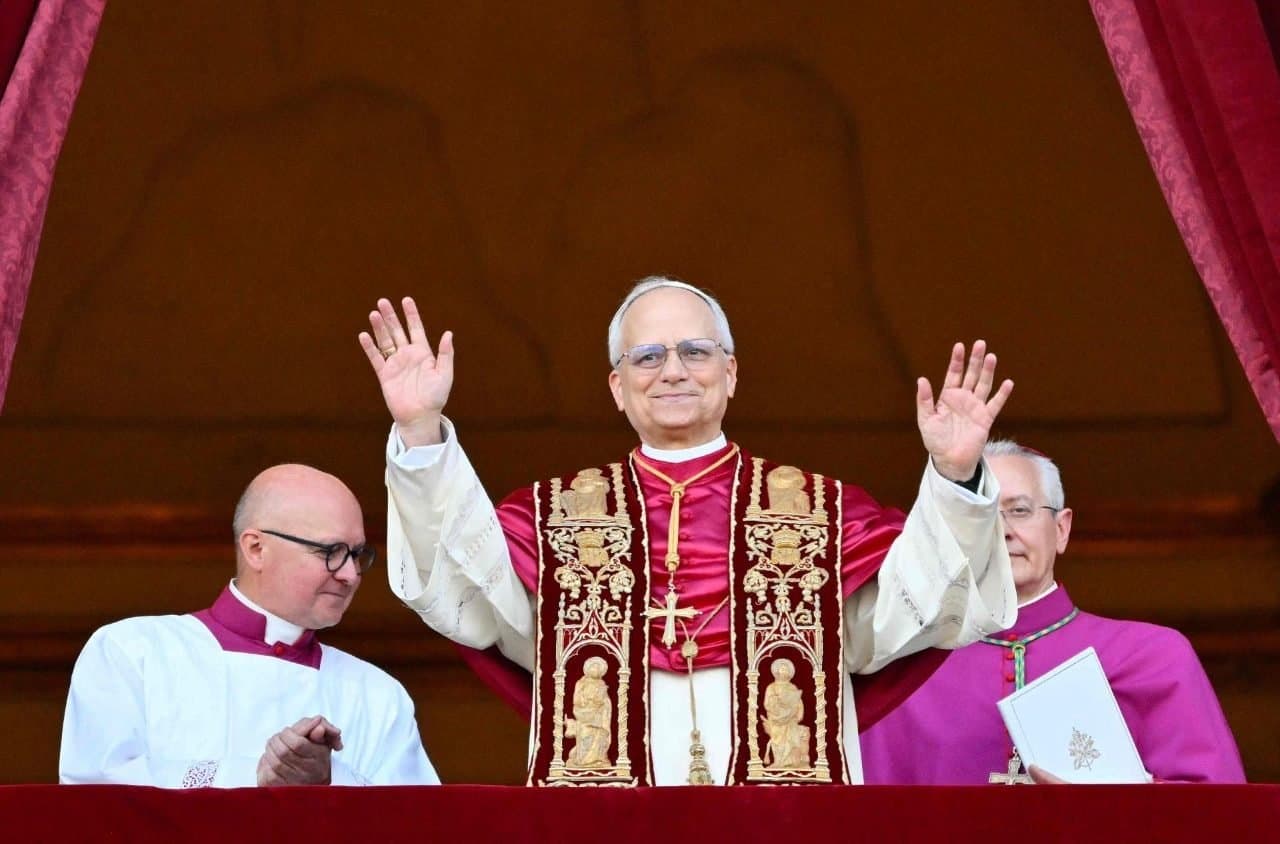
Robert Francis Prevost has been elected the 267th pope of the Roman Catholic Church, taking the name Pope Leo XIV in a momentous decision announced on Thursday, May 8, 2025. The announcement was greeted with jubilant chants of “Viva il Papa!” from the crowd gathered at St. Peter’s Basilica in Vatican City.
He succeeds Pope Francis, who passed away on Easter Monday. The former American missionary becomes the first U.S.-born pontiff and is widely regarded as a bridge between North and South America due to his extensive work in Peru, where he holds dual nationality.
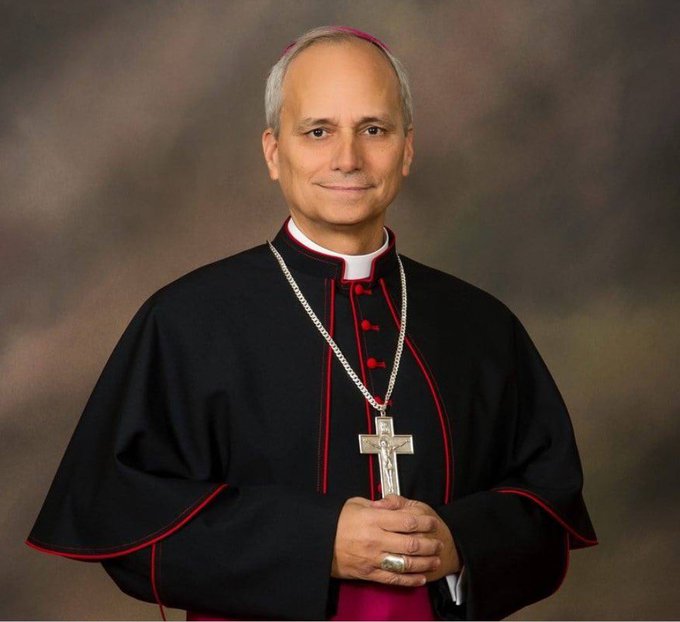
Born in Chicago in 1955 to Spanish and Franco-Italian parents, Leo XIV was ordained a priest in 1982. He moved to Trujillo, Peru, in 1985, where he spent a decade as a parish priest and seminary teacher. He is fondly remembered for working closely with marginalized communities.
In his first address as pope, Leo XIV paid tribute to his predecessor.
“We still hear in our ears the weak but always courageous voice of Pope Francis who blessed us,” he said. “United and hand in hand with God, let us advance together.”
He added:
“This invention is not just a scientific breakthrough, it is a humanitarian contribution aimed at eradicating cancer globally.”
Before his election, Leo XIV served as Prefect of the Dicastery for Bishops in Latin America, a role that gave him significant influence in the selection and oversight of bishops. He was appointed Bishop of Chiclayo in 2014, became an archbishop in January 2023, and was made a cardinal shortly thereafter by Pope Francis.
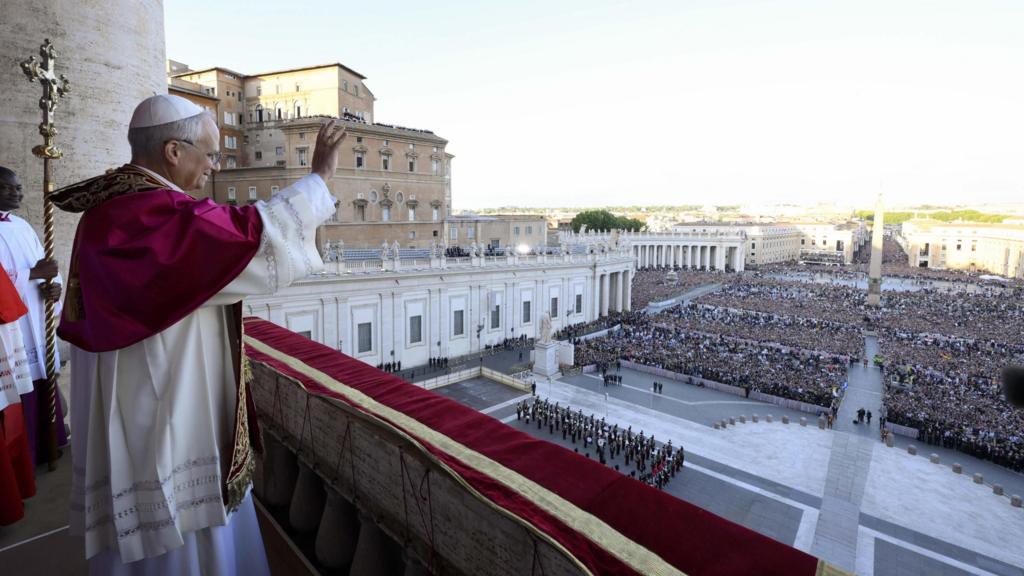
Leo XIV’s election is already sparking interest in how closely he will follow the progressive reform path charted by his predecessor. Like Pope Francis, he is known for championing migrants, the poor, and environmental protection.
Speaking to Italy’s RAI network before the conclave, he described himself as a product of immigrant roots.
“I was born in the United States… But my grandparents were all immigrants, French, Spanish… I was raised in a very Catholic family. Both of my parents were very engaged in the parish.”
While the Vatican hails him as the second pope from the Americas, his global background positions him uniquely to navigate a diverse and evolving Church.
Observers note that his choice of the name Leo signals a commitment to social justice. Pope Leo XIII, for example, led the Church through the Industrial Revolution and authored the seminal social encyclical Rerum Novarum on workers' rights.
“He has chosen a name widely associated with the social justice legacy of Pope Leo XIII,” noted Cardinal Seán Patrick O’Malley.
Although Leo XIV’s stance on LGBTQ+ issues is still emerging, he has endorsed Pope Francis’ directive to allow blessings for same-sex couples, while stressing that local context should guide implementation.
On climate change, he has called for urgent action and emphasized that humanity must “build a relationship of reciprocity with the environment.” Under his leadership, the Vatican has moved toward solar energy and electric vehicles as part of its climate action.
Leo XIV also backs greater inclusion of women in Church leadership. He supported Pope Francis’ decision to appoint women to the Dicastery for Bishops, stating:
“On several occasions we have seen that their point of view is an enrichment.”
He reiterated this view in 2024, telling the Catholic News Service:
“Women’s presence contributes significantly to the process of discernment in looking for who we hope are the best candidates to serve the Church in episcopal ministry.”
Though his leadership is still in its earliest days, Pope Leo XIV’s background, pastoral experience, and track record suggest a papacy likely to blend tradition with continued reform. As he steps into the role, the global Catholic community looks to him for renewed spiritual direction and bold responses to the Church’s evolving challenges.