

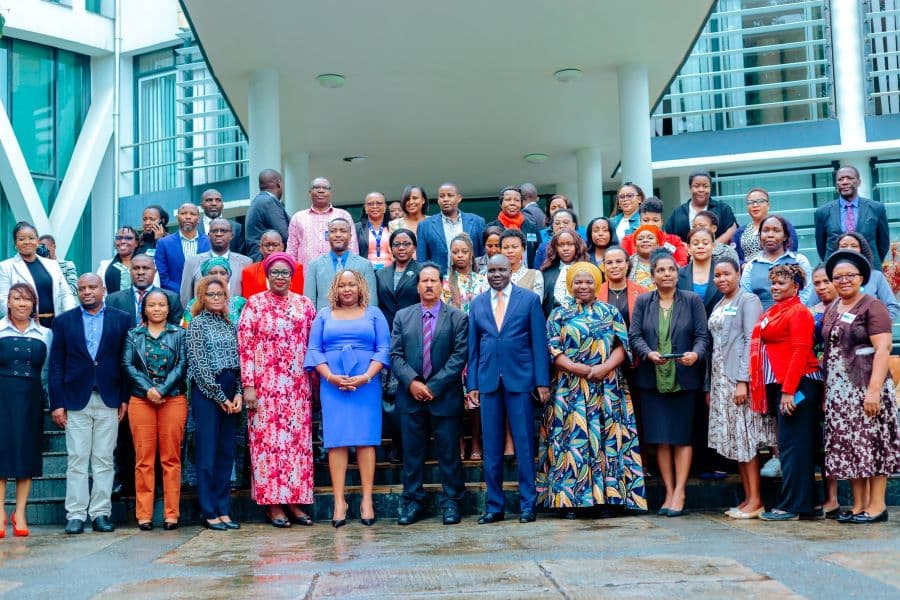
The East African Community, the Common Market for Eastern and Southern Africa, and the Economic Community of West African States last week convened in Arusha, Tanzania for a two-day coordination meeting on the 50 Million African Women Speak Platform.
The platform offers instant access to business information, financial services, training resources and networking opportunities. With features such as product trend alerts, flash sales, live chats and AI-driven business tools, it aims to go beyond information sharing and actively empower women entrepreneurs.
The meeting brought together officials from the three Regional Economic Communities, development partners and stakeholders to assess the platform’s progress, review financial contributions, and agree on a sustainable future for the initiative.
During the opening session, East African Community Secretary General Veronica Nduva said the platform could help address trade challenges by boosting women’s inclusion.
“Women make up a significant portion of our small business sector but often encounter greater barriers to scaling and exporting. If we can remove these barriers, imagine what we could achieve economically, socially and regionally,” she said.
Nduva said women’s empowerment remains a key part of the EAC’s development strategy.
“The second phase of the 50MAWSP will transform the platform into a one-stop hub. It will integrate powerful new features: e-commerce capabilities so women can trade across borders, real-time trend alerts and mentorship sessions and AI-driven credit scoring to unlock micro-loans for women who have never had formal financing,” she added.
Speaking for COMESA, Dr. Dev Haman, Assistant Secretary General in charge of Administration and Finance, said the platform plays an important role in linking women to regional markets and value chains.
“Our communities thrive when women thrive. An initiative that connects and strengthens women-owned businesses is directly contributing to grassroots development and poverty reduction in East Africa,” said Dr. Haman.
Dr. Haman said he was confident that the meeting would produce a clear roadmap for continued implementation.
Salimata Thiam, Principal Programme Officer for Gender at ECOWAS, said the meeting showed a strong desire to enhance inter-regional cooperation, share experiences and build a more inclusive and sustainable platform.
“We are looking at developing a long-term sustainability strategy based on diversified funding sources and increased support from partners and beneficiary countries,” said Thiam.
“Integrating user feedback into the development of the platform’s functionality is also critical,” she added. Thiam stressed the need to strengthen project governance through effective coordination and monitoring.
Andrea Aguer Ariik Malueth, EAC Deputy Secretary General in charge of Infrastructure, Productive, Social and Political Sectors, said boosting the number of women-led businesses trading across EAC borders would enhance intra-regional trade and create a more inclusive common market.
“The 50MAWSP is a practical tool to achieve that. It helps women entrepreneurs find information and partners beyond their home country, essentially lowering the informational and networking barriers that often keep trade localised,” said Ariik.
Since its launch in 2016, the 50 Million African Women Speak Platform has been rolled out in 37 countries across the three Regional Economic Communities. The platform now has more than 700,000 registered users, 43.6 percent of whom are men. The most active users are aged between 25 and 34 years, with Kenya leading in user numbers.
In Kenya, women have already started forming cross-border partnerships. “One woman began exporting organic spices to new markets. Another secured mentorship that helped her access funding. These stories are real and they are just the beginning,” said one participant at the event.
The meeting will conclude with the presentation of a long-term sustainability and resource mobilisation strategy, along with a proposed plan of activities for joint implementation by the three Regional Economic Communities.