The Ministry of Foreign Affairs has outlined a new approach to diplomacy that prioritises national interests, strategic partnerships and economic growth in an increasingly competitive global environment.
Foreign Affairs Minister Adonia Ayebare said Uganda’s diplomacy must focus on securing opportunities that support the country’s development goals, including investment, technology transfer, market access and industrialisation.
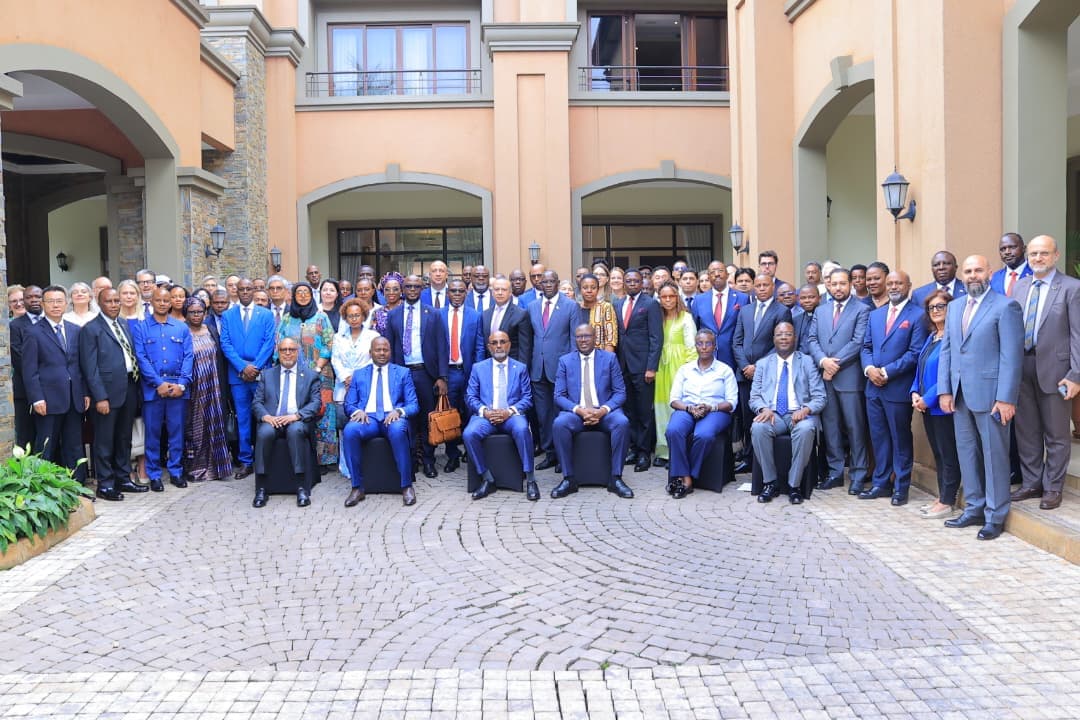
Ayebare made the remarks on August 19, 2026, during his first Diplomatic Briefing at Mestil Hotel in Kampala since taking charge of the ministry. The meeting brought together ambassadors, high commissioners, heads of international organisations and honorary consuls accredited to Uganda.
“Uganda’s foreign policy is anchored on the promotion and protection of national interests in an increasingly interconnected and competitive global system,” Ayebare said.
He said the ministry would align its international engagements with the government’s Tenfold Growth Strategy, which aims to expand Uganda’s economy to $500 billion by 2040.
The minister said achieving the target will require increased investment, export diversification, value addition and wider use of technology across key sectors.
Ayebare also highlighted government reforms aimed at improving efficiency in public service through the rationalisation of ministries, departments and agencies.
He said reducing duplication and wastage of resources would strengthen accountability, improve service delivery and create a better environment for investors.
The minister pointed to developments in the energy sector, saying increased electricity generation would support industrialisation and improve livelihoods.
He also said the East African Crude Oil Pipeline (EACOP) is expected to be completed this year, paving the way for crude oil exports.
Ayebare described the project as a major economic opportunity that will generate government revenue, create jobs, support related industries and strengthen Uganda’s role as a regional energy hub.
On agriculture and household incomes, he said the Parish Development Model remains central to improving livelihoods at the grassroots.
He urged development partners to align their programmes with the model and Uganda’s wider economic transformation goals.
The minister said the ministry’s work would be guided by the ATMS framework, which focuses on agro-based industrialisation, tourism development, mineral-based industrialisation and science, technology and innovation.
Under the framework, the ministry will seek strategic investments, promote technology transfer, mobilise development financing and expand markets for Ugandan products.
Ayebare also reaffirmed Uganda’s commitment to regional peace and security through its participation in the East African Community, IGAD and the African Union.
He said Uganda would continue pushing for reforms at the United Nations Security Council through the African Union Committee of Ten (C-10) to ensure stronger representation for Africa.
On global challenges, the minister said Uganda supports climate action but wants developing countries to receive adequate climate finance and access to technology.
He added that digital transformation remains a priority for improving productivity and competitiveness.
Ayebare also defended Uganda’s sovereignty, saying the government welcomes engagement with international partners but retains the right to determine its own national direction.
He assured diplomats that the Sovereignty Protection Act does not affect diplomatic privileges and that Uganda remains committed to the Vienna Convention on Diplomatic Relations.
Rwanda’s High Commissioner to Uganda, Joseph Rutabana, who spoke on behalf of the diplomatic corps, welcomed the engagement and said it would strengthen cooperation between Uganda and its international partners.
Ayebare said the ministry would continue holding regular meetings with diplomats and other stakeholders to promote open dialogue and strengthen Uganda’s global partnerships.