
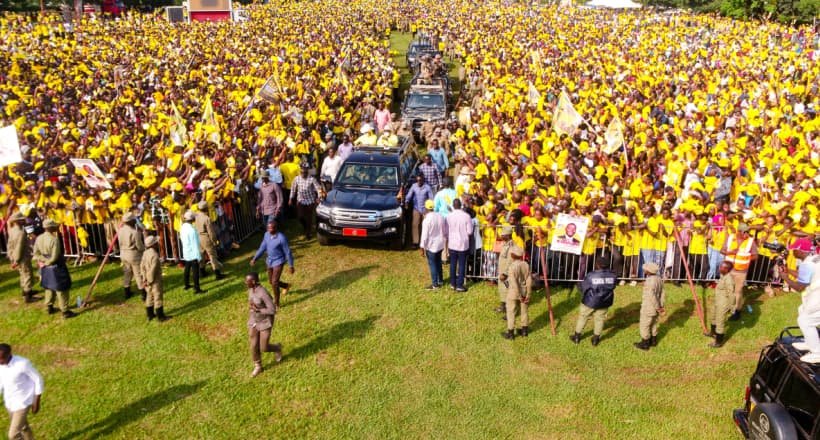
As traffic crawled past Naggalama trading centre on Friday morning, a commuter quietly stepped off a taxi and chose to walk the remaining distance. He had calculated that it would be faster on foot. Like many residents of Mukono, he has learned to plan his days around congestion, detours, and delays that have become routine along the Kampala–Mukono corridor. That daily frustration formed the unspoken backdrop to President Yoweri Kaguta Museveni’s message as he launched the National Resistance Movement (NRM) campaign in the district.
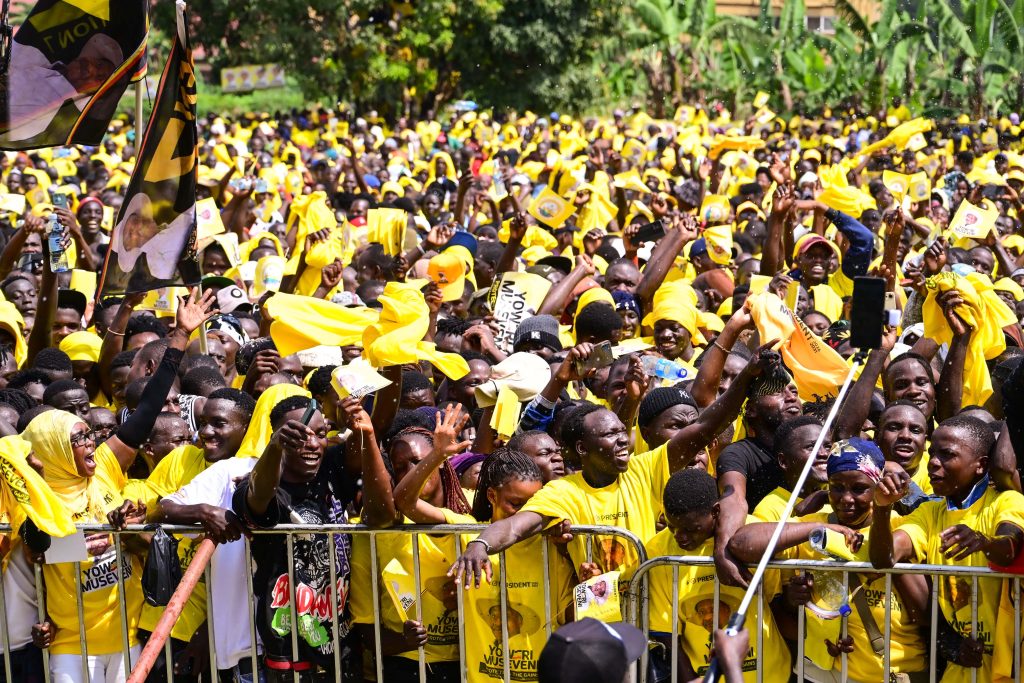
Addressing a large crowd at St. Joseph’s Secondary School, Naggalama Grounds on January 2, 2026, Museveni who is the NRM flagbearer pledged continued investment in road infrastructure across Mukono and neighbouring districts, saying new road links are key to easing congestion in Kampala and unlocking economic growth. He said government is prioritising alternative corridors that allow traffic to bypass the capital entirely.
“We need roads that allow vehicles to avoid Kampala city altogether,” Museveni said. “Because of the heavy traffic, we want most of the cars to pass on roads outside Kampala instead of all traffic being forced to go through the city.”
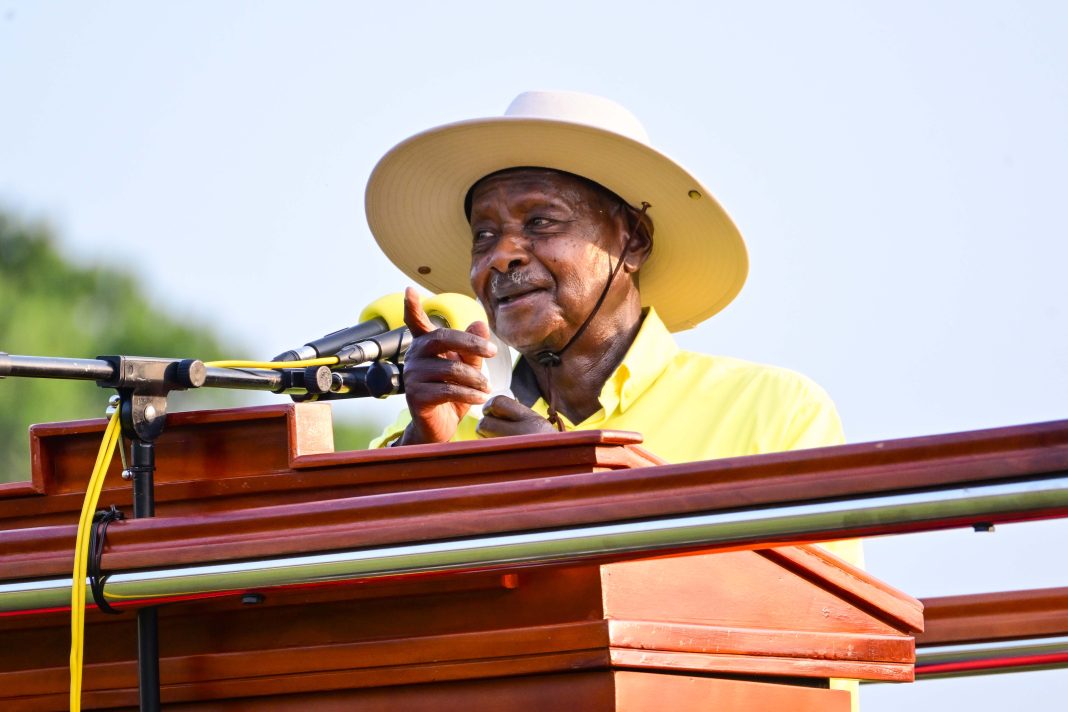
Museveni explained that traffic pressure from Mukono, Wakiso and surrounding districts has forced a rethink in infrastructure planning, with greater emphasis on outer ring roads and inter-district connectors. He said government has already invested heavily in major highways and will continue upgrading key links.
“We started with major roads like Kampala–Jinja, which has been repaired several times, and we are doing it again. We have already completed the Mukono–Kampala section, and we shall finish the remaining part from Mukono to Jinja,” he said.
He listed completed and expanded roads aimed at improving regional connectivity, including the Kayunga–Kangulumira–Jinja road, the Mukono–Katosi (Bakunja) road and the Kayunga–Baale–Galiraya road.
“These roads are all part of our plan to improve transport and trade while reducing pressure on Kampala,” he added.
Earlier, Mukono District NRM Chairperson Hajji Haruna Ssemakula raised concerns about persistent congestion and appealed for additional feeder and connecting roads, citing the Misindye–Kiyunga–Naggalama–Zirobwe road as a critical alternative route. Museveni responded that the road is already captured in government plans.
“The road mentioned by the NRM chairman is in our plan,” Museveni said. “We need roads connecting Mukono to places like Zirobwe, Seeta, Namugongo and Nansana so that traffic does not have to pass through Kampala.”
Reflecting on urban expansion, Museveni noted that Kampala has grown beyond earlier infrastructure assumptions.
“We worked on the Northern Bypass thinking Kampala would remain south of it, but the city expanded beyond it,” he said. “The Northern Bypass is now the central bypass.”
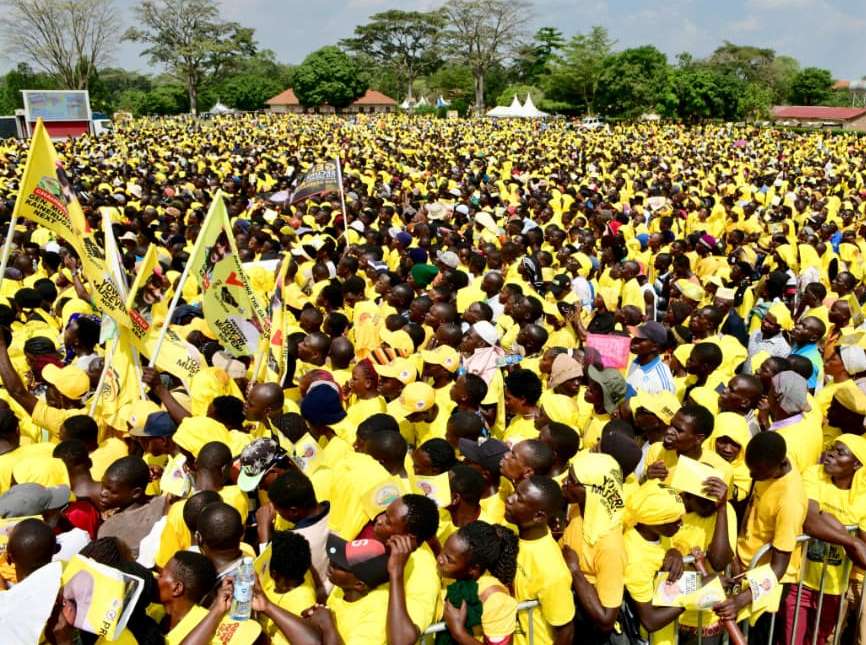
Beyond roads, Museveni raised concern over reported misuse of Parish Development Model (PDM) funds in Mukono, allegedly involving parish officials and SACCO committee members. He said government has ensured funds reach the grassroots, but mismanagement by local leaders threatens the programme’s impact.
“The money is there. I am sending it, and it is reaching the villages, but some people are diverting it,” he said.
Museveni urged residents to attend parish SACCO meetings and hold leaders accountable, warning that illegally constituted committees undermine wealth creation.
“You are the ones who elect these leaders,” he said. “If SACCO leaders elected themselves without a general meeting, that is illegal and easy to verify.”
He said the PDM National Coordinator, Hon. Galabuzi Ssozi, would be dispatched to establish whether PDM committees in Mukono were lawfully elected.
Turning to youth participation, Museveni criticised what he described as low civic engagement among sections of young people, warning that disengagement weakens accountability.
“You may find that a general meeting was called, but you didn’t bother to attend, especially you, the youths,” he said. “I also need the vibe, but first I work, I study, I defend the country. After those three, then I can have the vibe.”
Official figures show that Mukono District and Mukono Municipality, with a combined 97 parishes, have received Shs34.59 billion under the PDM programme. Of this, Shs28.52 billion—about 82.4 percent—has been disbursed to 31,248 beneficiary households.
Using the rally to outline the NRM manifesto, Museveni highlighted what he described as the party’s seven key contributions to Uganda’s development, starting with peace.
“Peace is our first contribution,” he said. “It comes from our ideology of non-sectarianism, which enabled us to build a strong national party that unites all Ugandans.”
On education, Museveni said Mukono has benefited from government investment, with 220 government primary schools, 962 private primary schools, 25 government secondary schools and 270 private secondary schools. In health, he said the district’s 18 sub-counties have one hospital, one Health Centre IV and 17 Health Centre IIIs, with plans to upgrade Kigogola HCII and Kimenyedde HCII and construct new HCIIIs in Katosi and Namataba Town Councils.
On water access, Museveni said coverage in Mukono stands at 96 percent, with 591 out of 610 rural villages connected. He cited completed projects such as the Kabembe–Kalagi–Naggalama Water Supply Project, which serves about 130,000 people, alongside multiple solar-powered and piped water systems.
He cautioned residents against focusing only on visible infrastructure without assessing household incomes.
“Do not be blindfolded by development,” Museveni said. “Look into your home and assess how you stand economically.”
He reiterated the Four-Acre Model and dismissed claims that government should be the main employer, noting that Uganda has about 480,000 government jobs for a population nearing 50 million.
“Jobs are in commercial agriculture, manufacturing and artisanship, services and ICT,” he said, citing industrial parks such as Namanve and Sino-Mbale as key employment hubs.
Maama Janet Kataaha Museveni thanked residents for turning up in large numbers and urged them to support NRM candidates in the January 15, 2026 elections, as the rally closed with a call for participation, accountability and sustained economic transformation.