

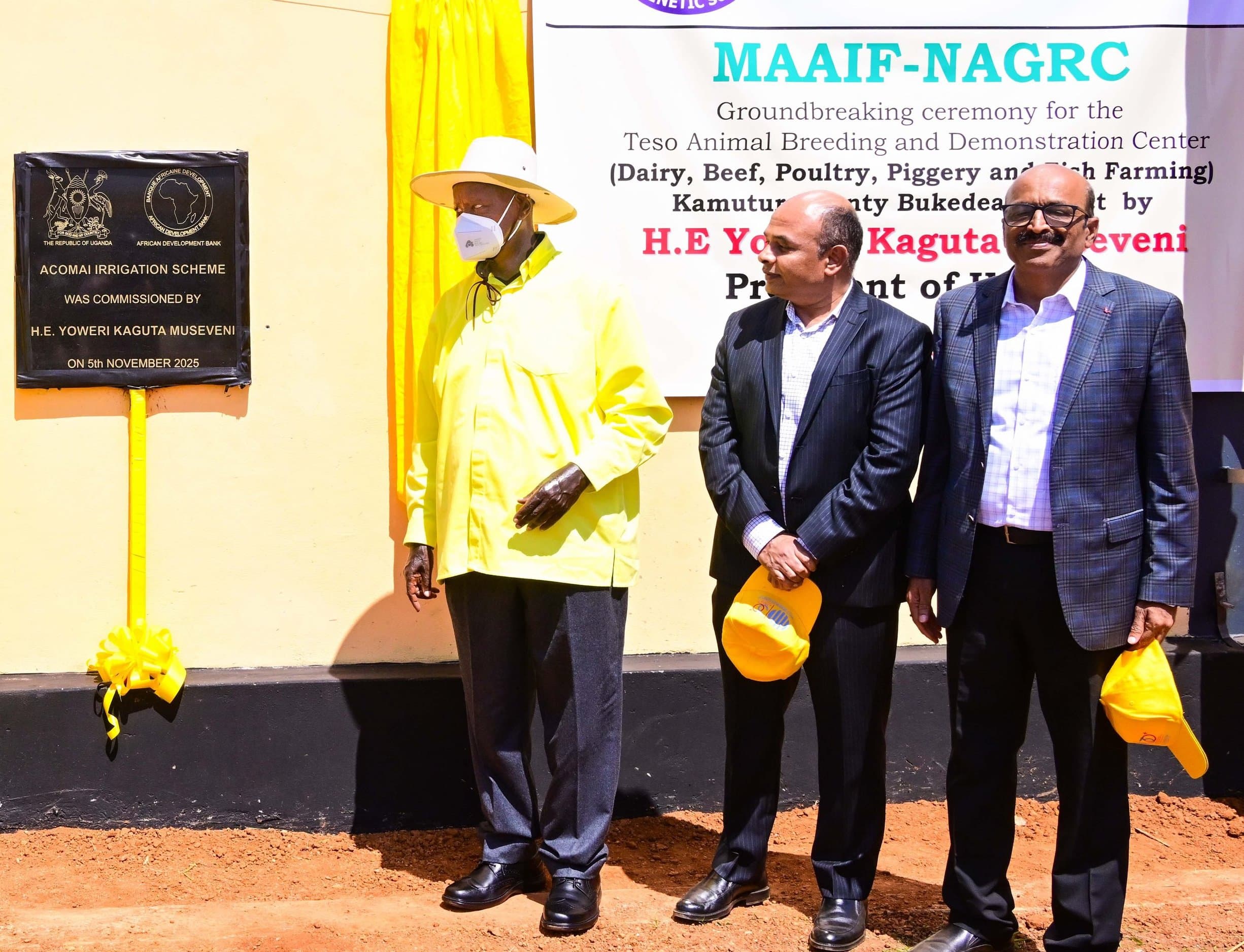
President Yoweri Kaguta Museveni has urged farmers to embrace irrigation-based rice growing on dry land rather than wetlands, saying Uganda must increase food production without destroying vital ecosystems.
The President made the call on Wednesday while commissioning the Shs71 billion Achomai Irrigation Scheme in Kamutur Sub-county, Bukedea District, a major government project designed to modernize farming and improve water management across the Teso and Bugisu sub-regions.
Speaking to the residents, local leaders and officials, Museveni hailed the project’s completion as a turning point in the country’s push for agricultural transformation.
“I don’t eat rice myself; I eat cassava and bananas and our indigenous foods,” Museveni said. “But some of our people eat rice, so it’s good to grow it, only grow it safely, not in the swamp. You should take water from the swamp to the dry land and irrigate.”
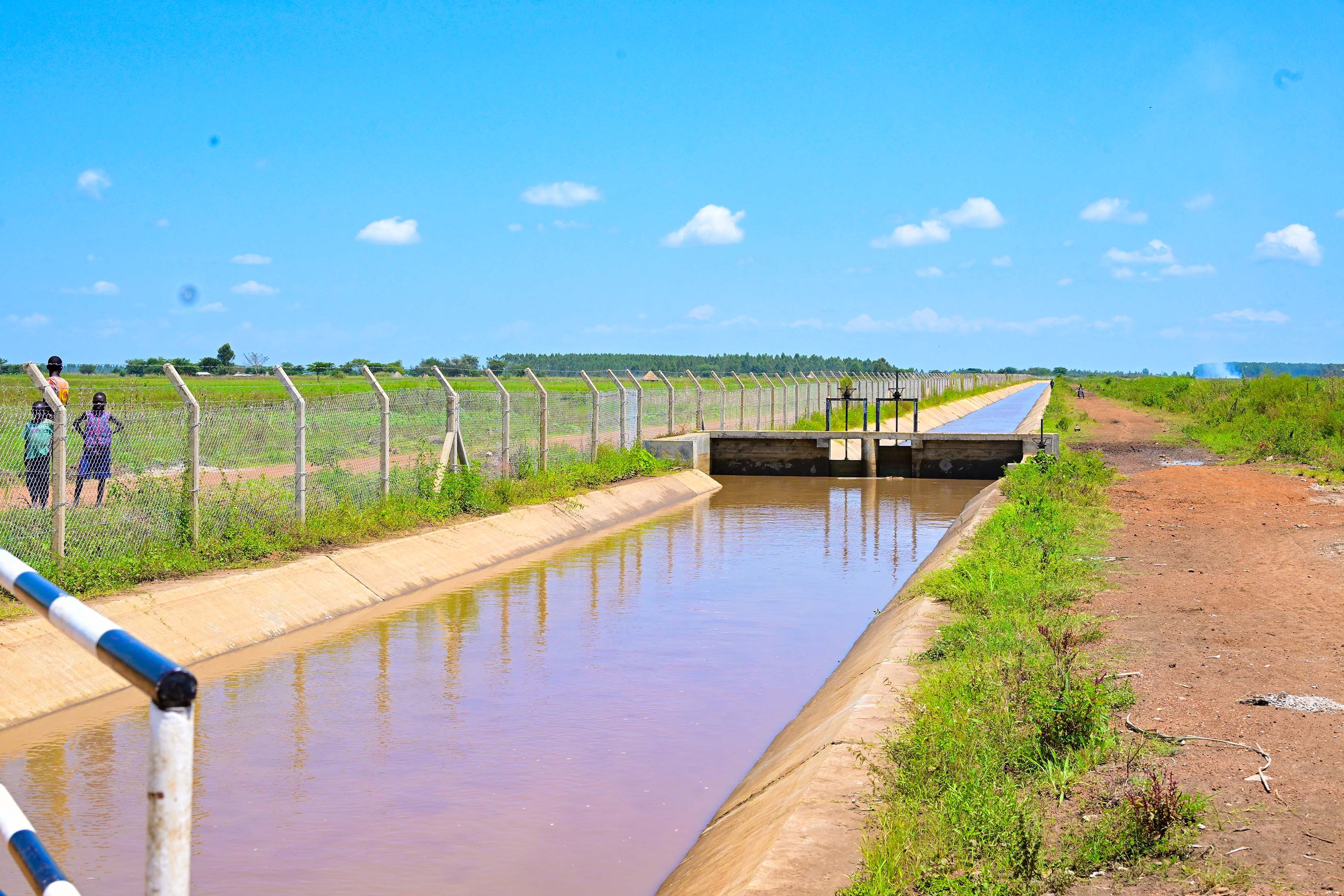
He cautioned that cultivating rice in wetlands undermines environmental sustainability and disrupts natural rainfall patterns.
“I don’t want rice in the swamp (Osamai). I want it in the Aroo (dry land), and then you irrigate. That is good because you’re now helping God to make rain in months when God is not bringing it. That is healthy and very good,” the President emphasized.
Museveni explained that irrigation not only boosts yields but also prevents destructive floods by enabling farmers to capture and store water for future use.
“When you irrigate, you yield and produce more per hectare, but you also tame floods by retaining water and using it when needed,” he said.
The Achomai Irrigation Scheme, which covers 2,200 hectares across Bukedea and neighboring Bulambuli District, is part of the government’s broader strategy to shift Ugandans from subsistence to commercial agriculture through technology and infrastructure investment.
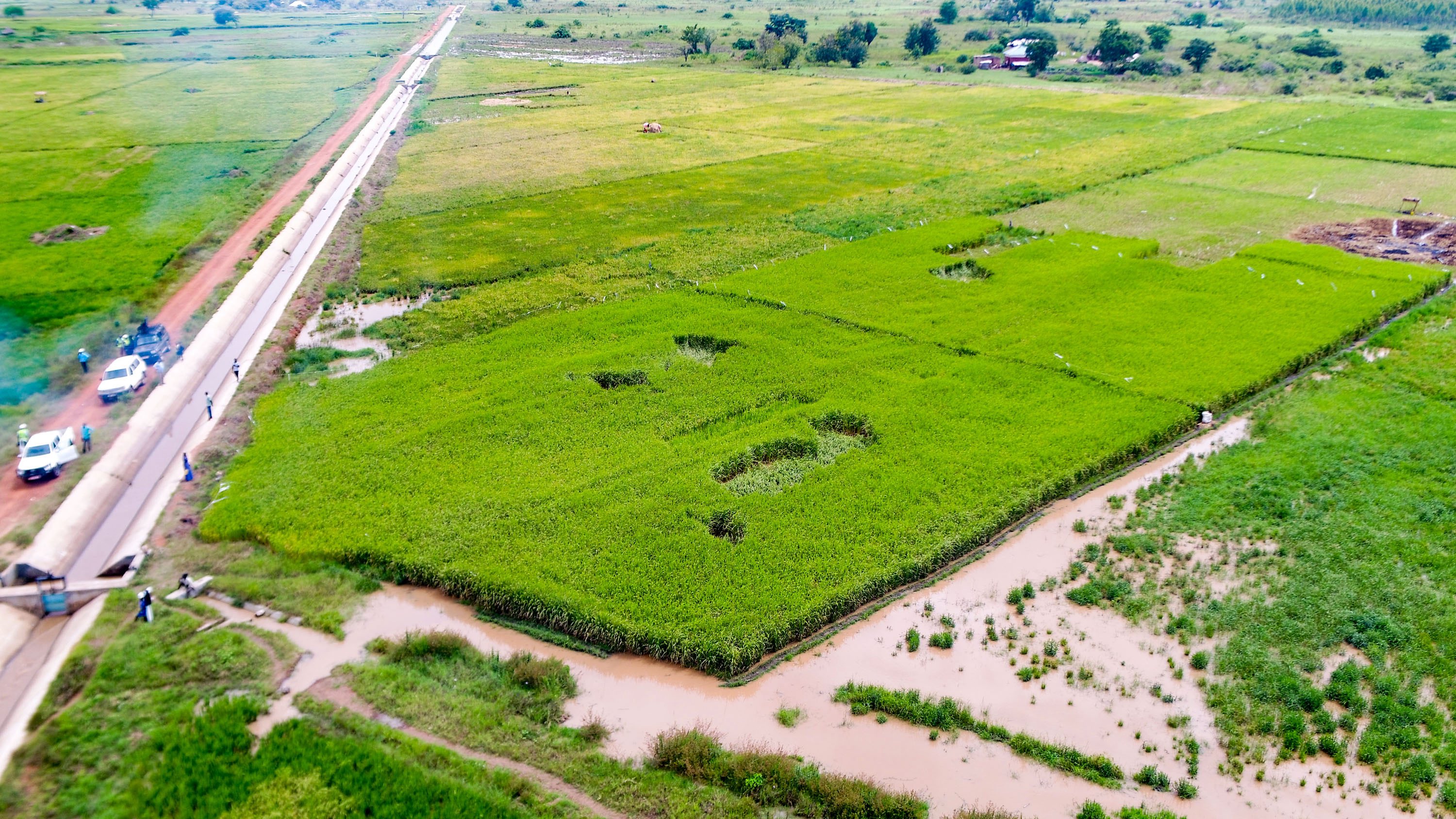
According to Museveni, the project reflects the National Resistance Movement’s (NRM) commitment to empowering farmers to earn more from the same land.
“The result of all this is increased production from the same land, but you harvest more,” he said.
Transforming Bukedea’s Agricultural Landscape
Engineer Athanasius Ssebugwawo, the project’s Contract Manager, said the scheme was implemented under the Agricultural Value Chain Development Programme (AVCP), a government initiative supported by the African Development Bank (AfDB).
He noted that before the project began, Achomai and surrounding communities suffered alternating droughts and floods that made farming nearly impossible.
“During the dry season, we could hardly see anything green, and during the rainy season, floods would destroy everything. The area was hardly inhabitable,” Eng. Ssebugwawo explained.
He said the scheme has since transformed livelihoods, enabling year-round crop production and food security.
“People now produce different crops throughout the year, and livelihoods have improved. Last season alone, more than 1,800 acres were harvested, and the next planting cycle will cover 2,000 acres,” he revealed.
The project includes an administration block, drying yards, a warehouse, workshop, bridge, and 58 kilometers of access roads, all designed to support production, processing, and market access.
Part of a Larger Vision
Valued at Shs71 billion ($19.9 million), the Achomai Irrigation Scheme was co-funded by the Government of Uganda and the African Development Bank. It forms part of Uganda’s national agenda to enhance the entire agricultural value chain, from production to value addition and export.
The commissioning event capped President Museveni’s tour of the Teso sub-region, which has focused on promoting irrigation, commercialization, and value addition as the next drivers of Uganda’s journey toward middle-income status.
“Development is ours, but wealth is yours,” Museveni said. “Government will provide the infrastructure, peace, and facilities, but it’s up to you to use them to create wealth in your homes.”
As he moves into the Bugisu sub-region for his next leg of campaign rallies ahead of the 2026 general elections, Museveni continues to champion agriculture as the foundation for sustainable growth and prosperity.