

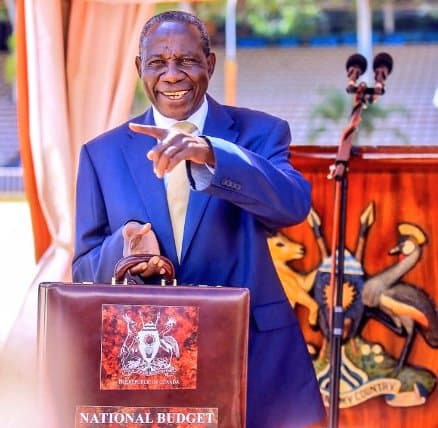
Uganda has unveiled a Shs72.136 trillion national budget for the 2025/2026 financial year, with a strong focus on accelerating economic growth through commercial agriculture, industrialisation, digital transformation, and expanded market access.
Finance Minister Matia Kasaija presented the budget on Thursday at the Kololo Ceremonial Grounds, highlighting it as a strategic tool to fully monetise Uganda’s economy and improve citizens’ livelihoods.
"The budget for next financial year, and over the medium term, is focused on people and wealth creation," Kasaija said during the national address.
The budget, one of the largest in Uganda’s history, is anchored on the theme: “Full Monetisation of Uganda’s Economy through Commercial Agriculture, Industrialisation, Expanding and Broadening Services, Digital Transformation and Market Access.”
Out of the total resource envelope, Shs37.2 trillion—about 60%—will come from domestic revenue, while the rest will be financed through borrowing and grants. The budget deficit is projected at 7.6% of GDP.
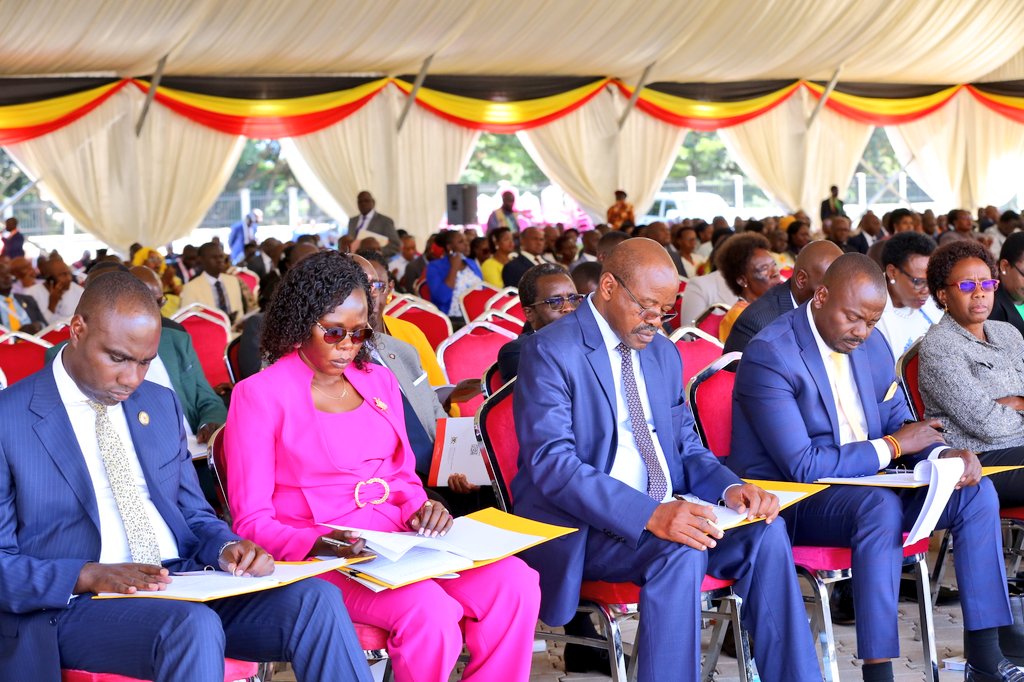
Kasaija assured Ugandans of the government’s commitment to expanding the tax base and strengthening revenue collection. He said emphasis will be placed on tackling smuggling, corruption at Uganda Revenue Authority, and leveraging tools like the Electronic Fiscal Receipting and Invoicing System.
Key sectors received substantial allocations. The health sector was allocated Shs5.87 trillion to support emergency services, e-health systems, and hospital equipment. Kasaija confirmed that 20 digital X-ray machines have been delivered and CT scanners installed in 14 of 16 regional referral hospitals.
"We are strengthening the National Ambulance and Emergency Care System," he added.
The education sector received Shs5.04 trillion to fund Universal Primary and Secondary Education, student loans, and school construction. The government also plans to operationalise Bunyoro and Busoga universities and improve school inspections through digitisation.
Wealth creation initiatives were allocated Shs2.43 trillion. The Parish Development Model (PDM) alone will receive Shs0.59 trillion, ensuring every parish continues to receive Shs100 million annually.
"These investments are changing the lives of Ugandans by boosting household incomes, enhancing food security and creating employment opportunities," Kasaija noted.
He revealed that more than 2.6 million Ugandans have benefited from PDM funds, supporting enterprises in food production, livestock, poultry, and trade. The government has digitised PDM operations using platforms like WENDI and ZAIDI to improve transparency and efficiency.
On agriculture and industry, the government earmarked Shs1.86 trillion for agro-industrialisation, including irrigation, extension services, and value addition. Kasaija reported the completion of 145 solar-powered irrigation schemes, with 157 more under construction.
He also boosted the Agricultural Credit Facility with an additional Shs50 billion, bringing total disbursements to over Shs1 trillion.
Industrial development and oil exploration were also key priorities. The budget allocated Shs875.8 billion to mineral-based industries and the oil and gas sector. The East African Crude Oil Pipeline is 58% complete, and Uganda has signed a deal to build a 60,000-barrel-per-day oil refinery.
Once oil production begins in 2026, Uganda expects annual revenues of between US$1 billion and US$2.5 billion. Kasaija said direct petroleum imports by the Uganda National Oil Company are already saving the country US$72.8 million annually by eliminating middlemen.
Tourism received Shs430 billion directly and an additional Shs2.2 trillion through infrastructure support. Kasaija said Uganda is positioning itself as a leading MICE (Meetings, Incentives, Conferences, and Exhibitions) destination.
"Uganda now ranks 7th in Africa in MICE tourism," he announced.
The Minister also celebrated recent gains in export revenue. Coffee earnings rose to US$1.83 billion while tourism generated US$1.52 billion.
"It took over a century to reach US$1 billion in coffee exports, but we doubled that in one year. I urge Ugandans to grow more coffee and add value before exporting," he said.
Kasaija concluded with optimism, projecting a 7% economic growth rate and a GDP per capita rise to US$1,324 in the coming fiscal year.
"The necessary foundation has already been established. The speed of economic transformation is destined to be faster in the medium term," he said.