

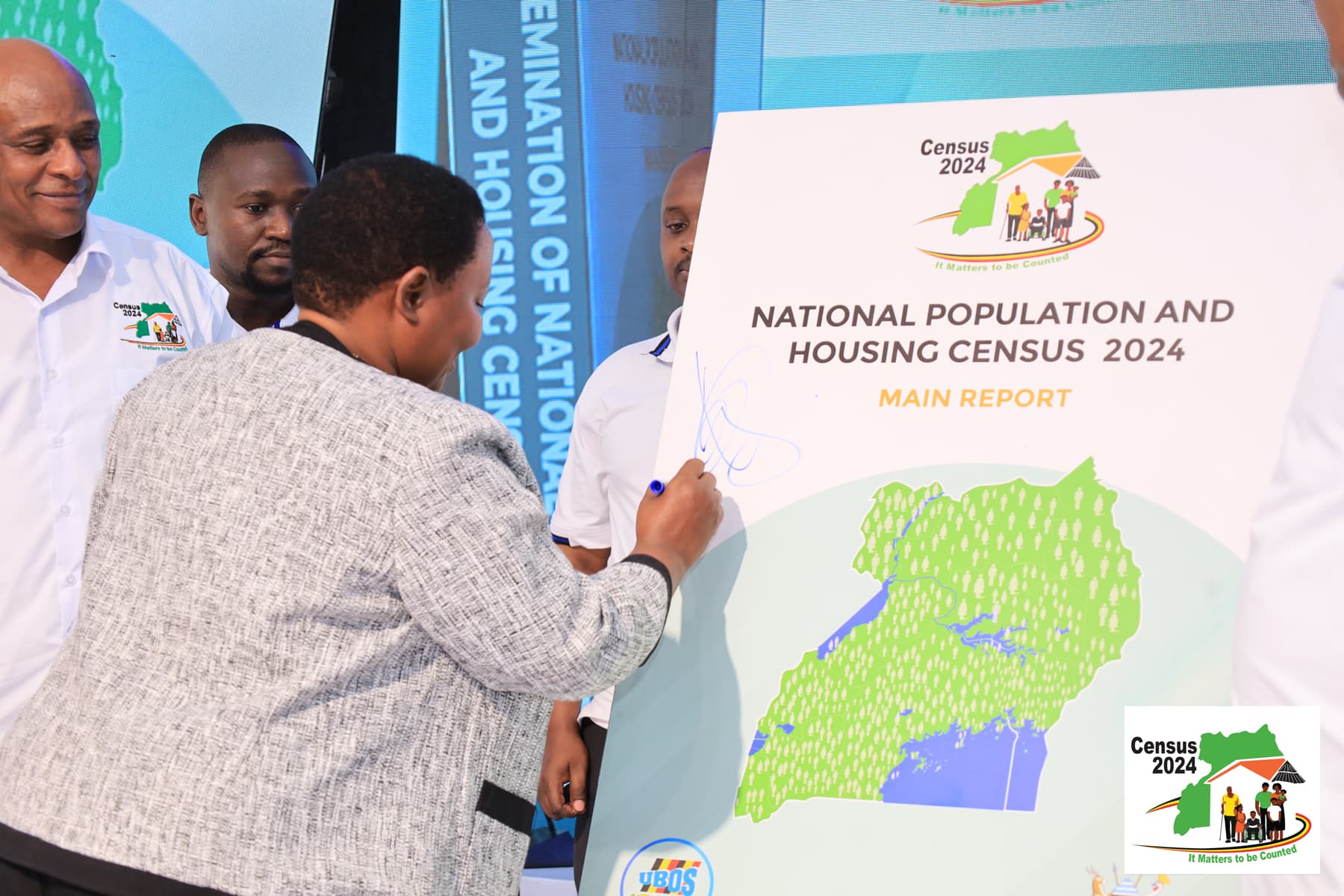
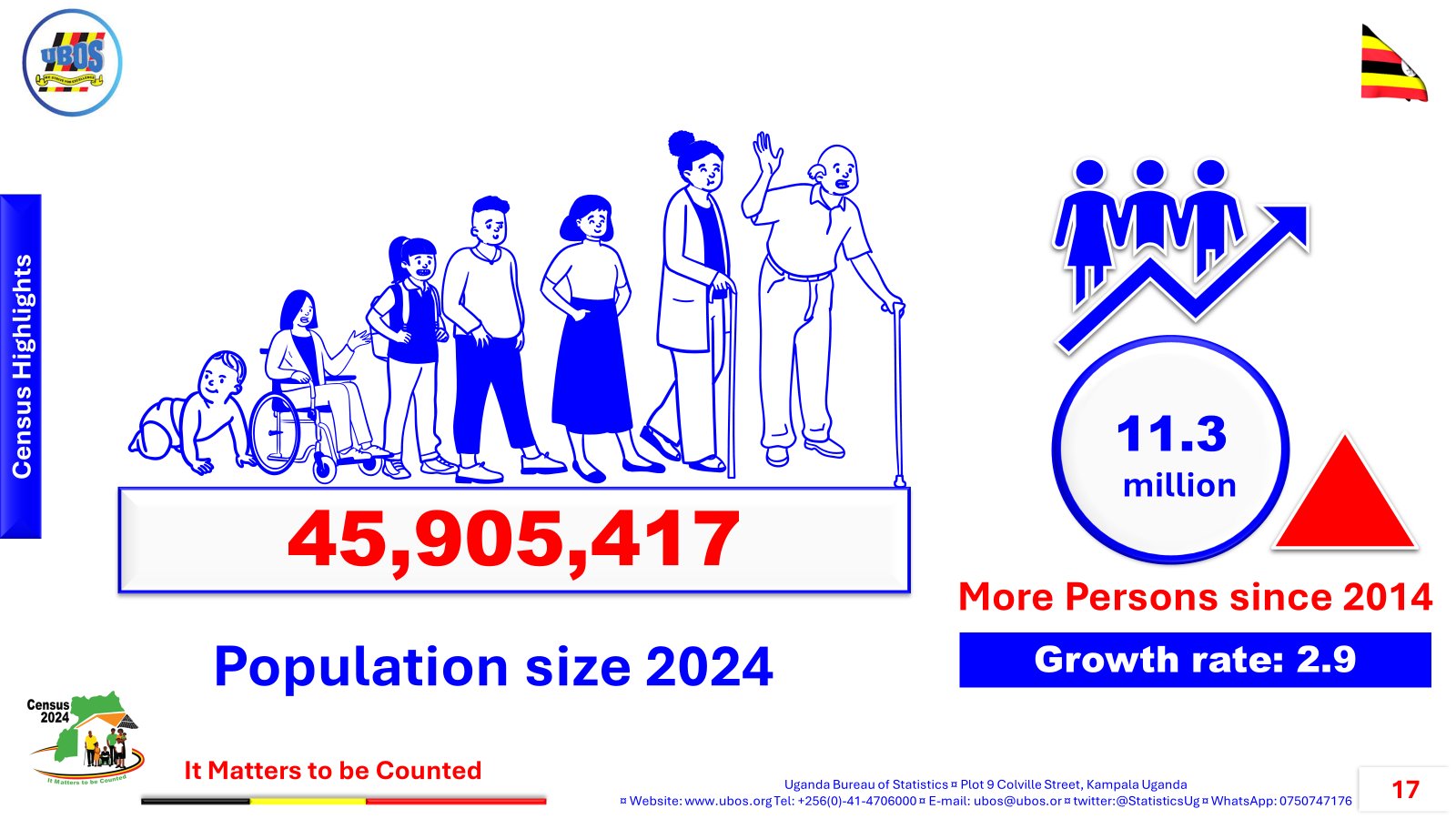
Uganda’s total population has grown to 45,905,417, with children aged 0-17 years making up half of the population, according to the 2024 National Population and Housing Census results. The final results of the National Population and Housing Census 2024, released on October 3, 2024, by Uganda Bureau of Statistics (UBOS) Executive Director Dr. Chris Mukiza, highlights key demographic data, including a 2.9% growth rate since 2014 and significant shifts in age distribution, literacy, and religious affiliations.
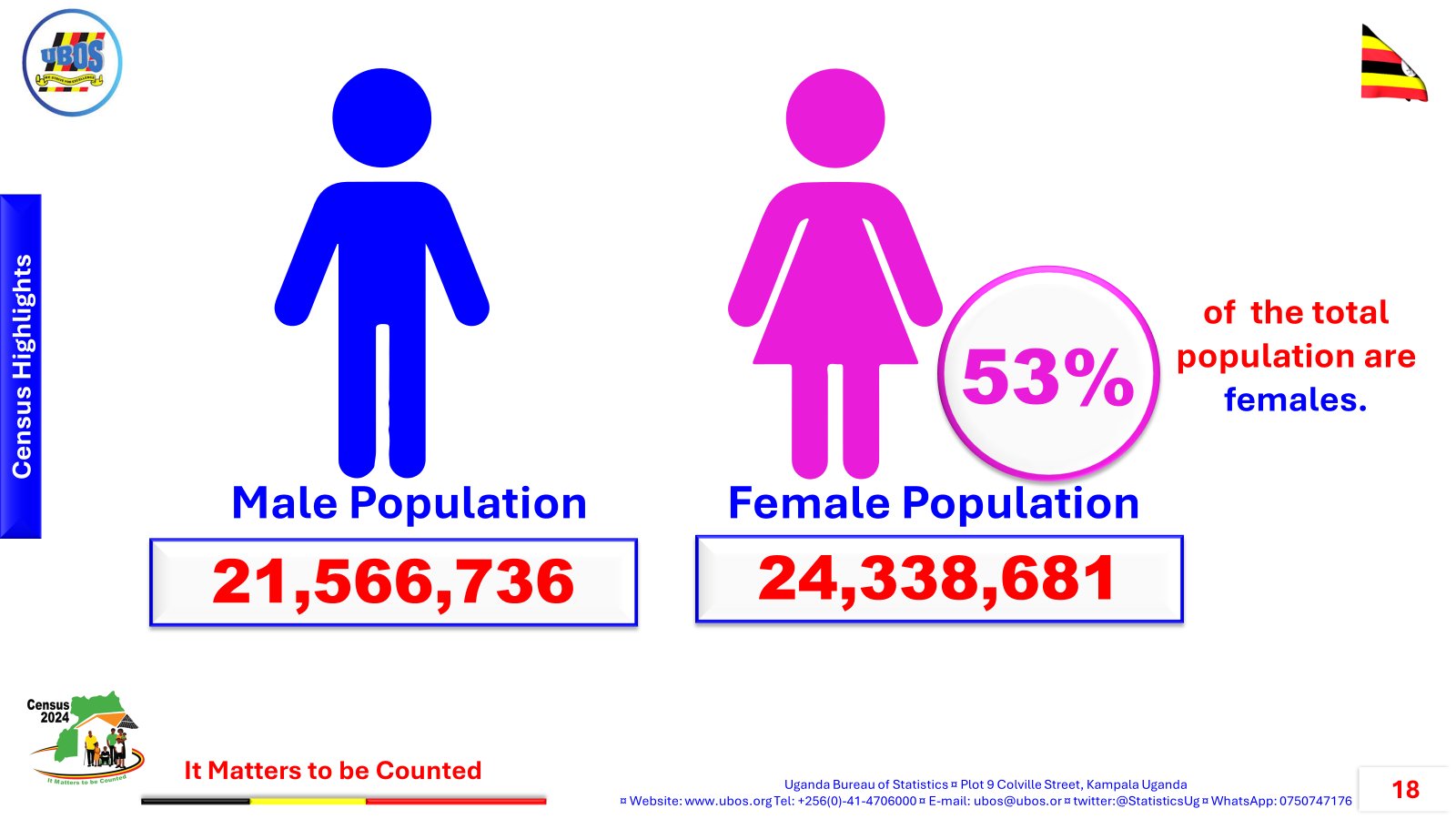
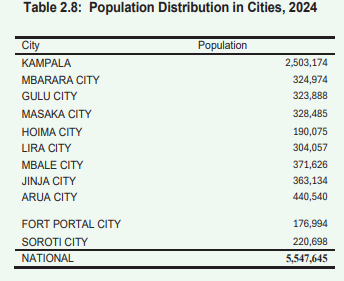
“Children represent the largest portion of Uganda’s population at 50%, followed by youth aged 18-30 years at 23.5%, while older persons make up 5%,” Dr. Mukiza revealed, underscoring the country’s youthful population. He emphasized the need for policy makers to plan accordingly, especially in cities where the population surges during the day. “Kampala’s daytime population is 2.5 million, although only 1.7 million reside there. Cities must plan using daytime population figures.”
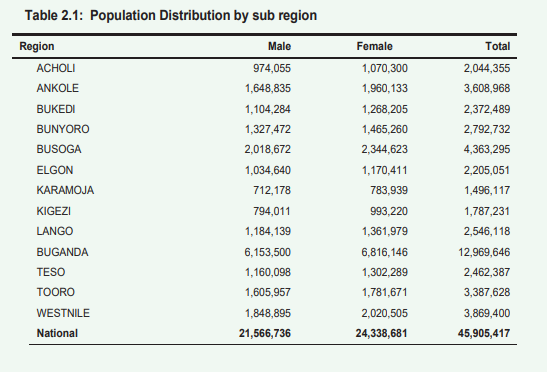
The census data shows the population distribution varies across regions, with Buganda having the largest population at 13 million people, followed by Busoga at 4.4 million, while Karamoja remains the least populated region with 1.4 million.
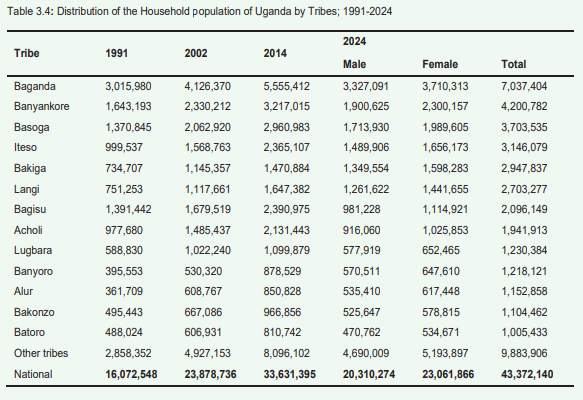
While distribution of the Household population of Uganda by Tribes; 1991-2024 indicates that Baganda lead at 7,037,404 followed by Banyankore with 4,200,782. Basoga are third with 3,703,535 according to the 2024 Census results.
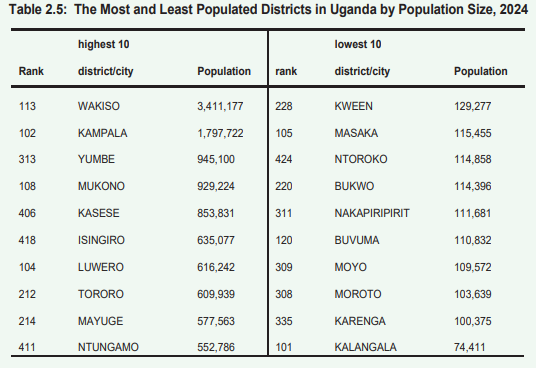
District-wise, Wakiso tops the list with over 3.4 million residents, while Kalangala has the smallest population, at just over 70,000.
According to UBOS, population distribution refers to the way people are spread over a specific geographical area. It provides information on the number of individuals living in different parts of the area and this helps to understand the patterns of settlement. The distribution can be clumped, uniform, or random. A clumped distribution indicates a high population density in an area.
The report also provided insights into religious affiliations, noting that Christians dominate, with Catholics making up 37.4%, followed by Anglicans at 30%. Pentecostalism has seen a notable rise, increasing from 11.1% in 2014 to 14.7% in 2024.
On socio-economic indicators, Uganda’s fertility rate stands at 4.5%, with a life expectancy of 68.5 years. Despite the literacy rate reaching 74%, the unemployment rate is 12.6%, reflecting the ongoing need for job creation. Dr. Mukiza thanked President Museveni for his support of the census efforts, emphasizing the importance of using data for informed governance decisions.
The findings will be used to guide national planning, particularly in areas such as education, healthcare, and urban development.