The Uganda Peoples’ Defence Forces (UPDF) has acquired state-of-the-art GeneXpert diagnostic machines to boost tuberculosis (TB) detection and treatment across its medical facilities.
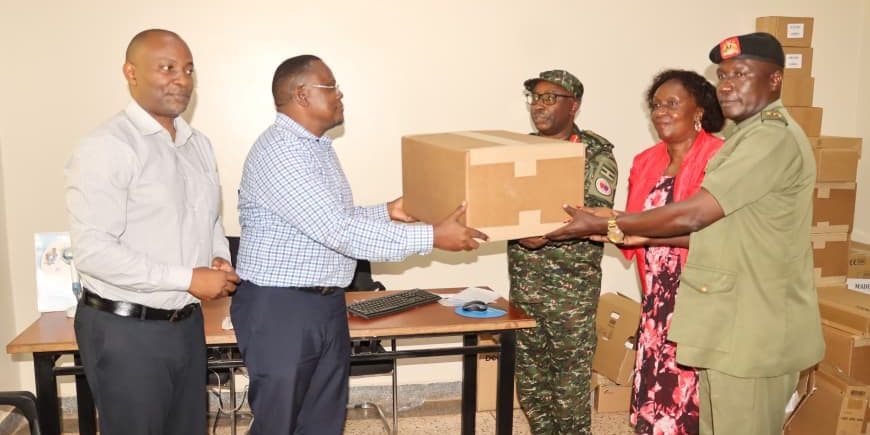
The military took ownership of the advanced laboratory equipment during a handover ceremony at the Senior Officers Diagnostic Centre in Mbuya.
Senior military health officials, Ministry of Health representatives, and development partners attended the official hand-over event.
The Head of Public Health and Director of the HIV/AIDS Programme in the UPDF, Colonel Dr Francis Xavier Bakehena, represented the Joint Staff Health Services at the function.
Colonel Dr Bakehena described the technology as a timely intervention that will significantly improve TB management within the armed forces.
He noted that Uganda still ranks among the global high-burden nations for both TB and HIV.
“Uganda is one of the high-burden countries for TB and HIV. We are only diagnosing approximately 60 per cent of the cases clinically, while the remaining 40 per cent remain undetected in the community. This remains a challenge both for the civilian population and the UPDF,” Colonel Dr Bakehena said.

The military health strategy prioritizes early case identification, immediate treatment, and the rollout of Tuberculosis Preventive Therapy (TPT).
“Our first objective is to find and treat every TB patient. Secondly, we want to ensure that all eligible individuals receive preventive therapy. However, locating those affected remains one of the biggest challenges,” the Colonel added.
Colonel Dr Bakehena assured stakeholders that the army will safeguard and properly maintain the newly acquired equipment.
The military is installing electronic medical systems across its health centers to securely share real-time diagnostic data.
The procurement of the GeneXpert machines follows the strict medical equipment standards set by the Ministry of Health.
Dr Denis Bwayo, the Programme Director of University Research Co. LLC (URC), stated that the United States Government funded the procurement through the President’s Emergency Plan for AIDS Relief (PEPFAR).
“We wanted to ensure that the equipment we procured was exactly what is recommended by the Ministry of Health. This means the machines can be serviced through existing national mechanisms and integrated seamlessly into Uganda’s health system,” Dr Bwayo said.
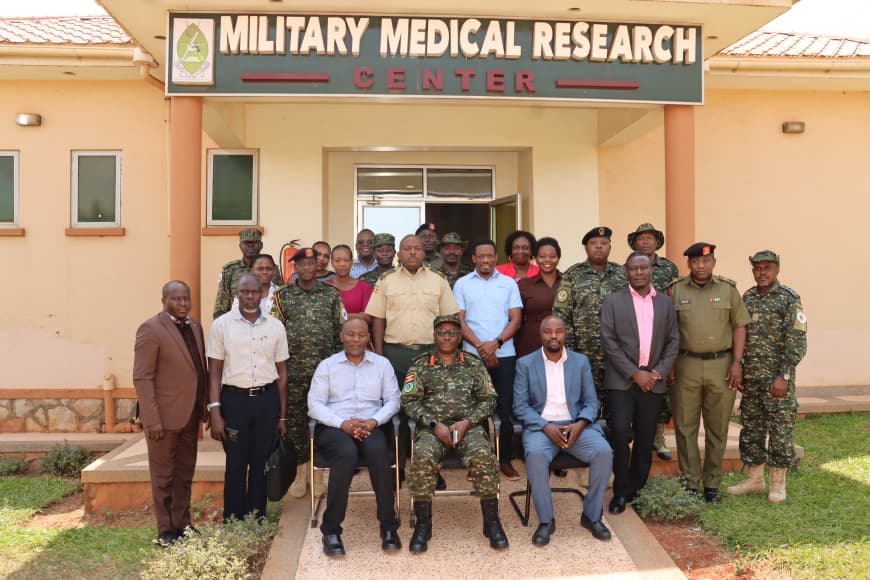
Representing the Ministry of Health, Dr Emmanuel Twongere hailed the donation as a major milestone toward eliminating TB and leprosy in Uganda.
He noted that Uganda has successfully reduced national TB-HIV co-infection rates down to approximately 33 percent.
“The advantage with TB is that it is curable. However, every patient must first be confirmed to have TB. Many other conditions can mimic TB, including pneumonia, malnutrition, and other respiratory illnesses. The only way to confirm TB is through laboratory testing,” Dr Twongere explained.
Uganda currently operates 397 GeneXpert machines nationwide but still faces a deficit of nearly 200 units.
“As a country, we currently have about 397 GeneXpert machines, but we still face a gap of nearly 200 machines. Every additional machine helps us move closer to universal access to TB diagnosis,” Dr Twongere added.
The high-level handover ceremony concluded with a joint inspection of the newly delivered diagnostic units by both military and civilian medical experts.