

The Uganda National Bureau of Standards (UNBS) has issued a stern warning to supermarkets across the country to stock only certified locally manufactured products or face legal consequences.
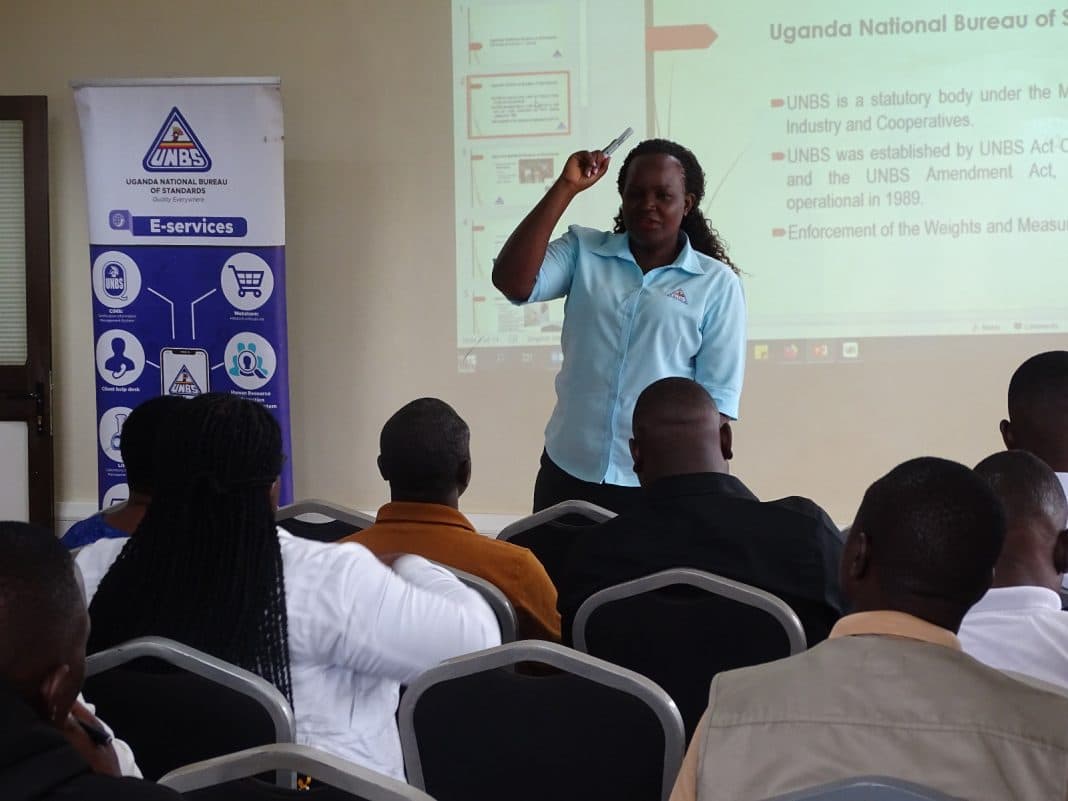
During a stakeholder meeting with supermarket owners at the UNBS head office in Bweyogerere, UNBS Head of Public Relations and Marketing, Sylvia Kirabo, stressed the agency’s commitment to consumer safety and the elimination of substandard goods from the market.
“During the routine market surveillance inspections around the country, we found that some new players in the supermarket sector are stocking products that are not certified. Sometimes when they have stock that has expired, they take advantage and sell it to unsuspecting consumers. But this is not acceptable,” said Kirabo.

She explained that the engagement was meant to re-educate supermarket owners on their roles and responsibilities. “In the next round of market surveillance operations, all supermarkets found doing this shall be taken on as the law requires,” she added.
Kirabo emphasized that UNBS is enforcing its mandate to promote public health, safety, and environmental protection through strict standards.
The meeting also addressed the issue of imported goods entering the market without undergoing Pre-Export Verification of Conformity (PVoC) or without Certificates of Conformity (CoC). Ronald Ahimbisibwe, Acting Manager of UNBS Imports Inspection, noted that this oversight results in inspection delays and extra costs.
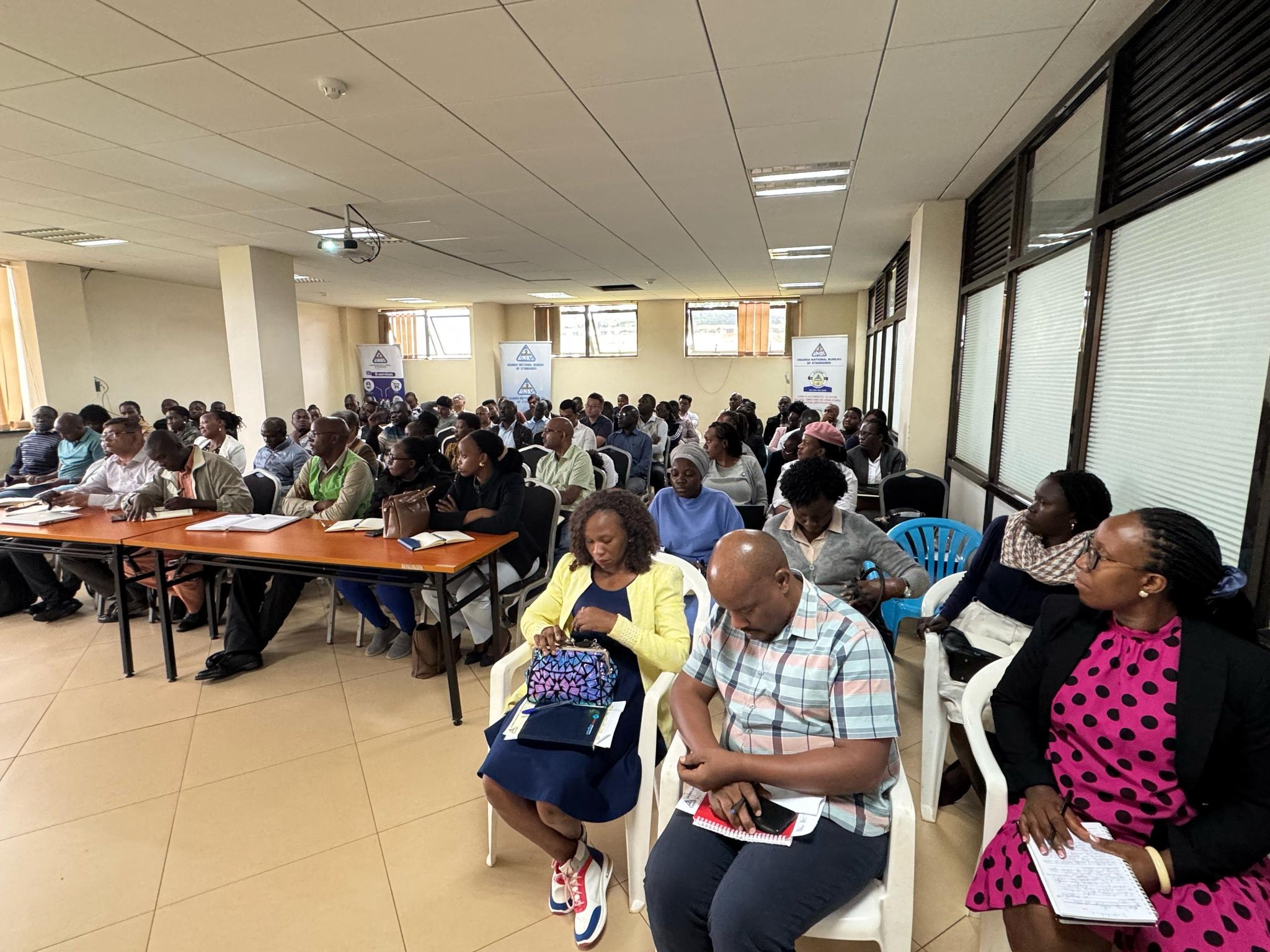
“We needed to inform our stakeholders that it is their responsibility to look for the PVoC service providers across the nations, to ensure that they do inspection, testing and get a CoC for their products before the goods are brought here,” said Ahimbisibwe.
He further clarified that the PVoC program is designed to ensure that only safe and quality products are imported into Uganda.
PVoC service providers present at the meeting revealed that some importers ship goods before completion of required laboratory tests, citing impatience and lack of awareness as contributing factors.

Supermarket owners welcomed the sensitisation initiative and called on UNBS to extend awareness campaigns to other players in the supply chain, including manufacturers, transporters, suppliers, distributors, and warehouse operators.
UNBS committed to regular sensitisation efforts aimed at ensuring that every business stakeholder understands and adheres to product certification and importation guidelines.