
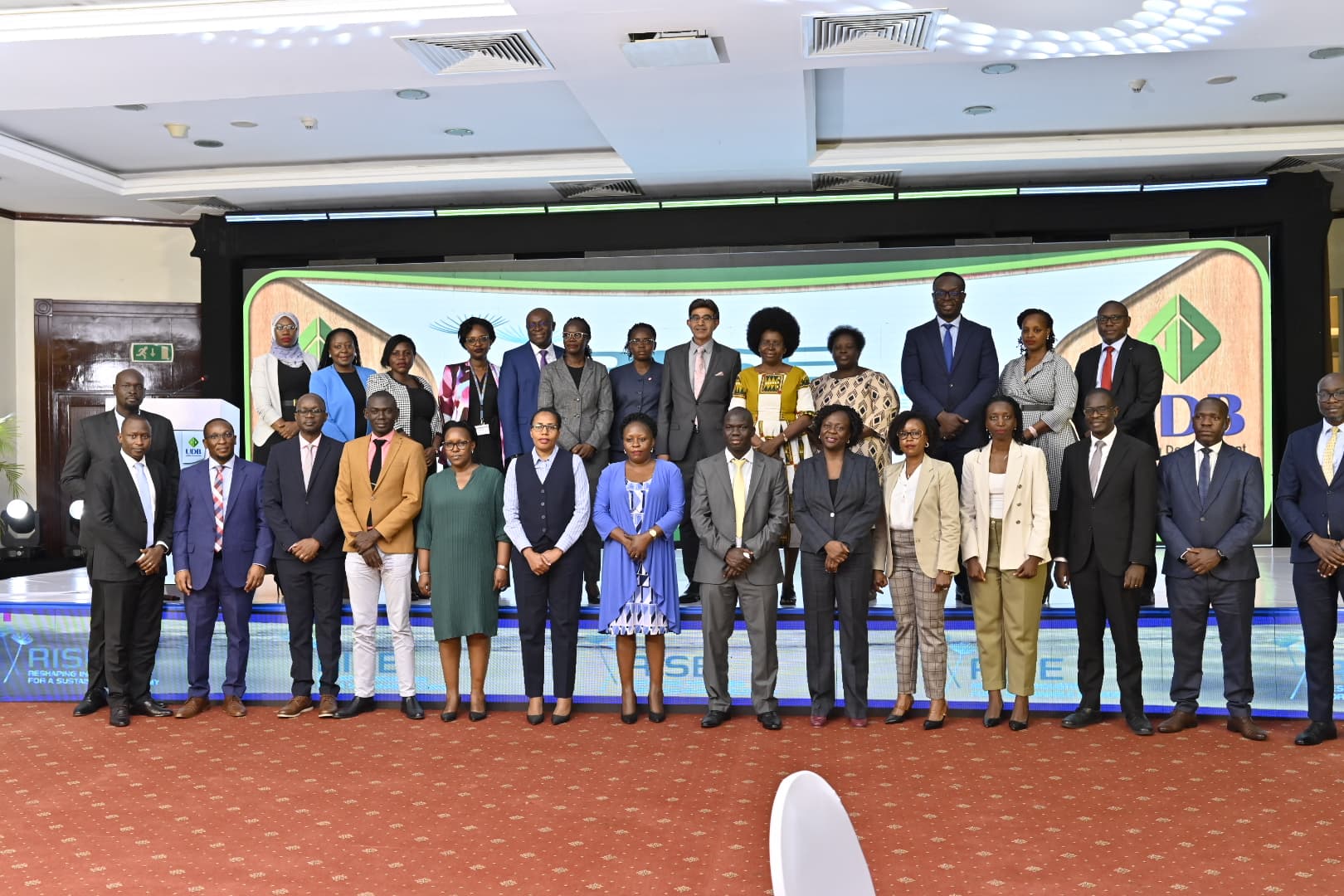
Uganda Development Bank (UDB) has unveiled its Reshaping Industries for a Sustainable Economy (RISE) Program, a bold initiative designed to transform the Bank's approach to deploying resources within the economy.
The RISE Program offers a groundbreaking solution to address modern-day challenges, diversify the economy, and establish high-tech, high-value-added, and green businesses and projects. It aims to build a sustainable local industrial base by harnessing the power of crowds, fostering “Change the World” businesses and projects.
The RISE platform enables financial institutions to create demand for sustainable finance by turning key societal, economic, and environmental challenges into transformational business opportunities.
During the launch on Thursday at Kampala Serena Hotel, UDB’s Managing Director, Patricia Ojangole, highlighted that the platform would allow the Bank to deploy loans, advances, and investments by leveraging science and technology. This initiative seeks to revolutionize business models, fuel innovation, and stimulate entrepreneurship that accelerates socio-economic transformation in an environmentally and climate-friendly manner.
“At a time when the focus is not only on development but sustainable development, it’s crucial that the financial sector plays a catalytic role towards making this future possible,” Ojangole remarked. “Creating a sustainable future requires collective action, and financing is a key lever in driving these outcomes.”
The RISE program’s goals align with Uganda’s Fourth National Development Plan (NDP IV), which emphasizes sustainable industrialization for inclusive growth. As part of this strategy, the government aims to grow Uganda’s economy from USD 50 billion to USD 500 billion by 2040, focusing on agro-industrialization, science, technology, and innovation.
RISE also supports the UN Sustainable Development Goals (SDGs), advocating for inclusive and sustainable industrialization. The SDGs encourage developing countries to strengthen their technological capacity and move towards more sustainable consumption and production patterns, while increasing renewable energy contributions globally.
Arshad Rab, CEO and Chairman of the International Council of Sustainability Standards for Value-Driven Financial Institutions, stated that while sustainable development is widely supported, countries need to take deliberate steps to make it a reality. He emphasized the private sector’s role in transitioning from exploiting nature to restoring it, adding that the RISE platform will unite various sectors to drive investments and lending practices that serve both people and the planet.
The RISE program will create an ecosystem that brings together agritech companies, scientists, engineers, tech startups, investors, and policymakers to drive environmentally friendly solutions. This new initiative is seen as a turning point in addressing the challenges of the 21st century by leveraging emerging technologies and innovative ideas.
In the agricultural sector, which employs around 72% of Uganda’s population and contributes about 24.1% to the GDP in 2024, RISE will help shift from unsustainable agricultural practices to a more sustainable food industry. Rab outlined that this transition will modernize the agrifood industry, making it more efficient, health-conscious, and environmentally friendly.
As a Sustainability Standards and Certification (SSCI) certified financial institution, UDB has made sustainability a key part of its strategy. This approach enables the Bank to support Uganda's development agenda while creating positive impacts on society, the economy, and the environment.