

By Ambassador Henry Mayega
Uganda’s intervention in South Sudan’s latest political fallout between President Salva Kiir and Vice President Riek Machar played a critical role in preventing deeper crisis and regional instability.
Since gaining independence in 2011, South Sudan has struggled with recurring unrest, with major flare-ups in 2013, 2014, and 2018. Uganda’s consistent support, under President Yoweri Museveni’s leadership, has helped to steady the fragile state, despite criticism from some opposition voices.
Historically, Sudan’s division between the wealthy, predominantly Muslim north and the poorer, largely Christian and animist south fueled decades of conflict. Uganda, sharing a long border with Sudan, endured significant refugee inflows during the Anyanya wars of 1955–1972 and 1983–2005, creating persistent security risks.
While South Sudan’s 2011 independence resolved part of the conflict, tribal divisions—mainly between the Dinka (40% of the population) and the Nuer (20%)—continued to destabilize the new nation. Other smaller tribes, including the Zande, Bari, Shilluk, Murle, Anuak, Acholi, Kuku, and Kakwa, have also struggled to find political balance.
President Museveni’s administration has pursued a consistent policy of promoting stability in South Sudan, guided by the ideals of pan-Africanism and regional integration.
Compounding the urgency, Sudan to the north remains embroiled in its own civil war between Generals Abdul Fattah Al Burhan and Mohamed Hamdan Dagalo. There is growing concern that instability in Sudan could spill over into South Sudan, heightening regional insecurity.
Museveni’s decision to intervene helped avert another humanitarian crisis. Uganda already hosts over 1.7 million refugees, making further inflows a serious economic and security concern.
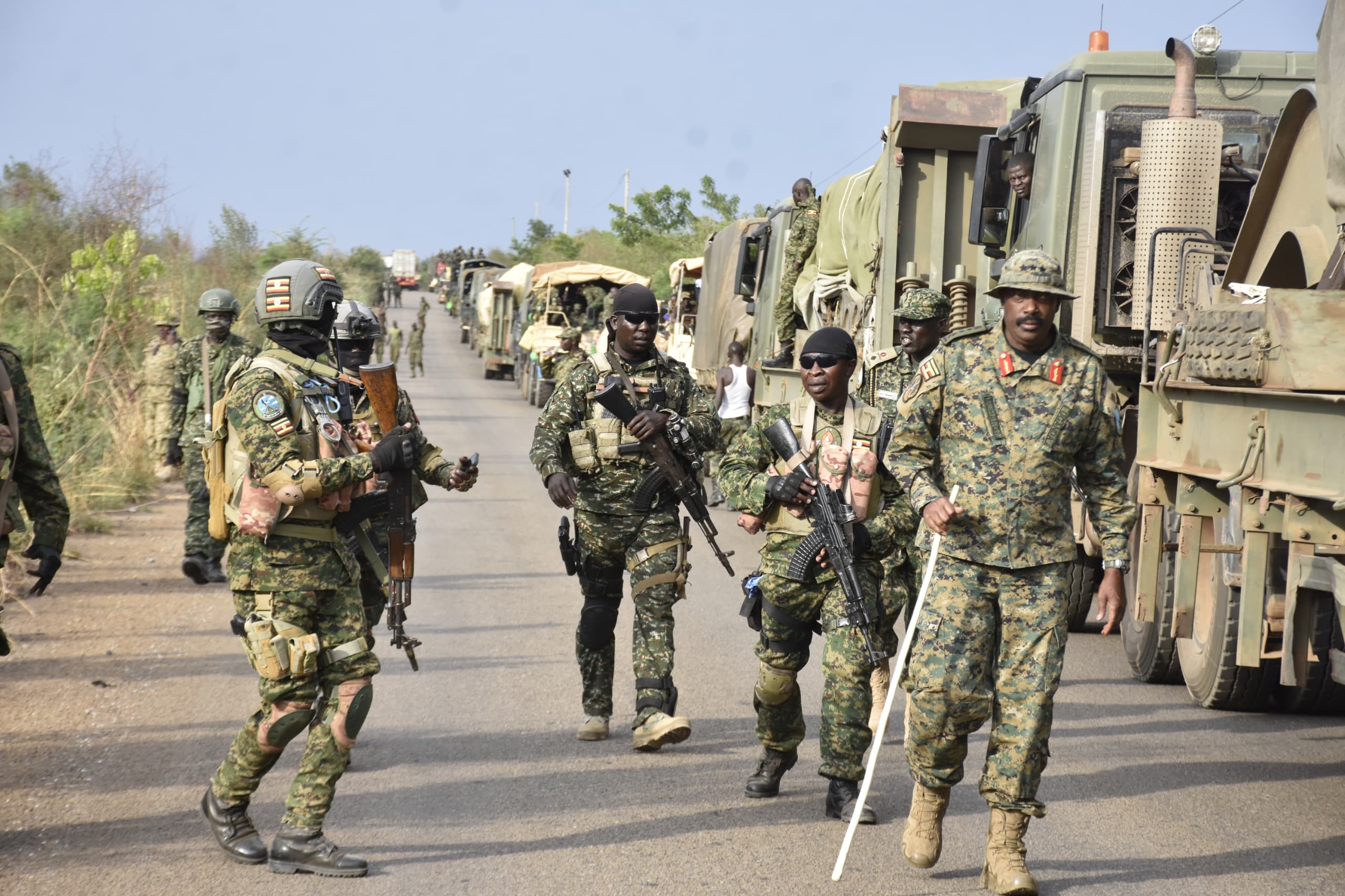
As one of the guarantors of peace in South Sudan, Uganda acted within its obligations. Contrary to claims of invasion, the Uganda People’s Defence Forces (UPDF) were invited to help stabilize the situation. The UPDF’s professionalism, tested in Somalia, the Democratic Republic of Congo (DRC), the Central African Republic (CAR), and now South Sudan, has consistently met international peacekeeping standards.
Uganda’s shared border with South Sudan stretches over 435 kilometers, making the stability of its northern neighbor vital to national security. Ignoring developments in South Sudan would expose Uganda to cross-border insecurity.
Trade between Uganda and South Sudan further underscores the importance of stability. About 150,000 Ugandans conduct business in South Sudan, and Uganda exports goods worth approximately $546.4 million annually to its neighbor. These exports have grown at an average of 12.2% annually over the past five years. Infrastructure projects, including plans for a cross-border railway, further link the two economies.
Beyond economics, fostering regional integration demands strong leadership. President Museveni’s proactive diplomacy not only secures Uganda’s borders but also strengthens regional markets, offering wider opportunities for Ugandan entrepreneurs.
In stabilizing South Sudan, Uganda demonstrates a clear understanding that peace, security, and prosperity are intertwined—and that leadership must focus beyond domestic politics to regional dynamics.