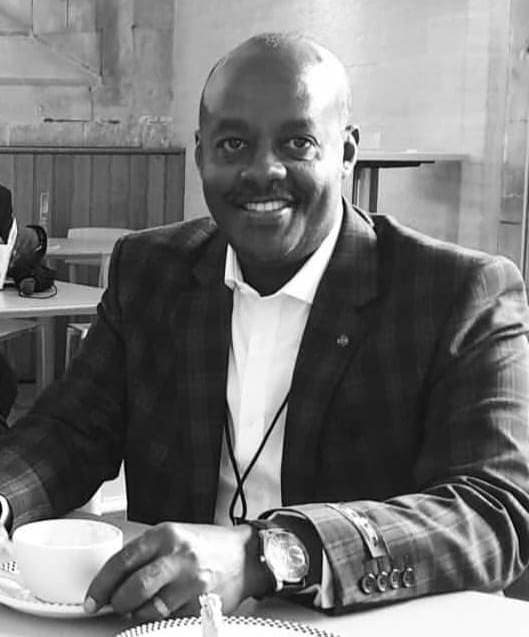
By Dennis Katungi
There is a new unified, coordinated national coalition of four critical pillars concerned with the transformation of the agricultural sector. Operation Wealth Creation, the Uganda National Farmers Federation, Uganda Development Forum, and the PDM Secretariat. It is the first time ever, that key players in the sector have formalized a coordinated operational partnership working with Local governments to overcome known barriers.
Uganda’s agricultural sector employs over 70% of the workforce, yet the majority of farming households remain locked in subsistence production, generating barely enough food to survive, let alone to sell, invest, or grow. Decades of effort have failed to break this cycle at scale.
The structural barriers are well documented: fragmented land holdings, limited access to quality inputs, near absent post-harvest infrastructure, and a financial system that has historically excluded rural small holders from credit and capital. The result is a paradox – a fertile, agriculturally rich nation where rural poverty persists as a stubborn national challenge. These issues were articulated at Uganda Media Centre on 4th May 2026 by representatives from the four pillars of the national development architecture – Operation Wealth Creation [OWC], The Uganda Development Forum [UDF], Uganda National Farmers Federation [UNFFE], and the PDM Secretariat together with Local Government authorities.
They have just formalized a coordinated operational partnership to address agricultural transformation not through isolated interventions, but through an integrated, district-level implementation framework. This represents a fundamental restructuring of how government wealth creation programs are designed, communicated, demonstrated, and embedded at the grassroots.
It is on record that the President has personally championed a number of initiatives from Bona bagagawale to the recent PDM model. How far these have achieved the intended goals is debatable. But clearly, there has been limited success. What is now being proposed could well be the ice-breaker. Each of these partners brings a distinct and non duplicating capability. OWC provides on-the ground mobilization reach across every district; UNFFE mobilizes and trains farmers across the country; UDF contributes strategic stakeholder facilitation and development alignment while the PDM Secretariat ensures capital deployment, matched by enterprise readiness. Local government provides the constitutional authority and community trust to make famer engagement credible, sustained, and accountable.
On Monday 2nd May, representatives from these agencies addressed the Media at Uganda Media Centre and reiterated their commitment to work together in this endevour. This is a structural shift. It represents a new model of coordinated program delivery that addresses the systemic gaps namely; farmer education, enterprise selection, and incubation. These, as already noted above have historically limited the impact of rural programs in Uganda. For the first time, CAO’s and Town Clerks will be held accountable not just for program administration, but out comes – measured by the number of beneficiaries successfully transitioned into commercial enterprise and the quality of success stories emerging from their jurisdictions.
Joseph Katende who leads Uganda Development forum said that Capital without capacity is not development. He said that disbursing capital to farming households without structured enterprise education, selection, support, and market linkage produces poor developmental outcomes. He added that the integrated model being rolled out through this partnership directly addresses this failure.
When it comes to youth involvement, he said that they are not a target group but the strategy. The coalition’s investment in Presidential skilling Hubs and youth focused agro-enterprise incubation is not a social welfare response to youth unemployment. It is, he said, a deliberate economic strategy to position Uganda’s demographic dividend as the engine of agricultural transformation over the next decade. The team spearheading this new initiative is headed by Edward Katende who heads Uganda Development Forum and includes Brig. Gen G. Muwanguzi, Deputy Coordinator, Operation Wealth Creation as well as Dick Kamuganga, the president of Uganda National Farmers Federation.
The writer is Head of Communications & Media Relations – Uganda Media Centre.
@Dennis-Katungi