
Imagine waking up in the year 1525. No electricity, no internet, no knowledge of germs, gravity, or galaxies. The Earth stands still. The heavens revolve around you. And everything you believe seems obvious, until it is not.
The truth is, most of what we now call “knowledge” was discovered shockingly recently. Just 500 years ago, we had almost no understanding of the universe, biology, or the forces that govern reality. In the blink of an eye, historically speaking, science has rewritten the rules of life, death, and everything in between.
At the time, the line between science and religion was blurry, and the few who dared to question old beliefs risked their lives. Yet it was in this world, full of superstition and dogma, that the seeds of modern science began to grow.
Let us explore how these key breakthroughs did not just give us smartphones and medicine, but actually changed how we see ourselves and our place in the universe.
1. The Day the Heavens Moved - Copernicus and the Solar System
In 1543, a quiet Polish astronomer named Nicolaus Copernicus published a book that would change the world forever. It was called On the Revolutions of the Heavenly Spheres. In it, he proposed something bold and dangerous for his time: that the Earth was not the centre of the universe, but rather one of several planets orbiting the sun.
To us today, this sounds basic. But back then, this idea was radical. Almost everyone believed the Earth stood still, and that the sun, moon, and stars revolved around it in perfect circles. This belief wasn’t just scientific, it was deeply religious. If the Earth was not the centre of the universe, then maybe humanity wasn’t as special as once thought.
Copernicus's theory didn't become widely accepted immediately. It took the courage of later scientists like Galileo Galilei, who was put on trial by the Church for defending the idea, to push the truth forward.
But that first step, of moving the Earth from the centre, was the beginning of modern science. It taught us a lasting lesson: what seems obvious can be completely wrong, and we must be brave enough to question it.
2. The Falling Apple and the Invisible Force - Newton and Gravity
About 150 years later, in the late 1600s, another revolutionary mind emerged: Isaac Newton. The story goes that he was sitting under an apple tree when a fruit fell and sparked his curiosity. Why did the apple fall straight down? What force was pulling it?
That question led Newton to develop the laws of motion and gravity. He discovered that the same force that makes an apple fall is what keeps the moon in orbit around Earth, and the planets in orbit around the sun. It was the first time anyone connected the movement of earthly things with the heavens above using the same set of rules.
Newton’s ideas formed the foundation of classical physics. For the first time, people could predict the motion of objects with math. It gave birth to the age of engineering, machines, bridges, and eventually spaceflight.
More than that, it showed that the universe was not ruled by chaos or miracles, but by understandable laws, laws that apply to everyone, everywhere.
3. From Dust to Man - Darwin and Evolution
Fast forward to the 1800s. In 1859, a British naturalist named Charles Darwin published On the Origin of Species. In it, he laid out a theory that would deeply challenge the way people thought about life.
Darwin argued that species evolve over time through a process he called natural selection. Life was not fixed or created in one moment. Instead, living things, including humans, had slowly changed over millions of years, adapting to their environments, and passing on traits that helped them survive.
At a time when most people believed God had created all animals and humans separately, this was shocking. It meant we were not specially made creatures sitting above nature. We were nature. We had evolved from other animals.
Darwin’s work was not just about biology. It reshaped ethics, religion, psychology, and how humans understood their origins. To this day, some people still reject his theory. But modern science, from fossils to genetics, continues to confirm what Darwin proposed: that life is a long, messy, beautiful process of change.
4. When Time Slows Down - Einstein and Relativity
In the early 20th century, a young man working in a Swiss patent office began to see the universe in a completely new way. His name was Albert Einstein.
In 1905, Einstein published a paper introducing his Theory of Special Relativity. He proposed that time and space were not fixed and absolute, but flexible and relative to your speed and position. A few years later, his General Theory of Relativity expanded this further by explaining how gravity is not a force pulling objects, but a bending of space and time itself.
This might sound abstract, but it has real consequences. Time moves slower the faster you travel. GPS satellites in orbit need to adjust for time differences due to relativity in order to give accurate directions on Earth.
Einstein didn’t just change physics. He changed the idea of what reality even is. He taught us that the universe is far stranger than common sense might suggest.
5. Welcome to the Quantum World - Where the Rules Break Down
While Einstein was rewriting space and time, other scientists were diving deep into the world of the very small, atoms and particles. What they found was even more bizarre.
In the 1920s and beyond, scientists like Niels Bohr, Werner Heisenberg, and others developed quantum mechanics, a theory that describes the strange behavior of particles at the smallest scales.
In this world, particles can be in more than one place at once. They can "teleport" across space. They don’t follow clear paths, and sometimes they don’t seem to exist at all until someone observes them. Reality itself seems uncertain, shaped partly by the act of looking.
Quantum physics isn’t just weird, it works. It gave us computers, smartphones, lasers, and MRI machines. And it forced philosophers and scientists to ask deep questions: What is reality? Is it fixed? Or does it depend on how we interact with it?
6. Life Has a Code - The Discovery of DNA
In 1953, two scientists — James Watson and Francis Crick revealed something extraordinary. They had discovered the structure of DNA, the molecule that carries the instructions for building all living things. DNA is like a code written in chemical letters, passed from parents to children, generation after generation. It is the reason you look like your family, and why giraffes have long necks.
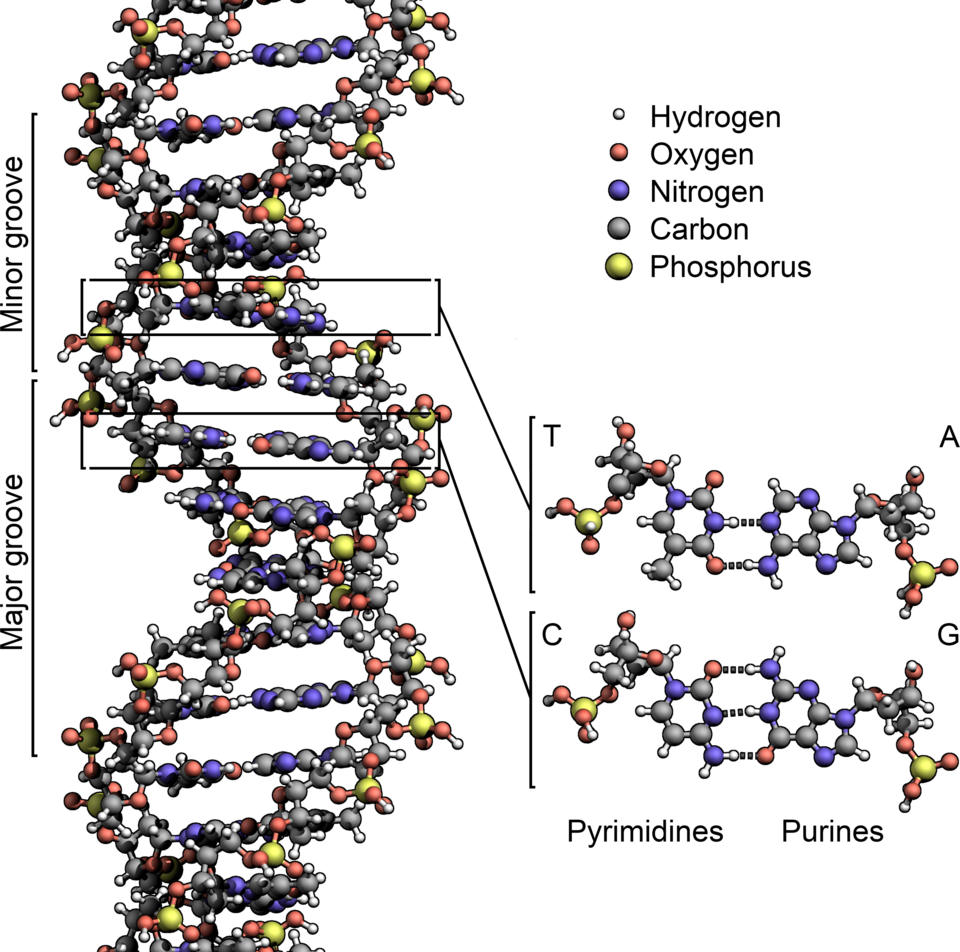
Understanding DNA opened the door to modern genetics. It allowed us to study how traits are inherited, how diseases work, and how we might treat or even prevent them. Today, we can trace ancestry, modify genes, and one day might even cure conditions that were once thought to be lifelong.
It has also found its way into everyday life here in Uganda. The growing use of DNA testing, especially in matters of paternity, has shaken many families and relationships. What was once based purely on trust and tradition can now be confirmed or questioned by science with incredible precision.
DNA showed us that life is not magic. It is information, passed through time.
7. Stephen Hawking and the Questions at the Edge of Time
In the late 20th century, one voice rose from a wheelchair and echoed across the world. That voice belonged to Stephen Hawking, a brilliant theoretical physicist who helped us understand the nature of time, black holes, and the origin of the universe.
Despite living with a severe physical disability due to ALS, Hawking reshaped cosmology with his mind. He proposed that black holes are not completely black; they emit radiation, now known as Hawking radiation. He also worked to unify general relativity and quantum mechanics, a challenge that remains central in modern physics.
Hawking’s book A Brief History of Time became one of the most widely read science books in history, making complex ideas accessible to millions of people.
His work was not only about equations. It was about wonder. He reminded us that science is not just for academics in white coats, but for anyone curious enough to look up at the stars and ask where it all began, and where it might end.
Through him, we learned that even the limits of the body cannot stop the freedom of the mind. His legacy continues to inspire a generation of scientists, thinkers, and dreamers around the world.
8. A World of Ones and Zeros - The Rise of the Internet
In the last 50 years, the most dramatic change has come from something many of us use every day without thinking. The internet. Behind it is a powerful idea born in the 1940s, when Claude Shannon developed a way to send messages using simple binary digits, ones and zeros.
This idea laid the foundation for digital technology. From mobile phones to AI, from video calls to global banking, it all runs on the mathematics of information.
Today, we live in a world that is more connected than ever before. But with this also come new challenges; misinformation, screen addiction, and a growing crisis of truth.
Still, it reminds us of something simple: big changes often come from small ideas, quietly born in the minds of curious people.
This also happened to be a world to which I belong. It has shaped my life since I first touched a computer, as a young Computer Science degree student who had grown up in rural Uganda, without electricity or running water. That moment changed everything. It opened a door into a new way of seeing the world; one built on logic, creativity, and the endless power of information.
In Just 500 Years, we have moved from believing the sun moves around us , to standing on the moon. We have gone from thinking disease was a curse, to developing vaccines in a matter of weeks.
We once thought man was a special creation. Now we know he is also a clever animal, made from dust and time.
Yet, surprisingly, many people today still hold onto beliefs from 500 or even 2,000 years ago. Some reject evolution. Others think illness is caused by witchcraft. Many still believe the sun revolves around the Earth. These ideas persist not because they are true, but because they are familiar. And sometimes, comfortable lies last longer than difficult truths.
The scientific consensus today is vast, powerful, and testable. But it remains distant to many. That gap between what we know, and what we live by, is one of the biggest challenges of our time.
Final Thought
If we have learned all this in just 500 years, what more could we discover in the next 100? The next Copernicus, Newton, or Darwin might already be among us; perhaps right here in Uganda, drawing in the sand, reading by candlelight, or tinkering with scrap metal in a small workshop.
The beauty of science is that it doesn’t care where you come from. Only that you are curious, and willing to look closely at the world. But for many of us across Africa, that curiosity has been buried under centuries of inherited fear, suspicion, and superstition.
While the rest of the world has leaped forward through science; building cities, machines, and spacecraft; we often remain stuck in belief systems that were abandoned by others hundreds of years ago. We still treat illness as a curse, confuse scientific questions with blasphemy, and pass down fear instead of curiosity. This rejection of science has not protected us. It has left us watching other civilizations in awe, revering their advancements as if they were magic, while we fall further and further behind, not by decades, but by centuries.
The gap is not just in technology or infrastructure. It is in mindset.
If Africa is to rise, we must stop fearing what we do not understand. We must teach our children to question. To doubt. To experiment. We must replace fear with inquiry. That is how every great transformation begins.
The future of knowledge does not belong to the past. It belongs to those who are still asking questions, and brave enough to follow the answers wherever they lead.
Maybe, that’s you.
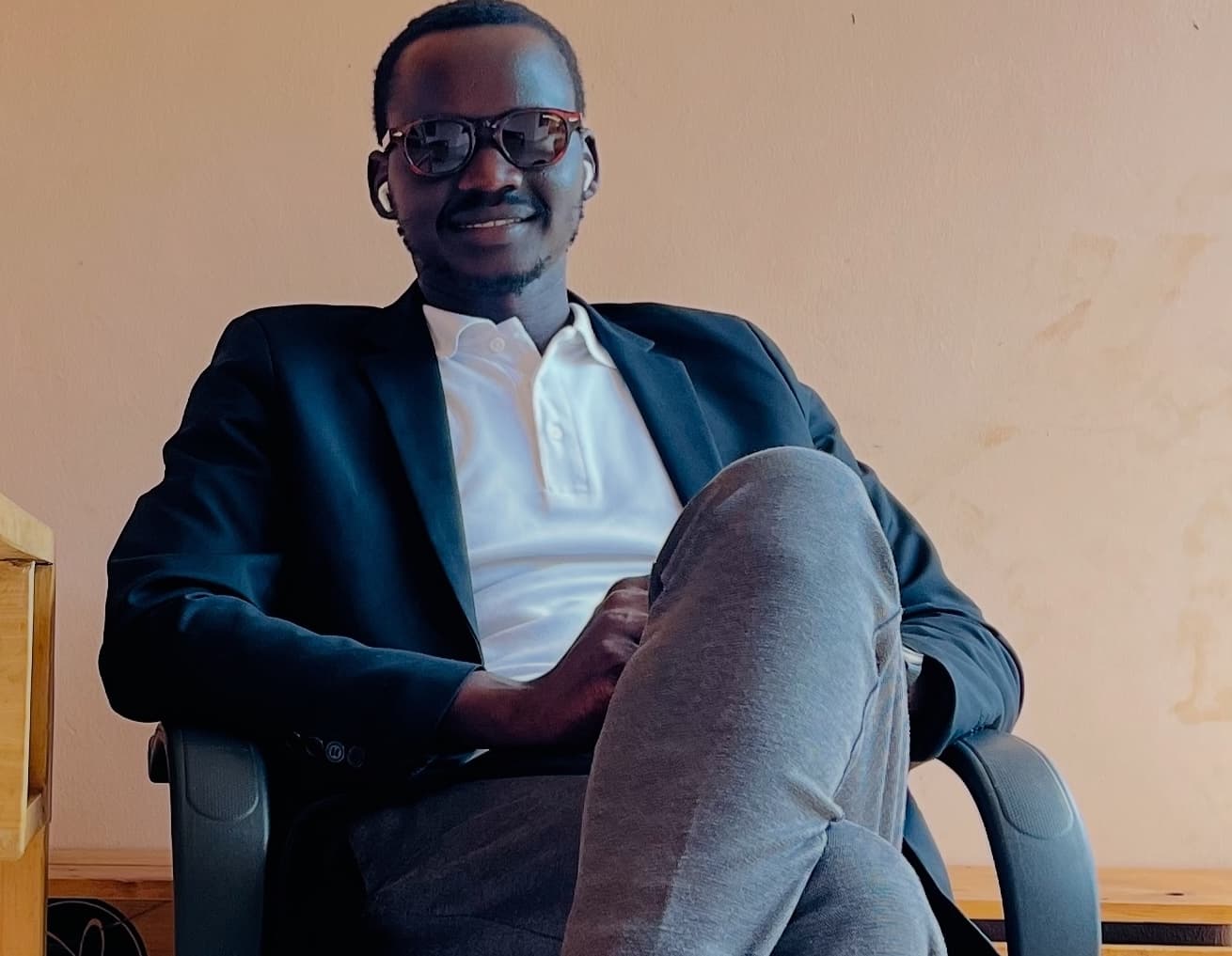
Olara Lamara is a computer scientist and researcher with a deep interest in science, philosophy, and the future of human knowledge. He writes to explore the intersections between technology, thought, and the evolving human story. olara.lamara@gmail.com