The government has urged manufacturers to take a leading role in Uganda’s plan to expand the economy to $500 billion by 2040.
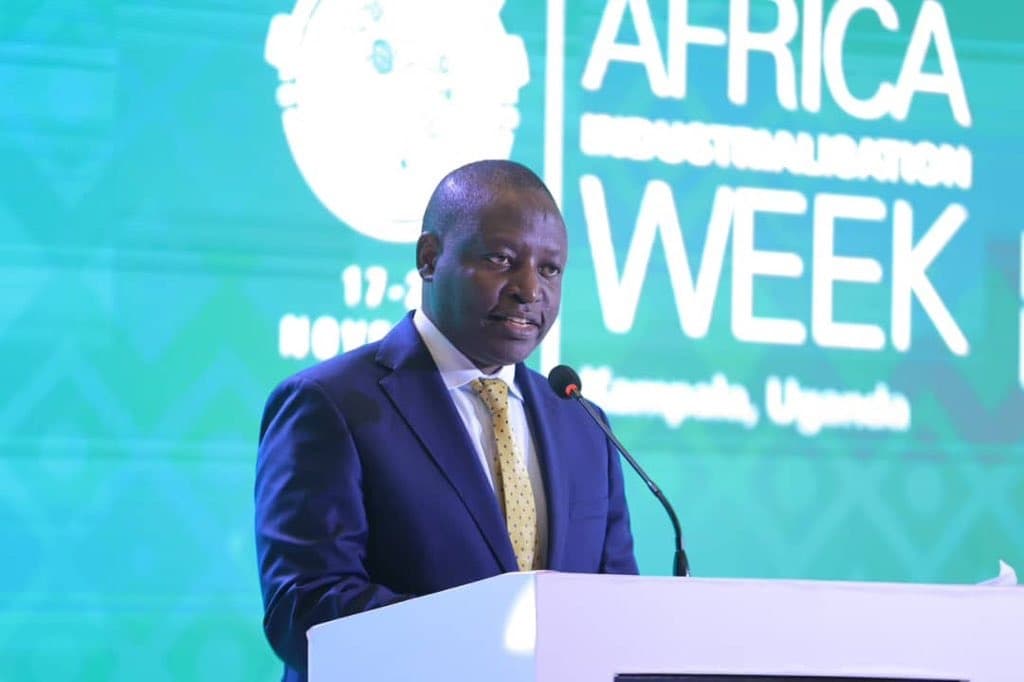
State Minister for Trade David Bahati made the call during the third Annual Pre-Budget Breakfast Dialogue held at Silver Springs Hotel. He said the manufacturing sector will play a central role in the country’s Ten-Fold Growth Strategy.
Bahati said Uganda’s economy currently stands at about $55 billion. He noted that the country must accelerate industrial growth to achieve its long-term economic target.
He explained that manufacturing currently contributes between 13 and 15 per cent of Uganda’s gross domestic product. This is equivalent to about $7 billion to $8 billion.
Under the government’s strategy, the sector is expected to expand significantly. Authorities want manufacturing to contribute between 25 and 30 per cent of the national economy in the coming years.
If achieved, the sector could grow to between $125 billion and $150 billion by 2040. Bahati said this growth will depend on stronger value addition, expansion of export industries and deeper participation in regional markets.
He stressed that Uganda must reduce the export of raw materials. Instead, the country should process resources such as cotton, coffee and minerals into finished products that can compete in regional and international markets.
Bahati also said expanding industrial parks and strengthening trade under the African Continental Free Trade Area will create more opportunities for local manufacturers.
Economists say a stronger manufacturing sector could improve livelihoods across the country. Increased factory production could create millions of jobs in processing, construction and logistics. It could also increase incomes for farmers who supply raw materials.
However, industry players warn that several challenges still affect the sector. They cite high compliance costs, bureaucratic procedures, smuggling of counterfeit goods and weak infrastructure in some areas.