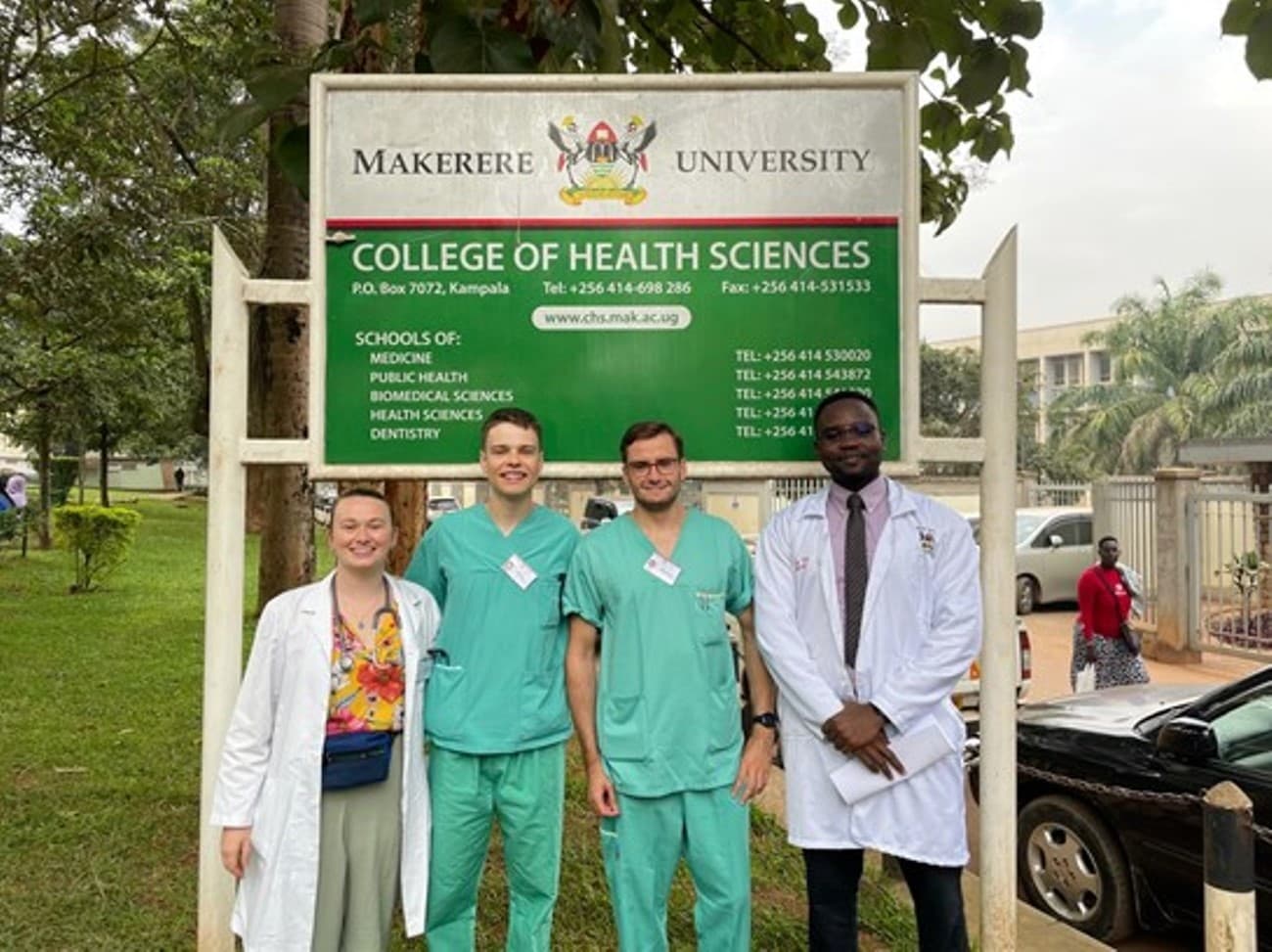
Makerere University College of Health Sciences has stepped up its international engagements by expanding student and staff exchanges and deepening partnerships with universities abroad.
The College has signed new cooperation agreements with several institutions, including the University of the Western Cape in South Africa, the Medical University of Graz in Austria, and Universitas Syiah Kuala in Indonesia. The partnerships focus on joint research and training of medical and dental students.
Between July and September 2025, the College hosted 86 visiting students from abroad. Europe produced the highest number of exchange students, with Norway, Italy, and the Netherlands sending the majority through partner universities. The visitors mainly trained in Paediatrics at Mulago National Referral and Teaching Hospital, and in Emergency Medicine and Obstetrics and Gynaecology at Kawempe National Referral Hospital.
The Medical University of Graz also sent students to Makerere while hosting Makerere students, despite the absence of Erasmus Mundus Plus funding. College officials said this signalled a strong two-way commitment.
Outbound student mobility also grew. Makerere students trained in the United Kingdom, the United States, and Austria. Two students completed haematology and oncology rotations at Addenbrooke’s Hospital, Cambridge, while others trained in plastic and reconstructive surgery at the University of Minnesota Medical Center–Fairview. More students trained in highly specialised areas such as paediatric surgery, orthopaedics, neurosurgery, and cardiac surgery at the Medical University of Graz.
Staff exchanges were also recorded. Makerere lecturers and graduate students attended the Annual Global Health Conference hosted by NUVANCE Health. They made presentations and joined panel discussions on topics such as decolonisation in global health, adolescent health, and mental health. College officials said the event helped staff connect with global funders and partners.
The College says these international programmes improve learning, enrich clinical experience, and help medical trainees gain exposure to advanced health systems. Officials added that global partnerships remain key to improving training and research in Uganda's health sector.