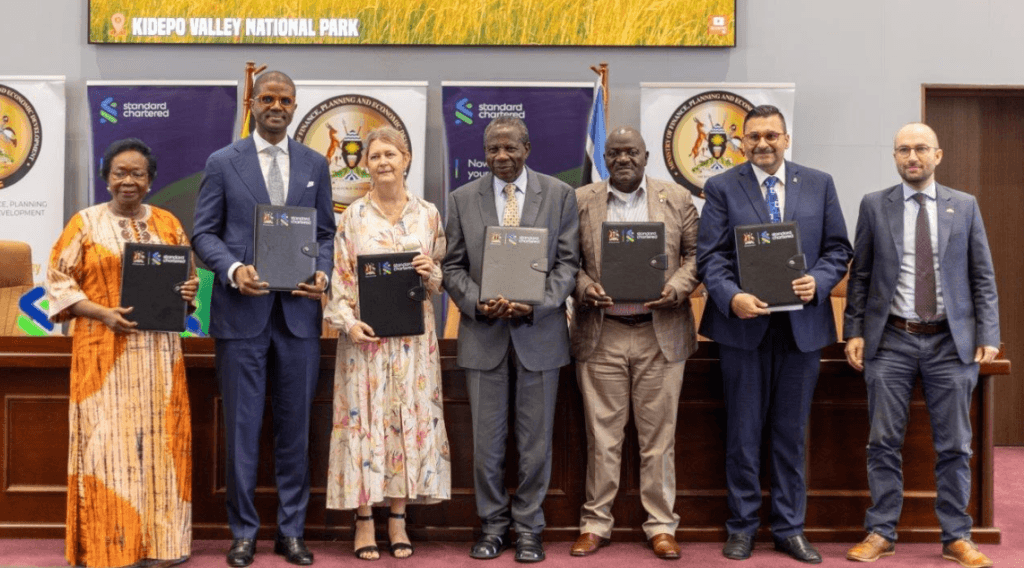
The Government of Uganda has signed financing agreements worth EUR 641.1 million (about UGX 2.747 trillion) with Standard Chartered Bank Uganda to fund major power, water, and road infrastructure projects under the country’s Ten-Fold Growth Strategy.
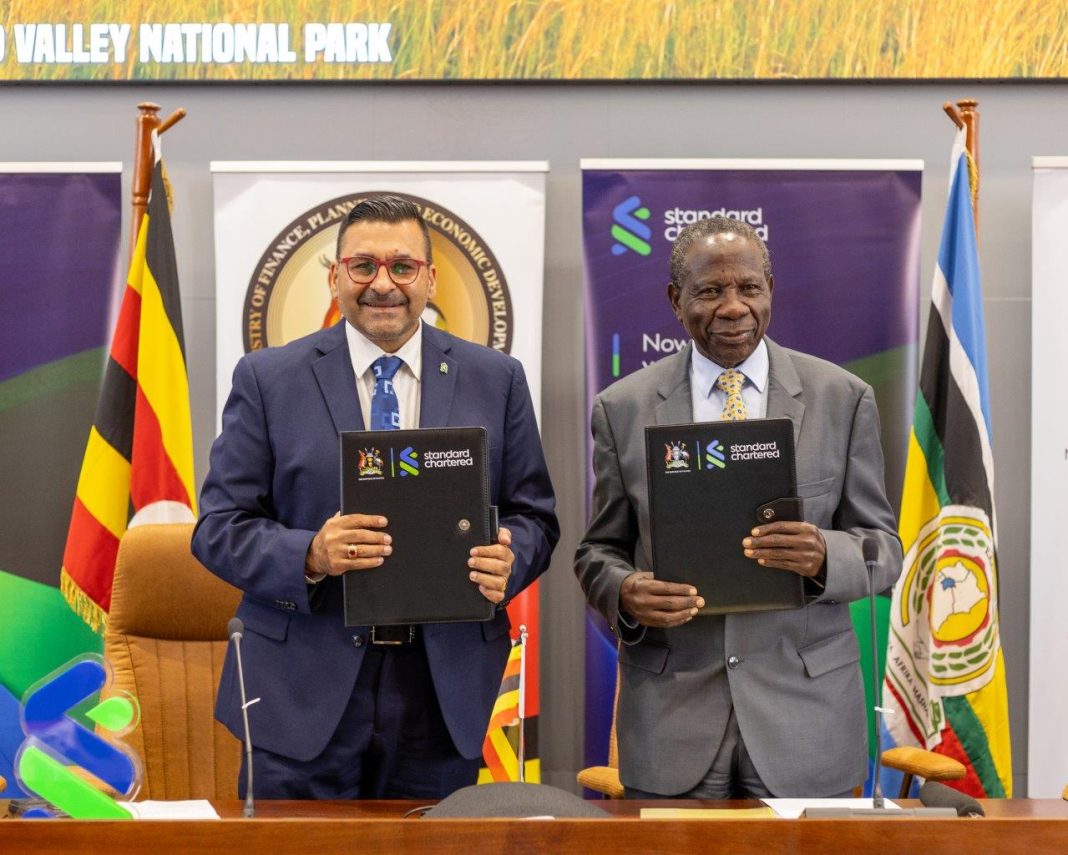
The agreements were signed on behalf of government by the Minister of Finance, Planning and Economic Development, Matia Kasaija, and by Standard Chartered Uganda CEO and Head of Coverage, Mr Sanjay Rughani, at the Ministry of Finance in Kampala.
The projects target energy transmission, water supply and sanitation, and strategic road infrastructure, which government considers critical to expanding the economy to USD 500 billion by 2040.
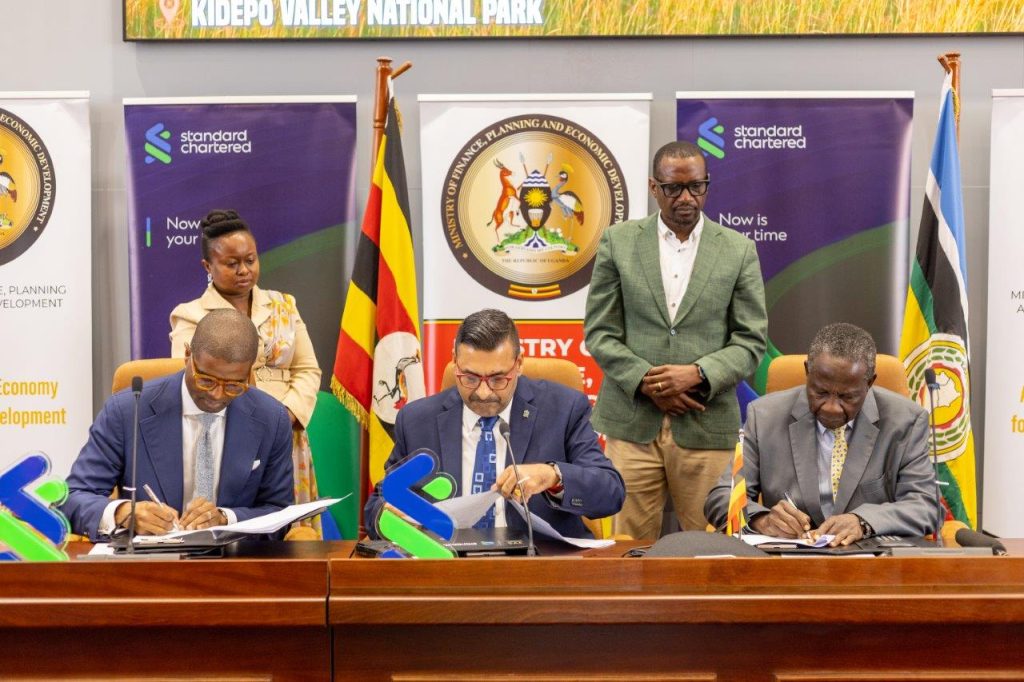
The signing ceremony was witnessed by the Minister of Energy and Mineral Development, Dr Ruth Nankabirwa, the Minister of Water and Environment, Sam Cheptoris, the Permanent Secretary and Secretary to the Treasury, Dr Ramathan Ggoobi, and the Swedish Ambassador to Uganda, Maria Håkansson, among other senior officials.
Under the financing package, Standard Chartered will arrange and co-fund three infrastructure projects.
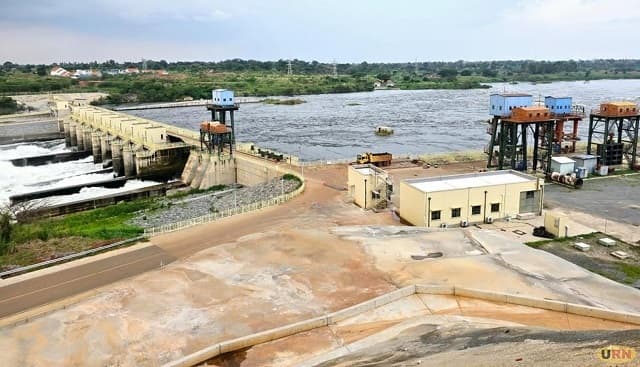
The largest component is the EUR 342.5 million loan for the Tororo–Karuma Transmission Line. The financing will support construction of the 400kV Karuma–Tororo double-circuit power line and the Ntinda substation to enhance power evacuation from the Karuma Hydropower Plant.
The project is expected to improve electricity reliability for industries and urban centres and strengthen Uganda’s position as a regional energy hub. The financing is supported by the Swedish Export Credit Agency (EKN) and the Swedish Export Credit Corporation (SEK), marking EKN’s first transaction in Uganda.
Standard Chartered will also provide a EUR 182.8 million loan to finance Phase II of the Strategic Towns Water Supply and Sanitation Project. The project will cover Nakasongola District and clusters in Kamuli, Mayuge, Bugweri, and Alebtong districts.
The water project aims to serve about 740,000 people by 2030 through construction of water treatment plants and sanitation facilities, with financing support from the Chinese Export Credit Agency, Sinosure.
A further EUR 115.8 million facility will finance construction of critical oil roads in the Albertine region, including the Karugutu–Ntoroko road, the Rwebisengo link road, and Ntoroko town roads. The roads are expected to improve access to oil development areas and enhance cross-border trade with the Democratic Republic of Congo. The facility is supported by the Islamic Corporation for the Insurance of Investment and Export Credit.
Matia Kasaija said the projects would strengthen Uganda’s development path by improving power transmission, access to clean water, and transport infrastructure.
“These projects will go a long way in supporting Uganda’s development trajectory by supporting evacuation of power from Karuma Hydropower Plant to identified load centres like Tororo industrial park and facilitate regional power trade,” Kasaija said.
He added that the water project would improve public health, while the road works would support oil sector development and tourism around Lake Albert.
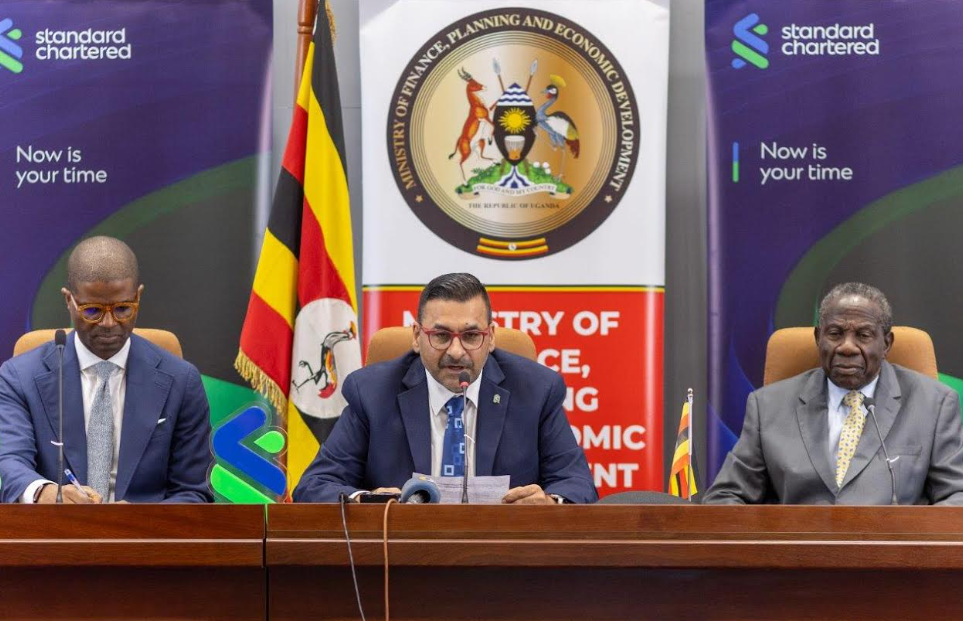
Standard Chartered Africa CEO and Head of Coverage, Mr Dalu Ajene, said the partnership demonstrated how governments and international financial institutions can structure long-term financing for projects with lasting impact.
“We are pleased to once again leverage our on-the-ground presence and trusted partnership with the Government of Uganda to continue to support its ambitions and help drive Uganda’s Tenfold Growth Strategy forward,” Ajene said.
Sanjay Rughani said the bank remains committed to financing infrastructure that supports resilience and inclusive growth.
“As Standard Chartered Bank we understand that water security, roads and efficient power transmission enhance resilience and promote inclusive growth,” Rughani said.
The three projects align with government’s strategy to grow the economy from USD 53 billion to USD 500 billion by 2040 through investment in productive infrastructure.