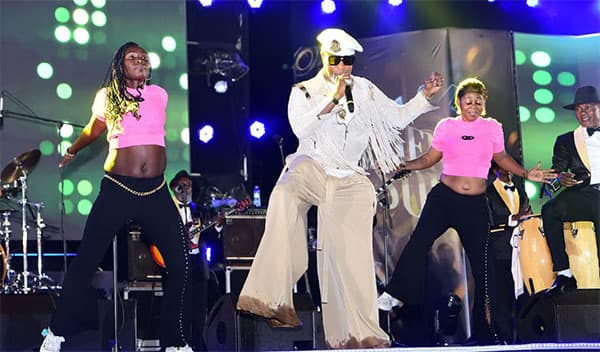
The drizzle fell steadily on the Millennium Grounds in Kampala, but nothing could silence the chorus of voices singing along to Afrigo Band’s timeless classics. Fans wrapped in raincoats and makeshift green polythene shoe covers swayed to the rhythm, proving that neither rain nor mud could dampen the spirit of a golden jubilee.
For half a century, Afrigo Band has carried Uganda’s musical heartbeat, and last Saturday night, they marked 50 years in spectacular fashion. Thousands turned up to celebrate the band’s enduring legacy, cheering on legends who have defined generations of Ugandan sound.
The story of Afrigo stretches back to the mid-1960s, when the late Tony Ssenkebejje’s Cranes Band first entertained Kampala at the White Nile bar in Katwe. After Cranes’ split, young musicians—including Ssenkebejje, Sam Kawuma, Joseph Mungaya, and a budding saxophonist named Moses Matovu—tried to keep the flame alive.
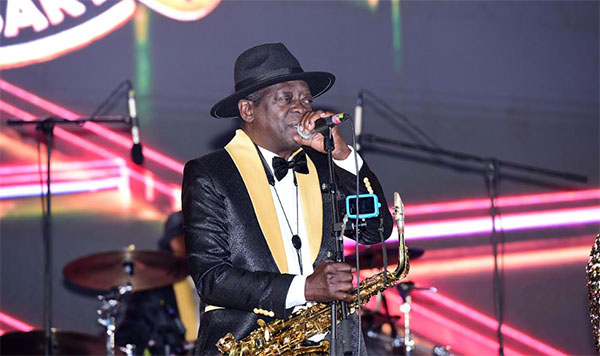
Matovu, now 76, recalls how limited resources forced them to innovate. “We then sought permission from the manager of White Nile bar to allow us use the old saxophone in the store. That is how I started learning how to play a saxophone, with the help of Akiiki Bulegeya, who was part of the Police band then,” he said.
In 1975, with Cranes Band finally closing, Matovu, Charles Ssekyanzi, Jeff Ssewava, Fred Luyombya, Anthony Kyeyune, Paul Serumaga, Paddy Nsubuga, and Geoffrey Kizito formed a new outfit—Afrigo Band. Their name, “Afri-GO,” symbolized Africa moving forward with hope and progress. Unlike other acts, Afrigo emphasized live performance, instrumental mastery, and Afrocentric storytelling.
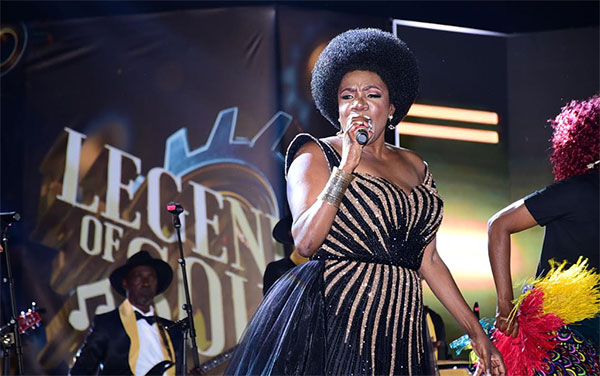
Over the years, the band welcomed talents like Joanita Kawalya, Racheal Magoola, Herman Ssewanyana, Frank Mbalire, Tony Sengo, and many others. Together, they created Ugandan classics such as Oswadde Nyo, Nantongo, Twali Twagalana, Olumbe Lw’Obwavu, and Afrigo Batuuse.
Veteran broadcaster Tony Geoffrey Owana once described their arrival as a game-changer: “Afrigo brought a sophistication we had not seen before. They were tight. Their sound was clean. And they dressed like gentlemen. It was a different standard.”
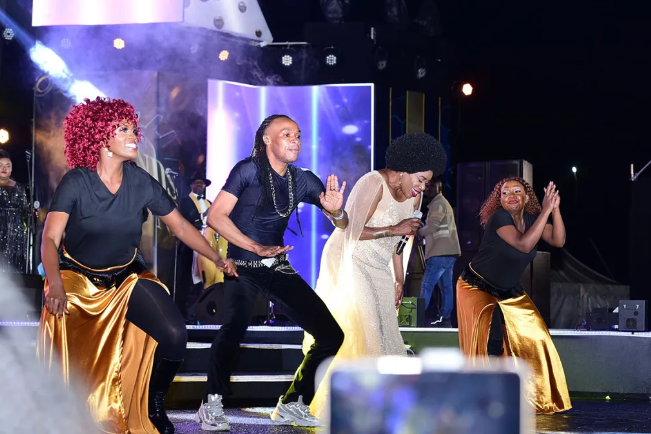
That standard was alive on Saturday night. The celebrations opened with Abeeka Band before Afrigo’s icons—Matovu, Kawalya, Magoola, Mbalire, Ssewanyana, Sarah Namulondo, and others—stepped on stage at 10pm, dressed in elegant black and gold. The crowd erupted as they performed Jim, Emaali, Obangaina, Amazzi G’enyama, Nantongo, and Afrigo Batuuse.
The highlight came when Congolese superstar Koffi Olomide stormed the stage. With his trademark flamboyance, he performed hits like Loi and Papa Ngwasuma before joining Afrigo in a once-in-a-lifetime collaboration. “Their longevity is a remarkable achievement that many aspire to but few attain,” Olomide said, paying tribute to the band’s legacy.
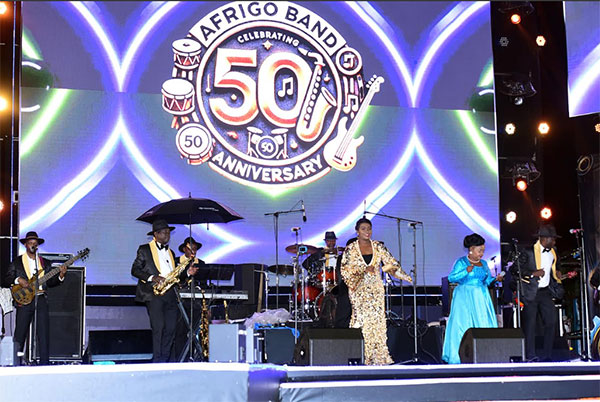
As the night drew to a close, Matovu reminded the crowd that Afrigo’s journey belonged not just to the musicians but also to Uganda’s loyal music lovers. “This milestone is yours as much as it is ours,” he told fans who had braved the storm to be part of history.
The final applause echoed into the cold night, affirming what many already knew: Afrigo Band is more than music. It is memory, resilience, and rhythm etched into the soul of Uganda.