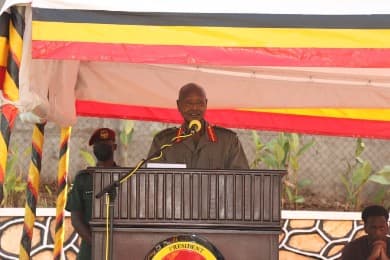
President Yoweri Museveni has said Africa cannot achieve lasting security without first transforming its economy, arguing that development remains the foundation of a strong defence system.
“If you want to defend Africa, the economy must undergo socio-economic transformation, there must be universal education, economic and political integration to defend Africa,” Museveni said on Saturday, July 11, 2026, while presiding over the graduation of Cohort Four (2025/2026) of the National Defence College–Uganda (NDC-U) in Buikwe District.
The ceremony saw 21 officers complete the National Security and Strategic Studies Course.
Museveni congratulated the graduands and urged Ugandans to move away from subsistence farming by embracing commercial agriculture, manufacturing, skilled trades, services and information and communication technology. He argued that expanding participation in the money economy would strengthen both Uganda and the continent.
“All peasants must disappear and we get a new society, then you will defend Africa,” he reiterated.
The President cautioned against what he described as “working for the stomach” through subsistence agriculture. He urged citizens to shift into sectors that generate wealth and create jobs.
Museveni also called for continued investment in modern military capability. He said the country should develop advanced defence systems beyond conventional rifles to secure dominance on land, in the air, at sea and in space, similar to major global military powers such as the United States, China, India and Russia.
He said Uganda should focus on building those defence capabilities after strengthening its economy.
The Minister of State for Defence in charge of General Duties, Grace Akifeza Ngabirano, described the graduation as an important achievement for both Uganda and the wider region, saying it had produced officers prepared for strategic leadership.
She thanked Museveni for what she called his continued commitment to national security and the modernisation of the Uganda Peoples’ Defence Forces.
Akifeza told the graduands that completing the course reflected discipline, resilience and dedication to public service.
“Invest in advanced strategic thinking to strengthen institutional capacity at all levels of command,” she told graduands.
She urged them to apply the knowledge gained with wisdom, integrity and patriotism. She also noted that continuous training remains essential as security threats evolve through terrorism, transnational crime, violent extremism, cybercrime and climate change.
“Training sharpens military competency and strengthens strategic security partnerships,” she said.
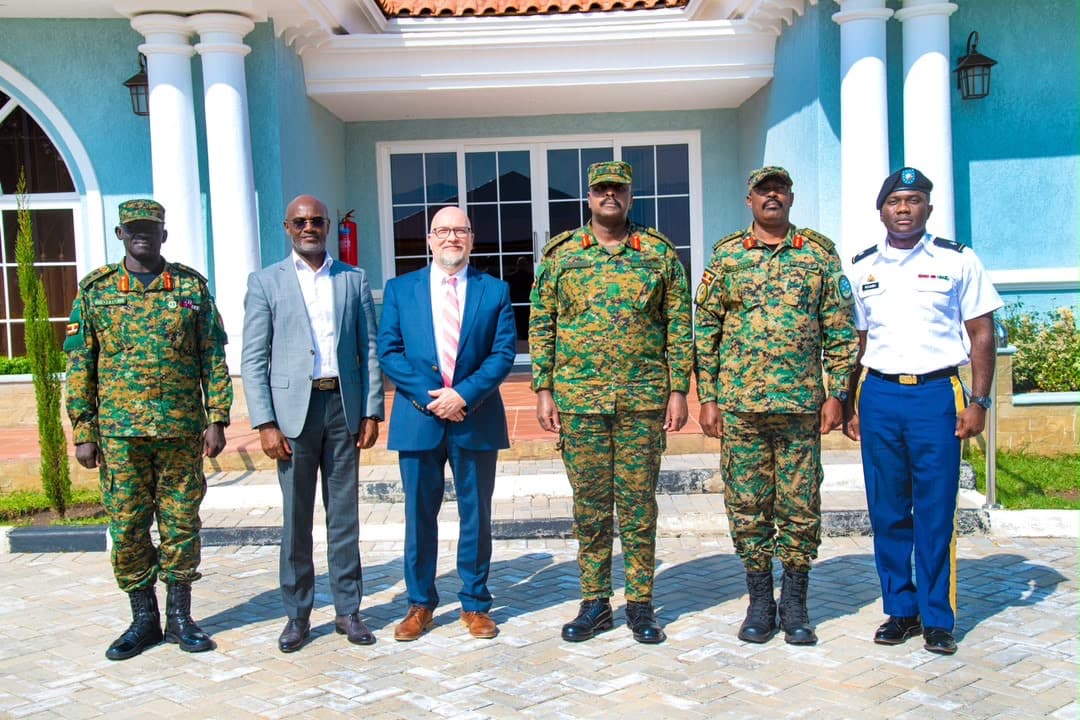
Deputy Chief of Defence Forces Lt Gen Sam Okiding, who represented Chief of Defence Forces Gen Muhoozi Kainerugaba, praised Museveni for supporting the transformation of the UPDF into what he described as a modern and ideologically grounded force.
He welcomed the officers into what he called a community of strategic thinkers and reminded them that greater responsibility now rested on their shoulders.
“We have given you a lot and we are going to demand more from you,” he said.
National Defence College–Uganda Commandant Brig Gen Alex Olupot said the President’s support for professional military education had strengthened the country’s security institutions.
“Your unwavering commitment to building professional, ideologically grounded and strategically minded leaders continues to inspire the transformation of our defence and security institutions,” he noted.
Olupot said today’s security environment requires cooperation across different sectors. He encouraged the graduands to put national interests before personal ones and uphold integrity throughout their careers.
“I urge you to lead and think strategically and maintain integrity as a foundation of leadership,” he said.
He added that graduation marked the beginning, rather than the end, of their responsibility to serve the country.
The course equips participants with skills in strategic decision-making, diplomacy, communication and crisis leadership.
The graduating class comprised three brigadier generals, 18 colonels and one civilian, including three women. Graduands received certificates and were authorised to use the post-nominal “ndc”. Brig Gen Freddy Joseph Onata emerged as the best overall student, followed by Col David Okumu and Mr Peter Temela.