

By Dinah Nandinda M.
In the history of African revolutionary movements, women have always played a crucial role in supporting efforts of liberation, both in active combat and in other strategic efforts. This is not to mention the other important roles played by women in African family setups.
Chairman Mao Zedong famously said, "Women hold up half the sky," and Harriet Beecher Stowe, one of America's best-known writers, who is known for her novel "Uncle Tom's Cabin," which depicted the harsh conditions experienced by enslaved African Americans, put it much better when she said, "women are the real architects of society."
Unfortunately, this vital role of women and their contributions to African liberation has been overlooked in our continent's history, and this is a mistake that the MK movement wants to correct. We acknowledge that women have the potential to transform communities and deserve a chance to serve. One of the most notable examples of women's contributions to African liberation struggles is the antiapartheid movement in South Africa.
Women played a key role in organizing mass protests and boycotts, and many were subjected to imprisonment and torture by the apartheid regime. Women's organizations, such as the Federation of South African Women, played a crucial role in mobilizing women across racial and class lines and were instrumental in building solidarity between different sectors of society.
In other countries, women's contributions to liberation struggles were more focused on armed resistance. In Mozambique, for example, women such as Josina Machel and Graça Machel played an active role in the guerrilla war against Portuguese colonial rule. Similarly, in Angola, women such as Lúcia da Silva and Deolinda Rodrigues were among the first guerrilla fighters to join the MPLA (Popular Movement for the Liberation of Angola) in the 1960s.
Beyond these high-profile examples, women also played a critical role in the day-to-day work of liberation movements. Women served as organizers, educators, and nurses, and were often responsible for the survival of their communities during times of conflict and hardship. Women's organizations, such as the Zimbabwe Women's Bureau and the Women's League of the African National Congress (ANC), provided vital support to the broader liberation movements and helped to ensure that women's voices were heard in the struggle for independence.
Back home in Uganda, our revolutionary leader, H.E. Yoweri Kaguta Museveni, recognized the potential of women from way back in the days of the NRA liberation struggle. Women like Gen Prescovia Nalweyiso, Gatrude Njuba, and the late Mama Chama played a very important role in mobilizing food and recruits for the revolution. Even after taking power, the President did not betray women or deviate from this noble cause; he has gone on to start different programs and policies to empower women.
He has also been a great teacher and advocate against bad cultural practices that deprive women of their rights and role in society building. He has given women freedom and support for both political and economic empowerment. Uganda is currently one of the top countries with the highest number of female entrepreneurs, and many women currently hold different leadership positions in our country.
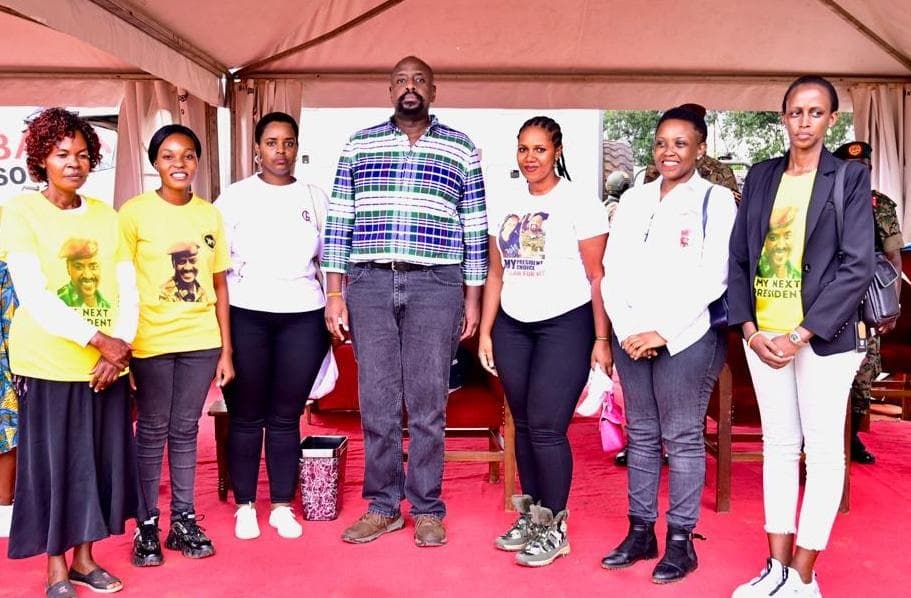
Understanding this history and the great role that women have played in the development of our country, with immense love and support for the chairman and leader of our generation Gen. Muhoozi Kainerugaba, female patriots in Uganda have organized themselves under Agojie (a women's brigade of the MK movement). We understand the precedent set for us by our great revolutionaries across Africa, and we rise up to the task to not only advance women's empowerment but also support the development of our country.
The name Agojie is derived from the African history of great female warriors from the kingdom of Dahomey West Africa, which at its height in the 1840s boasted of a fierce army of over 6000 female warriors who raided villages under the cover of darkness, took captives and slashed off resisters' heads to return to their king as trophies of war. Through these actions, Agojie established Dahomey's preeminence over neighboring kingdoms.
Unlike the West African Agojie that used violence to subdue their enemies, the MK movement's Agojie seeks to use peace, love and unity to establish the preeminence of the MK movement over the world and advance interests of our country building a platform to advocate for the rights of women and girls, teach and promote patriotism and as well establishing an inspiration to the young girls in school that they're valuable and have a role to play in the development of our country.
Gen. Muhoozi's respect, love and support for women has been very evident and on several occasions, he has spoken bravely against all forms of abuse against women. In him we trust a listening leader who will help in empowering women and giving them opportunities to serve our motherland. There's an important role that women have always played in the development of our country and communities throughout history of Africa and we come to take up this role in the building of the MK movement and support our revolutionary leader Gen. Muhoozi Kainerugaba.
"MK IS OUR VOICE"
The writer is the National Treasurer of MK Movement Women Brigade 'Agojie'