
For decades, travelling between Kampala and Jinja has largely meant joining the traffic on one of Uganda's busiest highways, negotiating heavy trucks, passenger taxis, buses and private vehicles competing for space along the 70-kilometre corridor.
For many travellers, the journey is not simply about covering the distance between the country's capital and its eastern commercial hub. It is also about navigating traffic congestion, road safety concerns and the uncertainty of travel time.
That experience could soon have an alternative.
The Uganda Railways Corporation (URC) is preparing to restore passenger train services between Kampala and Jinja, reopening a railway connection that has been without regular passenger operations for more than 30 years.
The service, scheduled to commence on December 5, 2026, will initially operate on weekends, with the corporation hoping to expand the frequency as it acquires additional locomotives and passenger coaches.
Beyond the return of a familiar mode of transport, the development could mark an important shift in how people move between two of Uganda's most economically significant urban centres.
It also raises a bigger question: Could the return of passenger trains help change the country's transport landscape and unlock new economic opportunities along the Kampala–Jinja corridor?
A railway connection returns
The Kampala–Jinja railway route has remained largely dedicated to cargo transportation since regular passenger services were discontinued in the 1990s.
Over the years, road transport increasingly became the dominant means of moving people between the two cities, leaving the railway with a limited role in passenger mobility.
The planned restoration therefore represents more than the introduction of another transport service. It reopens an important connection within Uganda's railway network and extends passenger rail operations beyond the Kampala–Mukono commuter route.
Preparations have already moved beyond announcements.
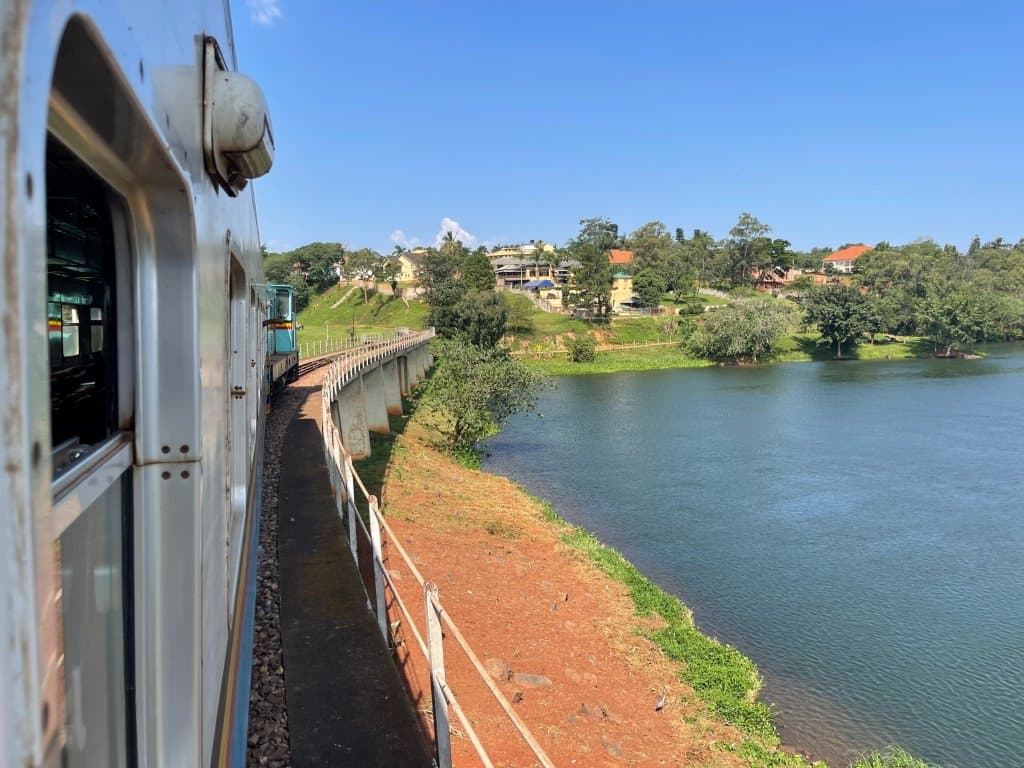
On November 21, URC conducted a test journey between Kampala and Jinja to assess the operational readiness of the railway line, the performance of the locomotives and the experience of passengers ahead of the planned launch.
The exercise involved technical experts and passengers whose feedback is expected to guide improvements before regular operations begin.
URC Chief Operations Officer Michael Lagara said the trial was intended to identify operational gaps and establish areas requiring attention before the service opens to the public.
The corporation's Chief Mechanical Engineer, Eng. Prosper Musiime, also indicated that engineers had identified sections of the railway line requiring repairs to improve the smoothness and efficiency of the journey.
The train is expected to cover the Kampala–Jinja journey in approximately two and a half to three hours, with a few stopovers along the route.
The proposed fare of Shs11,000 could also make the service an attractive alternative for passengers seeking affordable transport.
Under the initial weekend arrangement, the train is expected to depart Kampala at 9:30am on Saturdays and return from Jinja at 2:00pm on Sundays, allowing travellers to spend the weekend in the eastern city.
Could the train ease pressure on the highway?
One of the most immediate potential benefits of restoring passenger rail services is the opportunity to reduce dependence on road transport.
The Kampala–Jinja highway is an important national and regional transport corridor. Besides connecting two major Ugandan cities, it serves commercial traffic moving towards eastern Uganda and neighbouring countries.
Its significance also means that it carries a mixture of heavy commercial vehicles, passenger buses, taxis and private cars.
As economic activity and population movements increase, pressure on the road network remains a concern.
By providing an alternative for some passengers, the railway could help reduce the number of vehicles travelling along the highway, particularly during busy weekends and festive seasons.
Ministry of Works and Transport Senior Communications Officer Emmanuel Ainebyona has welcomed the restoration of the service, describing it as part of a multimodal transport approach in which railway and road transport complement each other.
He said passenger rail transport could help reduce road congestion, improve efficiency and preserve road infrastructure.
However, the extent of this benefit will depend on the number of passengers the train attracts and how frequently the service operates.
With the initial arrangement limited to weekends, its immediate contribution to relieving weekday commuter traffic may be modest.
The bigger opportunity lies in expanding the service into a dependable daily transport option that can serve people travelling for work, education, business and other routine activities.
A new opportunity for Jinja's tourism economy
Perhaps one of the most interesting possibilities presented by the revived railway service is its potential to support domestic tourism.
Jinja has long been recognised as one of Uganda's leading tourism destinations, attracting visitors interested in the Source of the Nile, adventure activities, cultural experiences and the city's historical significance.
Yet the accessibility and cost of travel remain important considerations for people planning domestic holidays.
The return of passenger trains could provide an additional option for families, students, groups of friends and individual travellers seeking weekend experiences outside Kampala.
The railway journey itself could become part of the attraction.
Passengers will have an opportunity to travel across the Nile using the historic railway connection, with views of the Jinja Bridge and the surrounding landscape forming part of the experience.
For tourism operators, this could create opportunities to develop weekend travel packages combining train journeys with accommodation, guided tours, restaurant visits and recreational activities.
Hotels, guesthouses, restaurants, tour operators, craft businesses and transport providers could benefit from increased visitor movement if the service attracts a significant number of travellers.
The planned Saturday departure and Sunday return arrangement is particularly suited to short leisure trips, allowing passengers to spend a night in Jinja before returning to Kampala.
However, converting increased passenger movement into meaningful tourism revenue will require coordination between URC, tourism operators and local businesses.
The train can bring visitors into Jinja, but the quality, affordability and accessibility of the experiences awaiting them will determine how much economic value the city captures.
What it could mean for businesses and communities
The economic implications of the railway revival could extend beyond tourism.
Kampala and Jinja are important centres of commercial activity, with businesses, educational institutions, manufacturing enterprises and service providers operating across the corridor.
A more accessible transport connection could make it easier for people to attend meetings, visit relatives, access services and participate in commercial activities between the two cities.
For small businesses, affordable passenger transport can widen opportunities to reach customers, suppliers and business networks.
Jinja's hospitality and service sectors could also benefit from increased weekend activity, while communities located near railway stations and designated stopping points may experience additional commercial opportunities.
The railway could also support a broader approach to urban and regional development in which passenger movement is organised around complementary transport systems rather than relying almost entirely on roads.
Nevertheless, the benefits will not be automatic. The locations of passenger stops, connections to local transport, accessibility of stations and availability of supporting services will influence how many communities benefit.
The corporation will therefore need to consider the wider passenger experience, not just the movement of trains between the two terminal cities.
The challenge of making the service reliable
While the announcement has generated interest, the real test will begin when the service starts operating.
Restoring a railway route is one achievement. Maintaining a reliable passenger service is another.
URC has already identified several areas requiring attention following the November 21 trial journey.
These include repairing sections of the railway line, improving sanitary facilities at stopovers and ensuring that passengers can access refreshments and other basic amenities inside the coaches.
The corporation has also indicated that it plans to provide emergency response support on the train, working alongside Railway Police to enhance passenger safety.
These preparations are important because passenger confidence will depend on more than the availability of affordable tickets.
Travellers will want to know whether trains depart and arrive on schedule, whether the coaches are comfortable, whether stations are accessible and whether the service can be relied upon consistently.
The current train has seven coaches with a reported seating capacity of 840 passengers. However, URC management says additional coaches and locomotives will be required to accommodate growing demand and increase the frequency of services.
This points to one of the biggest challenges facing the initiative: matching passenger demand with the operational capacity of the railway system.
If the service attracts significant interest but operates only once a week in each direction, some potential passengers may continue relying on road transport because of scheduling limitations.
The proposed expansion to daily operations will therefore be critical to determining the railway's long-term value.
Part of a bigger railway revival
The Kampala–Jinja passenger service is also emerging within a wider government effort to restore railway transport as an important component of Uganda's national infrastructure.
For years, the country's railway network has faced operational and infrastructure challenges, limiting its ability to compete effectively with road transport.
URC is now pursuing the revitalisation of both the Meter Gauge Railway and the planned Standard Gauge Railway network.
The corporation has also been working on improving railway cargo transportation and addressing encroachment on railway reserves.
Restoring passenger services to Jinja could therefore be viewed as part of a broader effort to increase the railway's contribution to national mobility and economic development.
The corporation has indicated ambitions to extend passenger services beyond Jinja, with Tororo and Gulu among the destinations identified for future expansion.
Such developments would gradually strengthen the railway's role in connecting Uganda's major urban and commercial centres.
However, achieving this ambition will require sustained investment in railway infrastructure, rolling stock, maintenance, passenger facilities and professional service delivery.
More than a train journey
For many Ugandans, the return of the Kampala–Jinja passenger train may initially be an opportunity to experience a journey that has been unavailable for decades.
For others, it could provide a cheaper alternative, a weekend escape or a more convenient way to visit relatives and conduct business.
But the significance of the initiative goes beyond individual travel experiences.
It offers Uganda an opportunity to reconsider the role of railway transport in reducing pressure on roads, supporting tourism, improving connectivity and stimulating economic activity.
The Shs11,000 proposed fare, the expected journey time of two and a half to three hours and the initial weekend schedule provide a starting point. What follows will determine whether the service becomes a lasting part of the country's public transport system.
Ultimately, the success of the Kampala–Jinja passenger railway will not be measured simply by the number of trains that leave Kampala or arrive in Jinja.
It will be measured by how many people can depend on it, how much time and money it saves, how safely and comfortably passengers travel, and whether businesses and communities along the route experience tangible benefits.
After more than three decades, the railway is preparing to carry passengers to Jinja again.
The bigger journey, however, is whether Uganda can turn this revival into a dependable transport system capable of supporting the country's growing economic and mobility needs.