
The Government of Uganda has launched a sweeping digital overhaul to consolidate its technology infrastructure, reduce wasteful expenditure, and prepare the public sector for Artificial Intelligence adoption.
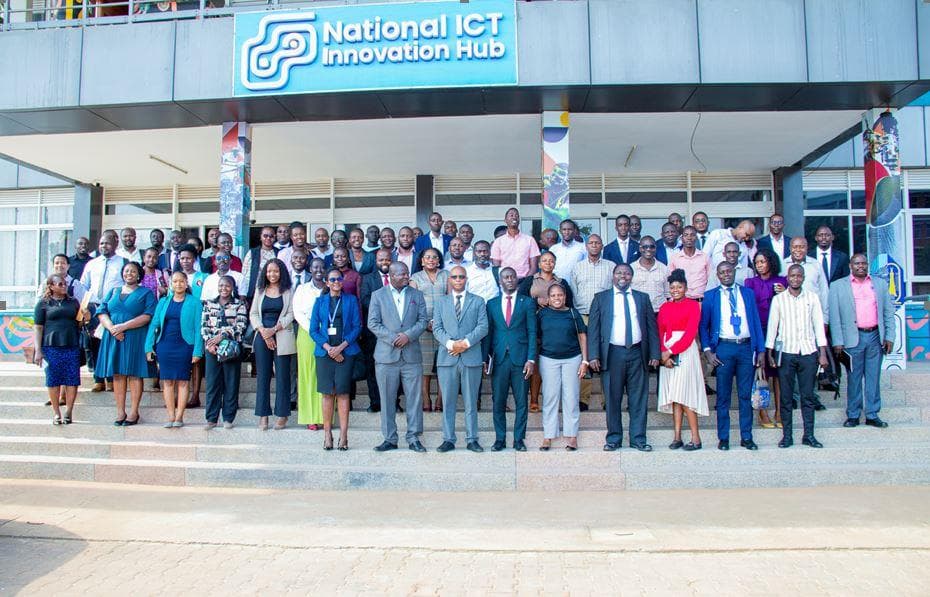
The initiative was unveiled during a quarterly meeting of ICT officers representing various Ministries, Departments, and Agencies (MDAs).
Government audit data presented at the meeting revealed that the state currently operates over 700 independent ICT systems.
Technical evaluations established that these systems serve only about 350 distinct processes, meaning nearly half of the government’s current digital infrastructure consists of redundant systems.
Ambrose Ruyoka, Head of Research at the Ministry of ICT and National Guidance, stressed the critical need for an integrated national digital backbone.
“There must be one national management system that everyone can do and everyone can deploy,” Ambrose Ruyoka stated.
He explained that the Ministry is actively mapping all 700 systems to integrate them, eliminate operational silos, and establish seamless inter-agency communication.
Beyond system consolidation, the Ministry is driving a complete transition from hybrid setups to full digital automation.
Currently, many government transactions require citizens to initiate requests online but finalize them through physical, paper-based steps.
Ruyoka pointed to public service recruitment as an area requiring immediate reform, noting that distance and manual verification create unnecessary burdens for applicants.
“I don’t have to move from Moroto to come to the Public Service Commission sit for an interview being the deputy CAO,” Ambrose Ruyoka noted. “I can remain there, do my interview, and then get selected.”
The system integration serves as a foundational step for Uganda’s National Artificial Intelligence Governance Framework, which targets 14 priority sectors including healthcare, agriculture, mining, banking, and the judiciary.
Ministry leadership urged public sector ICT officers, who recently received salary enhancements under the government's science-category scale, to continuously upgrade their technical skills to manage the new digital infrastructure effectively.