

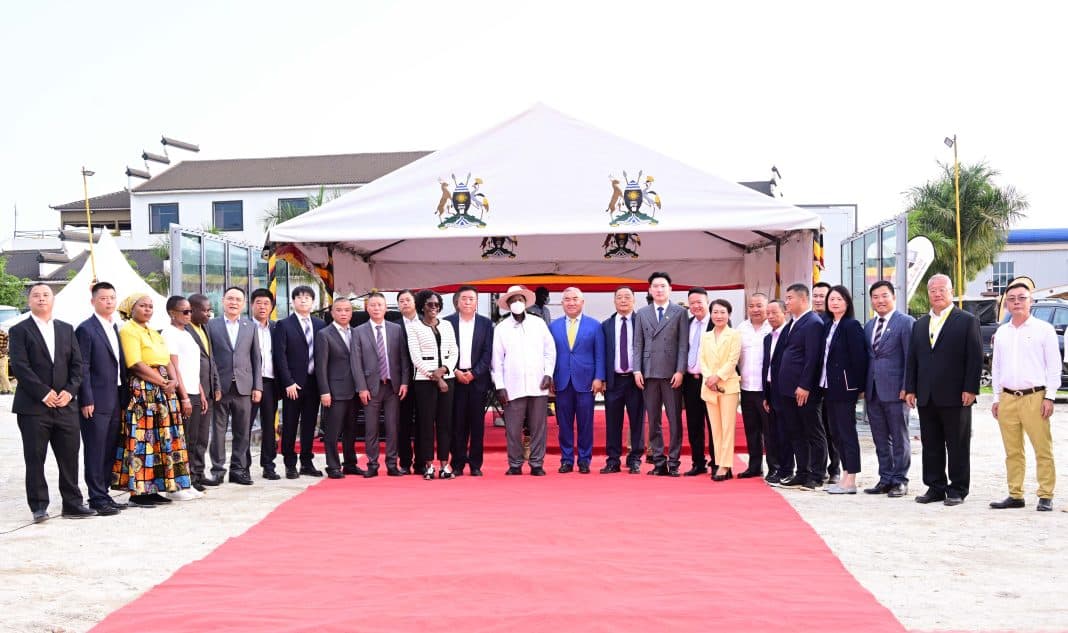
President Yoweri Kaguta Museveni has reiterated that Uganda’s transformation depends on industrialization, calling it the engine for wealth creation, modernization, and job growth.
The President made the remarks on Friday while commissioning four new factories and laying foundation stones for nine others at the Sino-Uganda Mbale Industrial Park in Eastern Uganda.
The park, which has become one of the country’s largest industrial hubs, now hosts 73 factories, 54 of which are operational and employ more than 11,000 Ugandans.
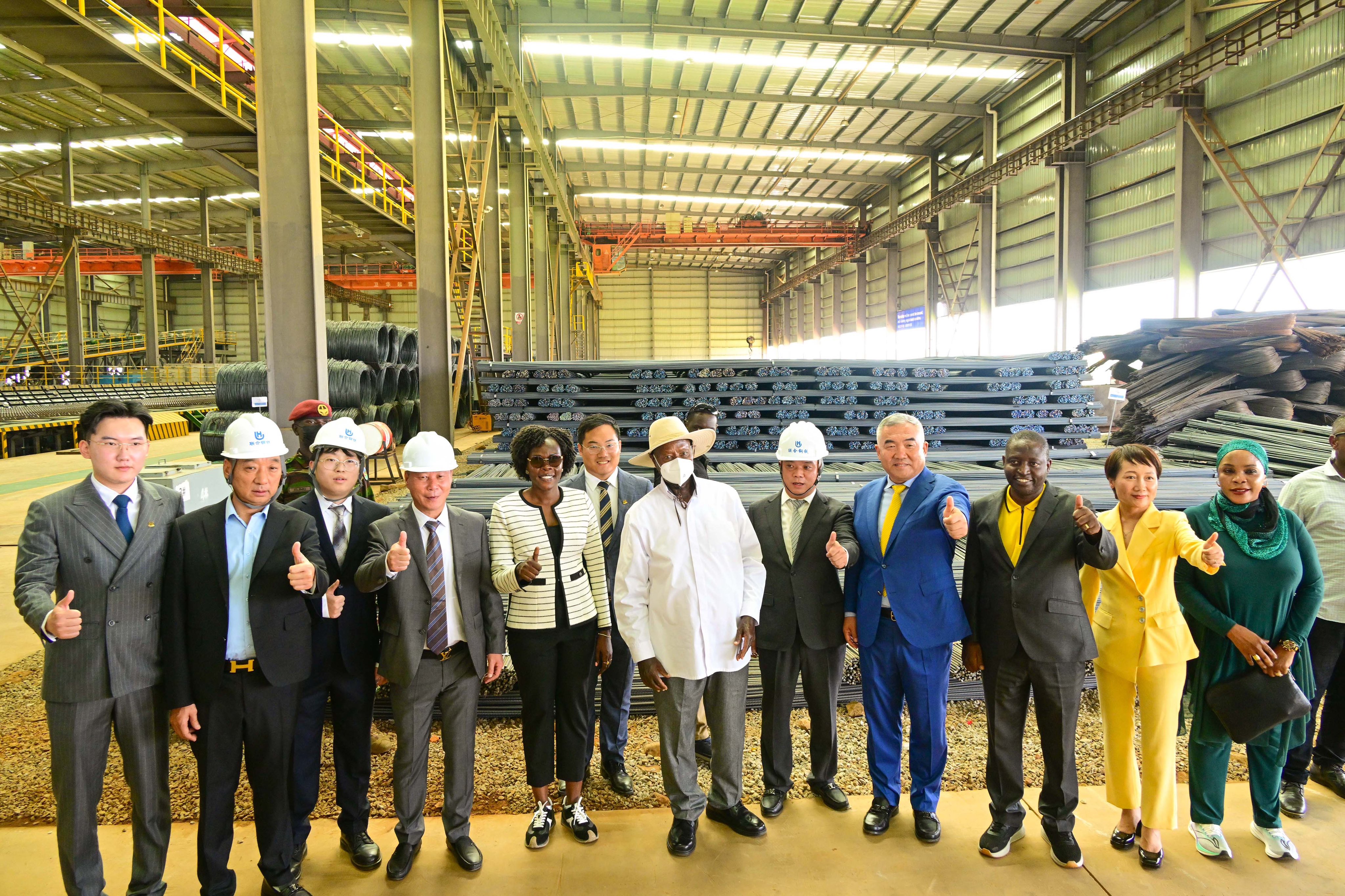
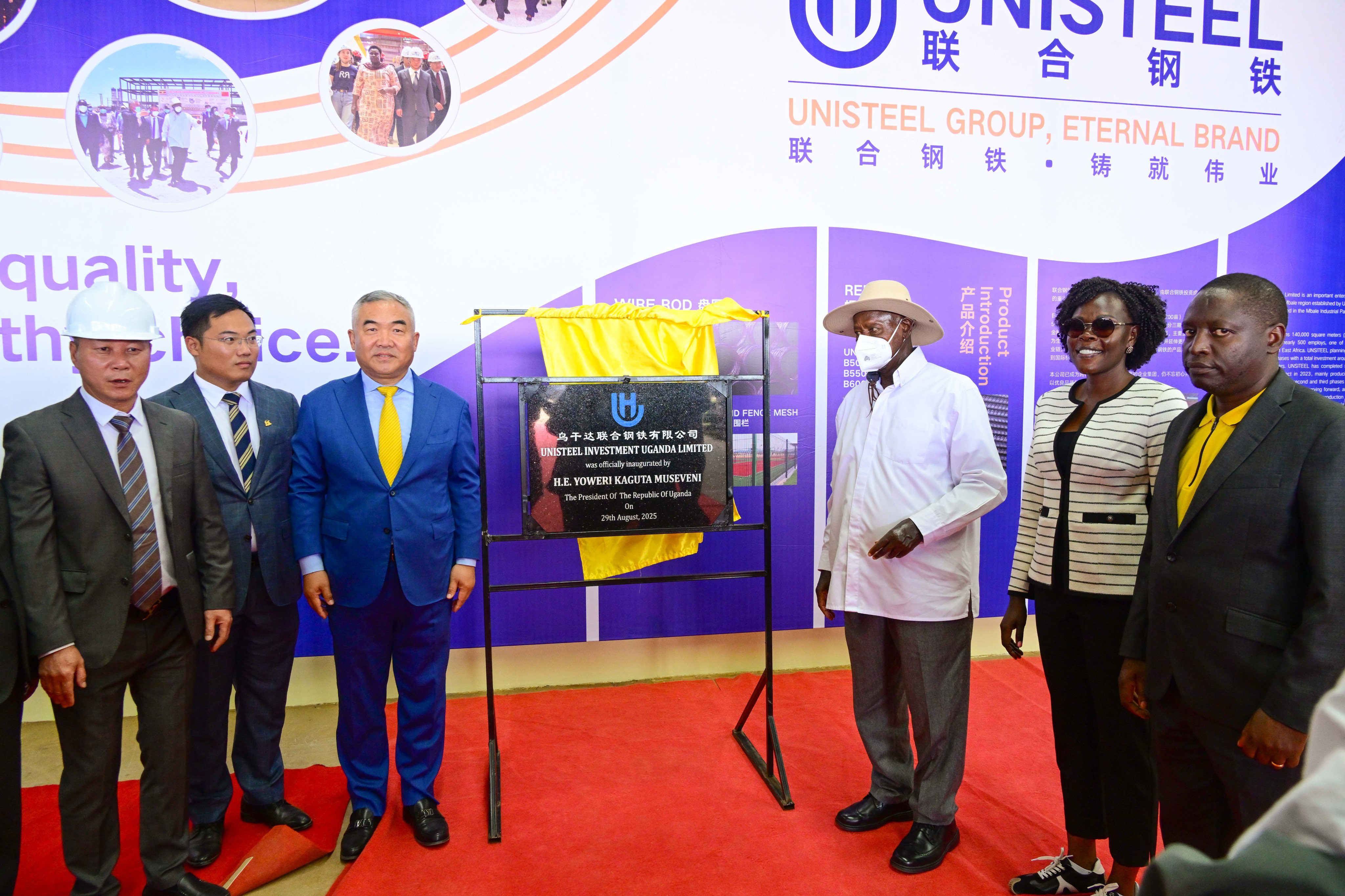
The newly opened factories are Unisteel Investment Uganda Limited, Nice Textiles Uganda Limited, Xinlon Textile and Garment Technology Company Limited, and Timber Paper Industry Uganda Company Limited. Construction is also set to begin for nine more factories, including Elgon Steel Uganda Limited and Hercules Automobile Manufacturing Uganda Limited.
Museveni said the National Resistance Movement’s (NRM) vision has always been anchored on creating wealth through four key sectors: commercial agriculture, manufacturing, services, and ICT. He emphasized that manufacturing and services provide the bulk of jobs.
“To create wealth, we have four sectors; sector one is commercial agriculture, comprising crops, livestock and fisheries. The second sector is factories; manufacturing which is to process and preserve and add value to what is produced in agriculture and minerals. The third sector is services, and the fourth sector is ICT, but the sectors which create more jobs are mainly manufacturing and services,” he said.
The President urged Ugandans to shift from subsistence farming to industrial and service-related work. “In the USA, only 2% of the people are in agriculture. Here you still have many Bagisu in the mountains on one acre of land that is not sustainable. We must shift more people into industries and services. That is part of modernization,” he added.
He noted that the Mbale Industrial Park is already reshaping the country’s economic landscape. “Now you see the difference. So many of the things we used to uproot from outside are now made here like the telephones, televisions, paper and steel,” he said.
Highlighting its contribution to the economy, Museveni explained that the park employs 11,000 people and consumes 50 megawatts of electricity, with demand expected to reach 100 megawatts. He urged farmers in the region to produce more food for the growing workforce.
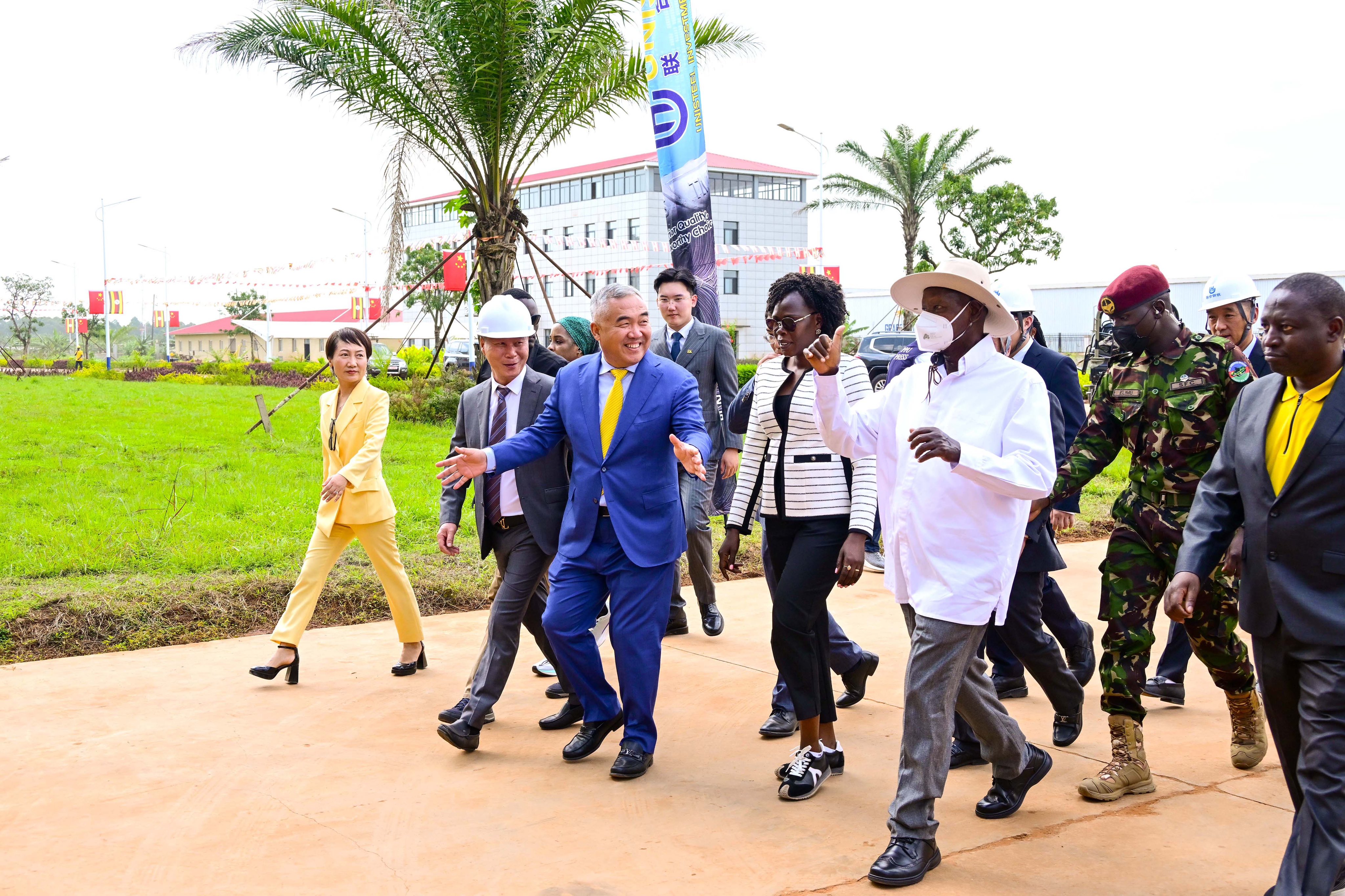
The President also revealed that management of the park had requested an additional 600 acres to expand the facility into a new industrial city. He commended Chinese investors for their role in Uganda’s economic transformation. “I want to thank Zhang and our Chinese friends for helping us transform our country. I am glad to be here to open new factories and lay foundation stones for more,” Museveni said.
Minister of State for Investment and Privatisation Evelyn Anite praised the President’s commitment to industrialization. “Your Excellency, you have not only saved these young people but also walked the talk of industrialization. You have done an excellent job, and that is why we are now talking of 1.2 million people employed under this industry,” she said.
Paul Zhang, Chairman of Sino-Uganda Mbale Industrial Park, also thanked government for its backing. “Your Excellency, thank you for supporting Mbale Industrial Park. More than 10,000 Ugandans have jobs because of this project. Without your support, we would have nothing to do,” he said.
The commissioning ceremony was attended by several leaders, including State Minister for Industry David Bahati and Hajjat Faridah Kibowa, Chairperson of the National Women Council.