

Ugandan scientists are developing a vaccine to control ticks and reduce livestock diseases that cost farmers money and weaken cattle production.
The Anti-Tick Vaccine Venture is one of several projects under development at Makerere University’s Centre for Biosecurity and Biomolecular Technology (CeBIOTECH).
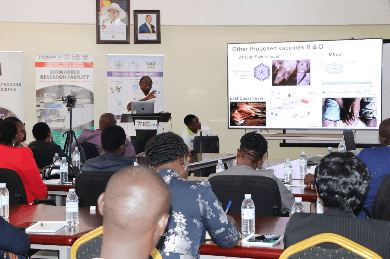
Members of Parliament’s Committee on Science, Technology and Innovation inspected the venture during a visit to the centre at the College of Veterinary Medicine, Animal Resources and Biosecurity.
The lawmakers assessed projects supported by the Science, Technology and Innovation Secretariat in the Office of the President.
Ticks and tick-borne diseases remain a major threat to livestock farming in Uganda. They lower animal productivity, cause deaths and increase treatment costs.
Scientists behind the Tick Control Innovations Initiative Ltd project hope the vaccine will supplement conventional control methods. These include acaricides, which farmers use to spray or dip cattle.
A successful vaccine could give farmers another way to protect their animals and reduce losses. It could also strengthen Uganda’s capacity to develop solutions for local agricultural challenges.
The committee also inspected projects targeting infectious diseases, medical research and diagnostic services.
The Central Laboratory Animal Research Facility provides laboratory animal services, specialised training and support for pre-clinical trials.
RePROVaD is developing recombinant proteins and subunit vaccines for emerging infectious diseases such as Covid-19 and mpox. The BIOMARKER venture is working on antibody-based diagnostic tools.
Legislators toured laboratories where scientists conduct experiments, analyse samples, test products and validate their findings.
The visit highlighted Uganda’s struggle to turn university research into products that can reach communities and markets. Moving an idea from the laboratory to the public can require years of testing, regulatory approval, intellectual property protection and investment.
It also requires skilled workers, modern equipment, manufacturing capacity and access to markets.
The engagement gave lawmakers a chance to hear from scientists and understand the barriers facing emerging ventures.
Parliament influences research funding and the policies that determine whether promising technologies progress to production.
Scientists said cooperation among the government, Parliament, universities, investors and private companies would help transform research into viable businesses.
The projects at CeBIOTECH form part of Uganda’s broader plan to use science and technology to support agriculture, healthcare and economic growth.