

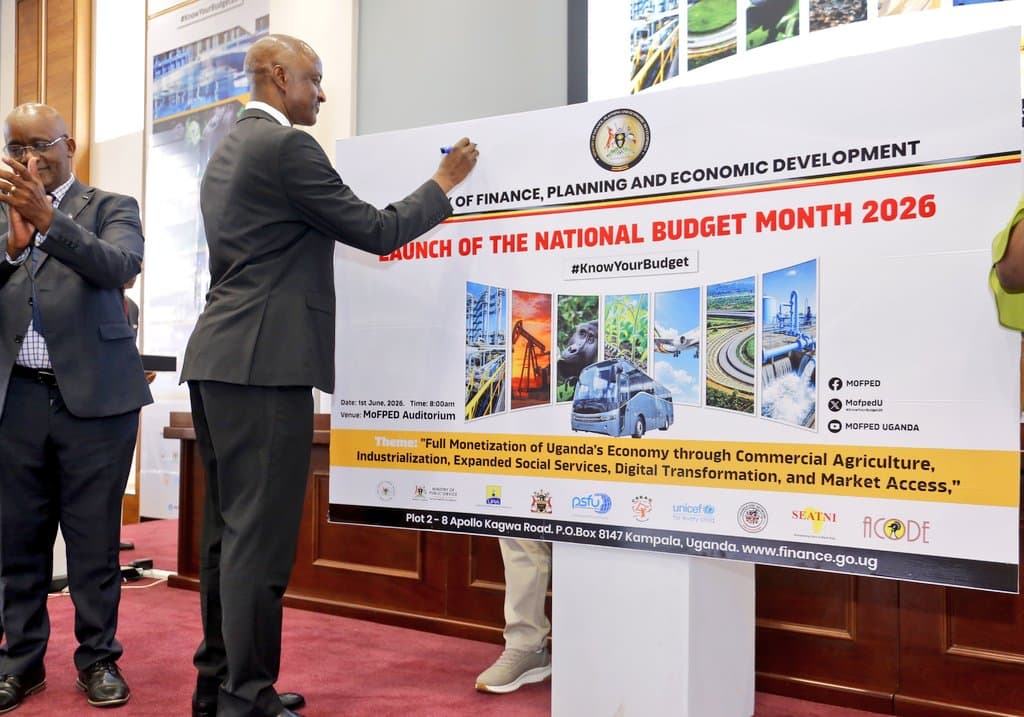
The Ministry of Finance, Planning and Economic Development has officially launched the National Budget Month for the Financial Year 2026/27 to shift public focus from legislative approval to strict implementation monitoring.
The Permanent Secretary and Secretary to the Treasury (PSST), Dr. Ramathan Ggoobi, presided over the launch at the ministry’s conference hall on Monday. Lawmakers originally passed the upcoming national budget on April 24, 2026. The new expenditure plan centers on full monetization of the economy through targeted investments in commercial agriculture, industrialization, digital transformation, and regional market access. Dr. Ggoobi noted that while the state has aligned its spending priorities with long-term growth targets, the actual impact of the funds rests on rigorous public oversight.
The treasury chief explained that the ministry developed the fiscal plan through wide consultations with President Yoweri Museveni, cabinet ministers, civil society groups, and grassroots community leaders. The ministry plans to use the month-long campaign to run public dialogues, media talk shows, and community outreach clinics across various sub-counties. These platforms will allow accounting officers to present their performance scorecards while helping citizens identify job and procurement opportunities embedded in the new budget.
“The National Budget Month provides an important platform for Government to account to citizens on achievements registered during the current financial year, communicate opportunities available in the new budget, and obtain feedback that informs future planning and policy decisions,” Dr. Ramathan Ggoobi stated.
The government first introduced the National Budget Month initiative in 2018 to bridge the information gap between state planners and taxpayers. The open-door framework has steadily elevated the country's standing in global public finance management rankings over the last few years. Dr. Ggoobi revealed that the country's commitment to fiscal transparency has significantly raised citizen awareness regarding the tracking of local service delivery projects.
Data from the latest Open Budget Survey confirms that Uganda’s budget transparency index increased from 58 percent in 2021 to 59 percent in 2023, surpassing the global average of 45 percent. Similarly, the country's institutional budget oversight score jumped from 59 percent to 67 percent during the same period, well ahead of the international average of 52 percent. The Finance Ministry plans to leverage these rising transparency metrics to attract sustainable foreign direct investment and boost donor confidence in national systems.