
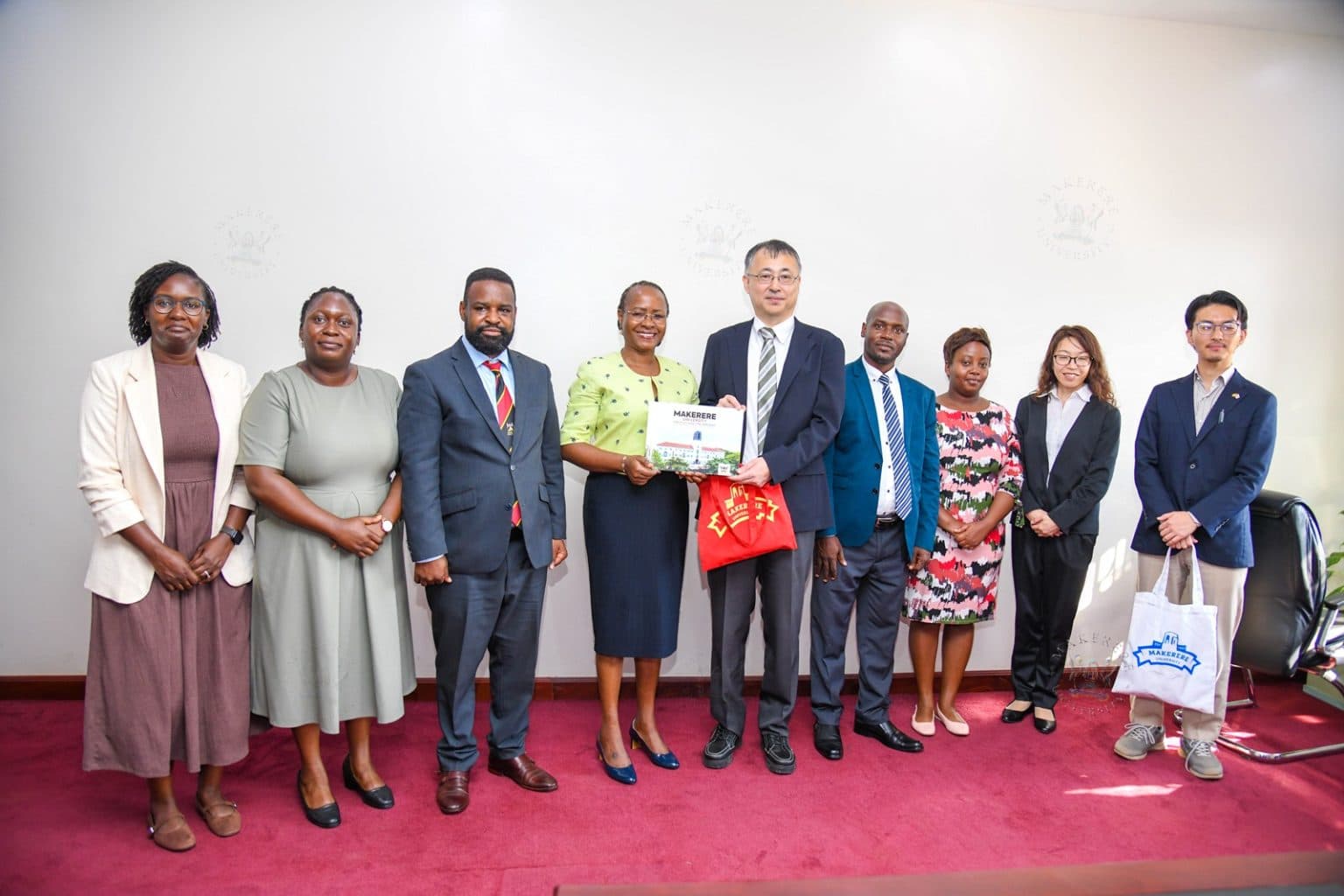
Makerere University and the Japan International Cooperation Agency (JICA) are considering new research partnerships in artificial intelligence, aerospace engineering and remote sensing.
The proposed cooperation also covers food value chains, energy, water, climate change and the exchange of students and researchers.
The two sides held talks at Makerere University on September 4, 2026. JICA senior adviser Dr Okano Takasei led the Japanese delegation.
Makerere deputy vice-chancellor for academic affairs Prof Sarah Ssali said the university had a long record of international research.
She cited Makerere’s contribution to global health studies and early research into sleeping sickness. She said Uganda’s research environment offered opportunities for further scientific discoveries.
Ssali also pointed to Japan’s support for Makerere’s academic work and infrastructure. One product of that relationship is the JICA building at the university.
The facility houses geology and petroleum studies under the College of Natural Sciences. It also provides office space for university administrators.
Ssali asked the delegation to examine Makerere’s existing programmes and identify areas for new cooperation.
Takasei said the visit formed part of JICA’s campaign to connect African and Japanese universities. The agency introduced the initiative during the ninth Tokyo International Conference on African Development in Yokohama in September 2025.
The programme operates under the African-Japan Initiative for Research and Education Partnerships, known as AJ-ASPIRE. It supports joint research, international study and the exchange of knowledge.
JICA is coordinating the programme through three African universities. These are the Egypt-Japan University of Science and Technology in Egypt, Jomo Kenyatta University of Agriculture and Technology in Kenya and Stellenbosch University in South Africa.
Each institution leads research in a strategic field. The Egypt-based university focuses on energy, while the Kenyan institution handles food value chains. Stellenbosch leads work on water and climate change.
Makerere researchers could join projects at the three institutions. They would work with colleagues from Japan and other African countries.
JICA also plans to create research networks in artificial intelligence and aerospace engineering. It wants Makerere scientists to participate in the two fields.
The agency proposed stronger cooperation between Makerere and the Egypt-Japan University of Science and Technology. The institution provides fully funded scholarships to African students with support from the Egyptian and Japanese governments.
Several Makerere graduates have benefited from the programme. They include Abdonoor Kalibala, who completed a doctorate in mechatronics and robotics engineering. His studies included six months of research in Japan.
JICA also offers small research grants to former students. The grants help alumni sustain projects linking African institutions with universities in Egypt and Japan.
Makerere director of research, innovations and partnerships Prof Robert Wamala said the two sides had held an online meeting before the visit.
That meeting identified the Makerere AI Lab, the International Office and researchers in space engineering as possible partners. Materials science and remote sensing also emerged as areas of interest.
The JICA delegation later met teams from the AI Lab, International Office and the Department of Geomatics and Land Management.
The discussions examined joint projects, staff expertise, student mobility and existing research. Makerere hopes the talks will lead to funded projects and wider opportunities for its students and researchers.