
The Bank of Uganda (BoU) has stepped up efforts to expand access to low-interest, affordable financing for agricultural commercialization and industrial agro-processing across the country.
Under the Agricultural Credit Facility (ACF), which the central bank administers on behalf of the Ministry of Finance, Planning and Economic Development, approximately Shs 1.35 trillion has been disbursed to more than 11,000 beneficiaries nationwide.
The intervention operates as a public-private risk-sharing partnership, with the Government funding 50 percent of the facility and participating commercial banks and financial institutions co-funding the remaining half.
Financing terms under the scheme remain heavily concessionary compared to commercial market rates:
- Interest Rates: Capped at a maximum of 12 percent per annum for core agricultural investments and 15 percent for grain trading and marketing.
- Repayment Periods: Flexible loan tenures extending up to eight years, tailored to gestation cycles.
- Eligible Uses: Procurement of farm machinery, irrigation infrastructure, agricultural inputs, post-harvest storage facilities, and agro-processing equipment.
In tandem, the central bank oversees the Small Business Fund (SBF), which provides targeted working capital and asset financing to micro, small, and medium enterprises (MSMEs).

Speaking during a stakeholder town hall engagement in Kabale District, Bank of Uganda Deputy Governor Prof. Augustus Nuwagaba highlighted the local impact of these financing instruments.
In Kabale District alone, 325 beneficiaries have secured Shs 13.59 billion through the ACF, supported by a government contribution of Shs 6.81 billion, while 70 micro-enterprises accessed Shs 636 million under the Small Business Fund.
Prof. Nuwagaba called on local government administrators, civic leaders, and extension workers to disseminate credit information to grassroots farmer groups, SACCOs, and youth- and women-led enterprises.
“Our policies may be formulated at the centre, but their effects are felt in homes, farms, markets, and businesses across Uganda,” Prof. Nuwagaba noted.
He challenged commercial banks to channel credit away from speculative consumptive lending into primary production sectors, specifically agro-industrialization, mineral development, tourism, and technology.
The central bank emphasized that affordable financing is essential to realizing President Yoweri Museveni’s wealth creation agenda and the government’s Ten-Fold Growth Strategy, which seeks to scale Uganda's GDP to USD 500 billion by 2040.
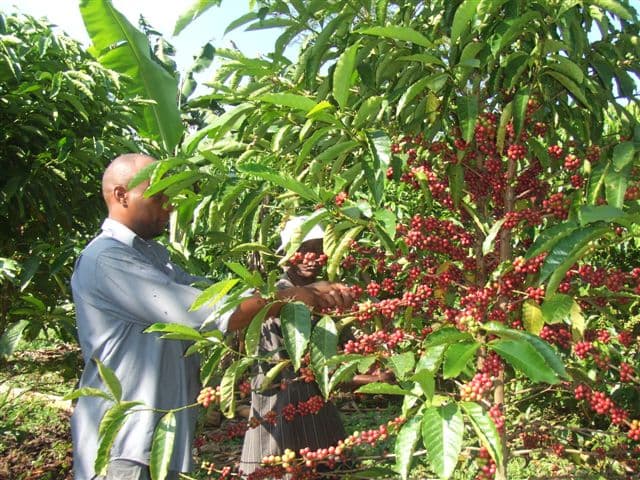
Central bank officials noted that expanding domestic production, post-harvest storage, and industrial processing for commodities such as coffee, dairy, grains, and bananas will broaden Uganda’s export base, enhance foreign exchange reserves, and stabilize the Uganda Shilling.