

Uganda’s economy has maintained a stable trajectory through the general election period, with gross domestic product (GDP) projected to grow by 6.6 percent this financial year.
The Ministry of Finance, Planning and Economic Development revealed the performance metrics in its newly released Post-Election Economic and Fiscal Update. The Public Finance Management Act (PFMA) Cap 171 legally mandates the publication of this report within four months of polling day. The data shows that core macroeconomic indicators successfully mirrored initial projections drafted before the political season commenced. Analysts attribute this resilience to steady domestic performance during the third quarter despite high global inflation and active geopolitical tensions.
The report indicates that headline inflation remained low and tightly controlled throughout the political transition. Furthermore, Uganda's balance of trade with the rest of the world registered significant improvements. This external stability was driven by a substantial surge in export revenue alongside strong foreign direct investment (FDI). Increased tourism receipts and consistent remittance inflows from the diaspora further insulated the local currency from typical election-cycle shocks.
The ministry of finance linked these positive outcomes directly to the rollout of the Fourth National Development Plan (NDP IV). The baseline development blueprint seeks to aggressively improve household income and general living standards. The current trajectory aligns with the state's Ten-Fold Growth Strategy, which intends to expand the national economy to USD 500 billion by 2040. Achieving this ambitious long-term target requires massive structural funding in productive industries, regional transport systems, and human capital.
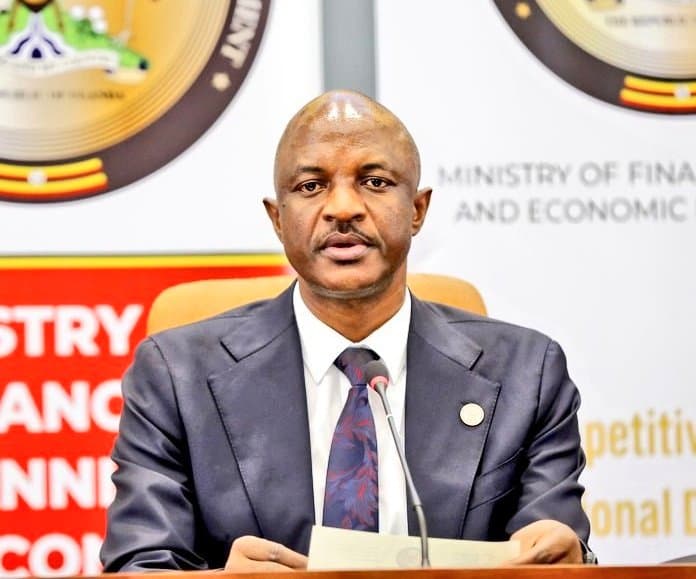
The Permanent Secretary and Secretary to the Treasury (PSST), Dr. Ramathan Ggoobi, who also serves as the Acting Finance Minister, praised the peaceful conclusion of the national polls. He noted that political stability enables the state to implement targeted fiscal policies without the threat of structural disruptions. The administration plans to concentrate its public resources on agro-industrialization, tourism, mineral processing, and science and technology. Additionally, technical teams will continue expanding the Parish Development Model (PDM) to integrate subsistence farmers into the formal money economy.
“As we continue to set the economy on a Tenfold Growth Trajectory, we are mindful of fiscal and debt sustainability," Dr. Ramathan Ggoobi stated. "Therefore, Government will focus on improving domestic revenue mobilization and efficiency of public expenditure to achieve self-sustaining and inclusive growth.”