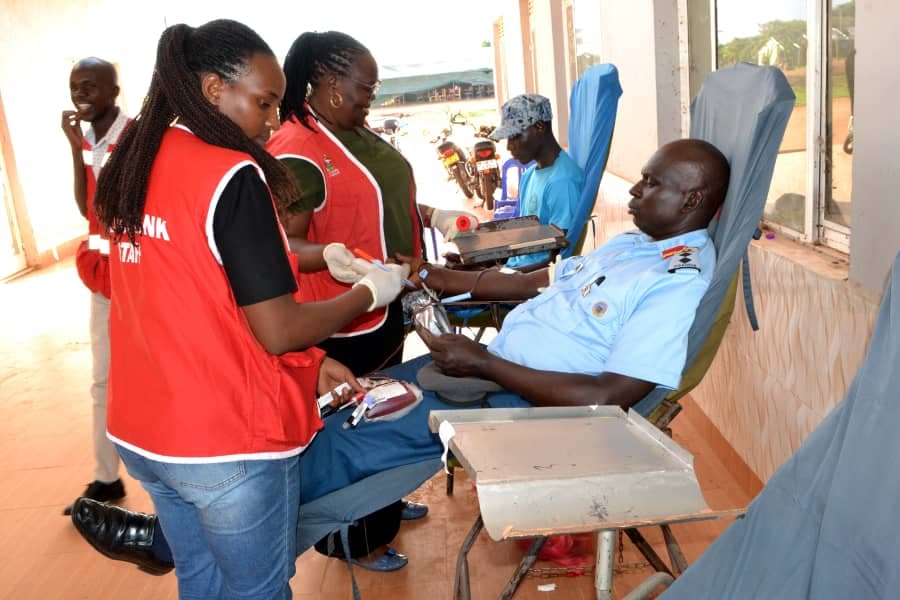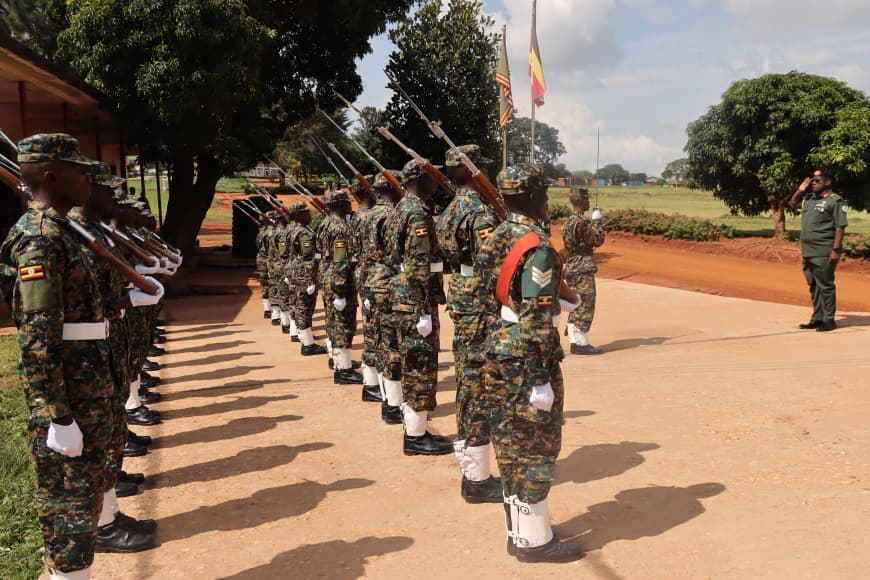
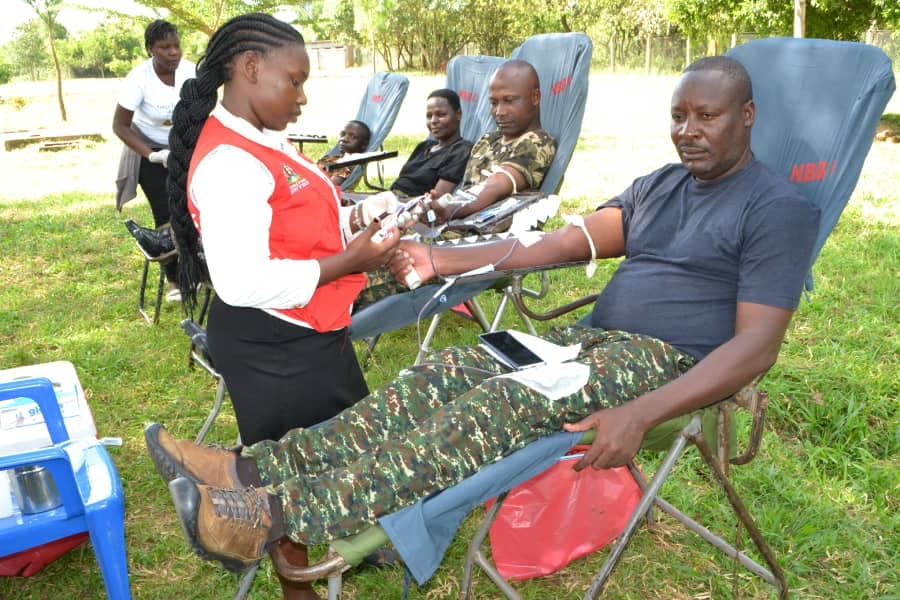
The Uganda Peoples’ Defence Forces (UPDF) has mobilized its troops at the Nakasongola Cantonment for a massive blood donation drive to safeguard national medical supplies.
The Motorised Infantry Division and the Uganda Air Force College partnered with the Nakasongola Community Blood Crisis initiative to execute the exercise. Organizers launched the campaign specifically to secure blood reserves ahead of upcoming holiday seasons when national banks historically run dry. The mobilization efforts yielded a significant response, with 250 military personnel donating blood on the very first day of the exercise.
Major General Charles Byanyima, the Commander of the Motorised Infantry Division, praised the soldiers for their civic dedication. He encouraged the troops to look at blood donation as a continuous duty to protect vulnerable citizens. The Commander noted that these contributions directly save victims of road accidents and patients battling chronic illnesses.
Colonel Ali James Uma, the Commandant of the Uganda Air Force College Nakasongola, emphasized the wider social impact of the drive. He stated that the collection would support mothers facing severe bleeding during childbirth. Additionally, the medical teams will use the blood to treat children suffering from severe anemia.
Lieutenant Doctor Simpson Ssemwogerere, a Medical Officer at Nakasongola Military Hospital, confirmed that the exercise will heavily reinforce the facility’s emergency readiness. Senior Nursing Officer Asha Shamirah Agip applauded the top military commanders for leading the exercise by example. She revealed that the hospital has set up specialized storage equipment to preserve the collected units safely. Furthermore, Agip issued a strict warning against corrupt medical workers who attempt to extort money from patients for transfusions.
"Blood is provided free of charge," Asha Shamirah Agip emphasized.
The high-turnout exercise also drew participation from the Division Training and Operations Officer alongside the Division Administration Officer. Both senior and junior soldiers queued up throughout the day to support the humanitarian cause. Hospital administrators expressed hope that this military intervention would inspire civilian communities to adopt regular donation habits.