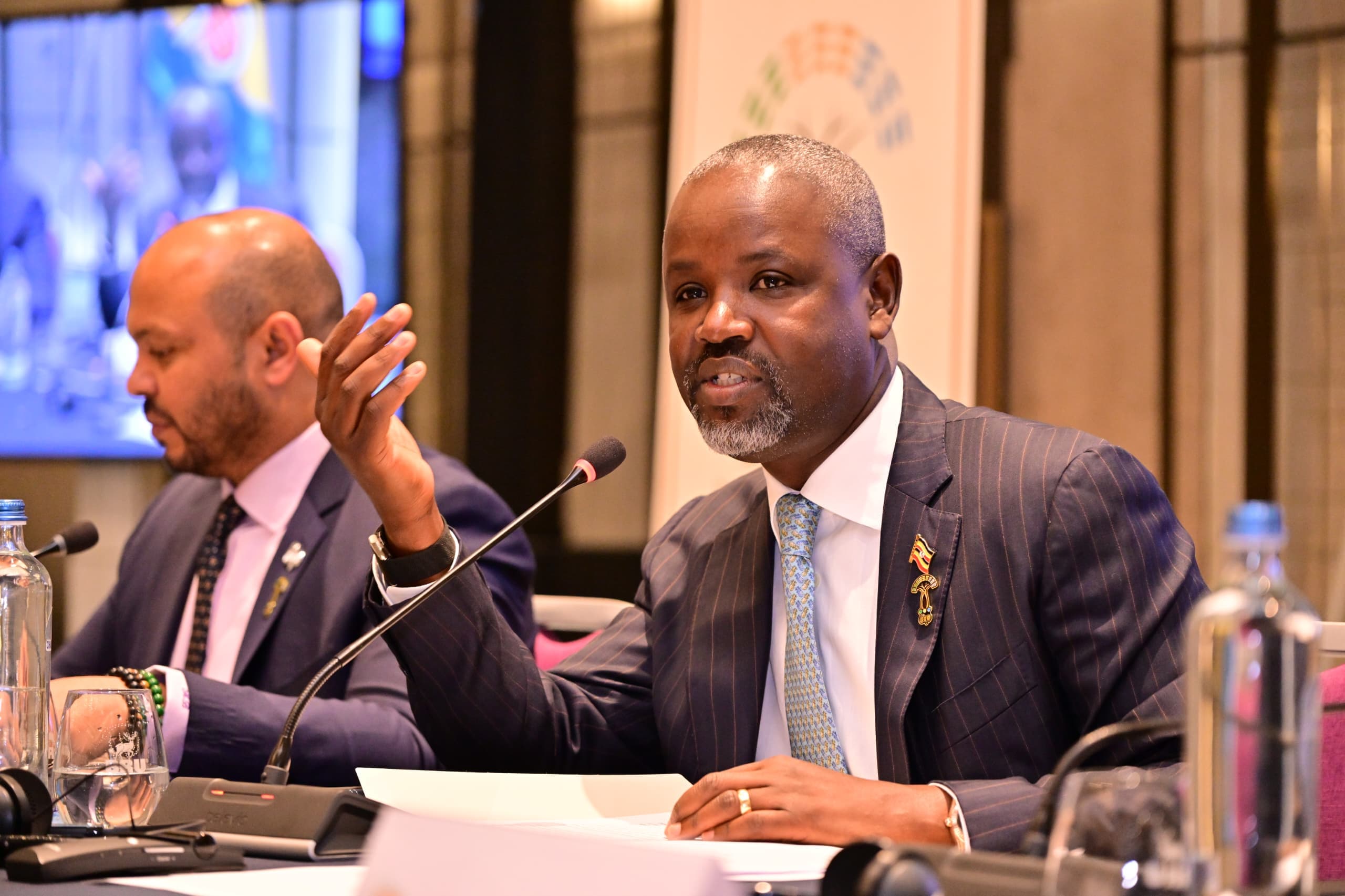

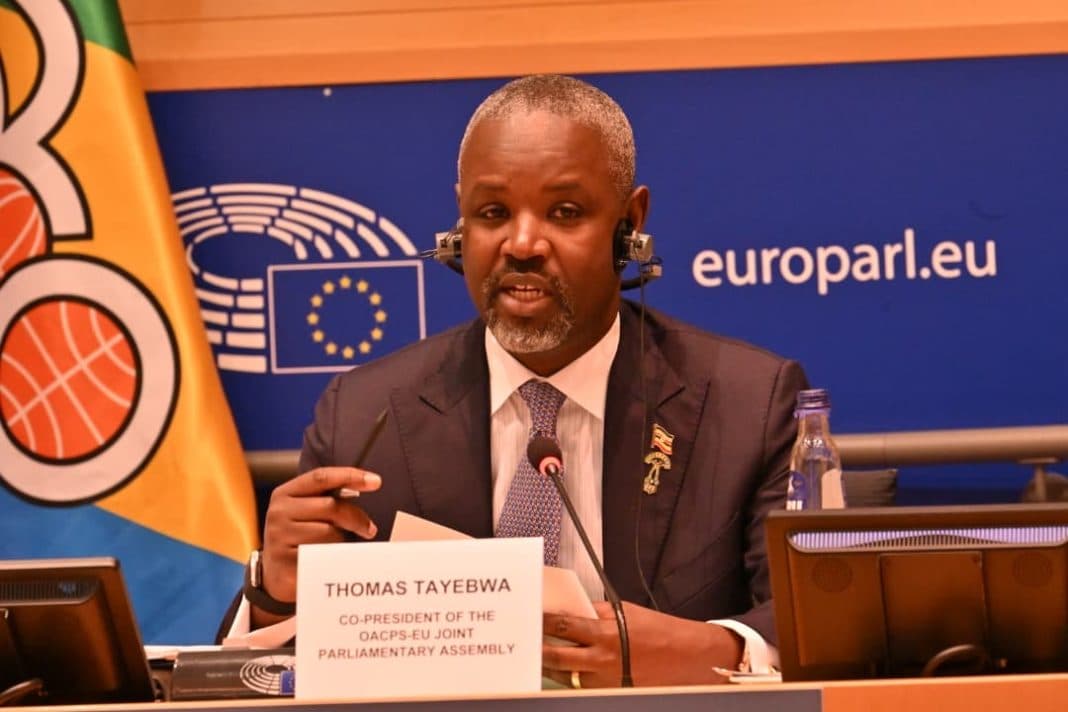
Uganda’s Deputy Speaker of Parliament, Thomas Tayebwa, has called for stronger international cooperation to address armed conflicts, organised crime and growing geopolitical tensions.
Tayebwa made the call on Wednesday while chairing a session of the joint parliamentary assembly of the Organisation of African, Caribbean and Pacific States (OACPS) and the European Union (EU) in Brussels, Belgium.
He said armed conflicts disrupt public services, destroy livelihoods and divert resources from development programmes.
He urged lawmakers to support mediation efforts and hold their respective governments accountable for commitments to conflict prevention and peacebuilding.
Tayebwa also warned that organised crime and insecurity increasingly transcend national borders, requiring countries to coordinate their responses.
“Our partnership should help strengthen respect for sovereignty, international law and the protection of civilians. It should also support international institutions in which developing countries and smaller states have a meaningful voice,” Tayebwa said.
Uganda faces refugee funding shortfall
Tayebwa also highlighted the financial pressure Uganda faces in supporting refugees, saying the country hosts more than two million people fleeing conflicts in the Democratic Republic of the Congo, Sudan, Burundi and South Sudan.
He said Uganda receives only 12.5 per cent of the funding required for its refugee response, forcing the government to redirect resources initially allocated to development programmes towards humanitarian assistance.
Despite the funding constraints, Tayebwa said Uganda would continue providing refuge to people escaping conflict.
“As a country, we will never close our borders to anyone seeking refuge because of conflict,” he said.
Sheema Municipality MP Dicksons Kateshumbwa called for reforms in global financial governance, measures to ease debt pressures and increased development financing.
He said unemployment and limited economic opportunities could expose young people to recruitment into armed conflicts.
Kateshumbwa cited the recruitment of young people from developing countries to participate in the Russia-Ukraine war as an example of the risks facing vulnerable populations.
Developing countries seek greater influence
Former Chadian Foreign Minister and United Nations envoy Mohamed Saleh Annadif said the renewed OACPS-EU partnership demonstrated how international institutions could adapt to changing global conditions.
He called for African, Caribbean and Pacific countries to have a stronger role in decisions on critical global issues, including the energy transition and conflict resolution.
Zimbabwean delegate Lt Gen Michael Reuben Nyambuya urged the OACPS and EU to defend the central role of the United Nations in maintaining international peace and security.
The discussions brought together parliamentary representatives from the two blocs to address shared challenges and strengthen cooperation on international issues.