How Ugandans earn a living is increasing exposure to malaria, a new study has found.
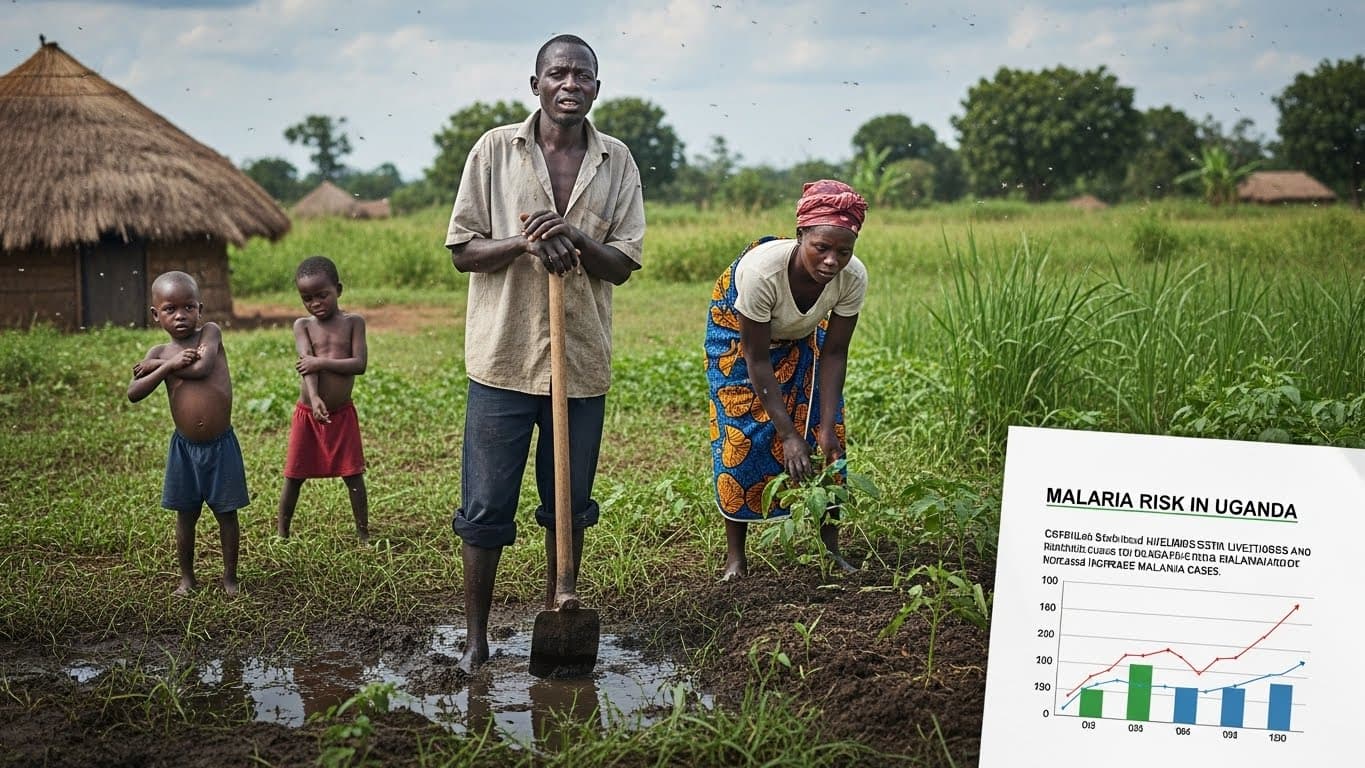
The research links malaria risk to daily activities such as farming, livestock keeping, construction and night-time work. The study was led by Dr Kevin Deane of The Open University, alongside Dr Edwinah Atusingwize and Dr David Musoke of Makerere University School of Public Health.
The study, published on December 2, 2025, in the journal Global Public Health, examined how work and income activities increase contact with mosquitoes. It found that these activities often weaken standard prevention tools such as treated mosquito nets and indoor spraying.
Researchers carried out fieldwork in June 2024 in Busiro County, Wakiso District. The area continues to record high malaria transmission despite control efforts.
The team conducted interviews and group discussions with 100 people. Participants came from communities, health services, local government and civil society. The study covered Kajjansi, Kasanje and Katabi town councils, as well as Bussi Sub-County.
Farmers linked malaria to growing maize near homes. The study notes that maize attracts mosquitoes, especially during the rainy season. This raises mosquito numbers around houses and increases outdoor and indoor biting.
Researchers said maize remains vital for food security. They noted that asking families to move crops away from homes is often unrealistic, especially where land is limited.
The study also found that keeping cattle close to homes attracts mosquitoes. Construction and brick-making leave water-filled pits that become breeding sites. Night jobs such as vending, guarding, fishing and bar work increase exposure during peak biting hours. Women and young children face higher risk due to caregiving roles.
The authors warn that malaria control will fail unless livelihoods are included in prevention planning. They called for closer coordination between health, agriculture, urban planning and economic policy.