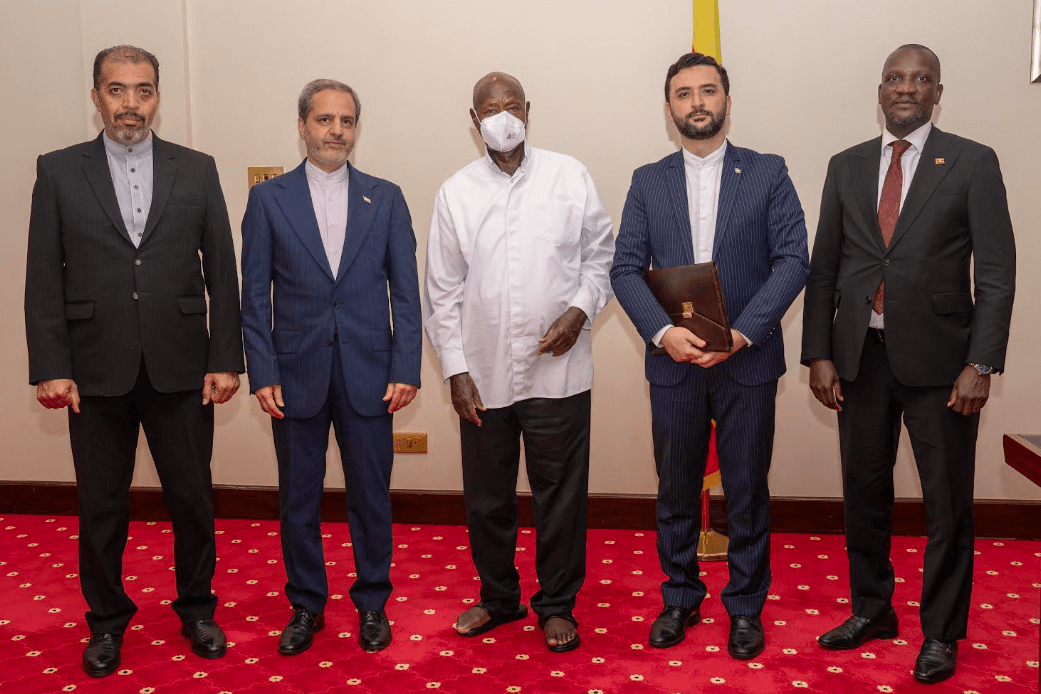
President Yoweri Kaguta Museveni has called on Iranian investors to set up agro-processing plants in Uganda rather than seeking large expanses of farmland, emphasizing that national economic policy focuses on local value addition prior to export.
The President stated that the country provides vast agro-industrial investment avenues in commodities such as cocoa, coffee, and pineapples, noting that local processing drives employment, boosts domestic revenues, and expands export earnings.
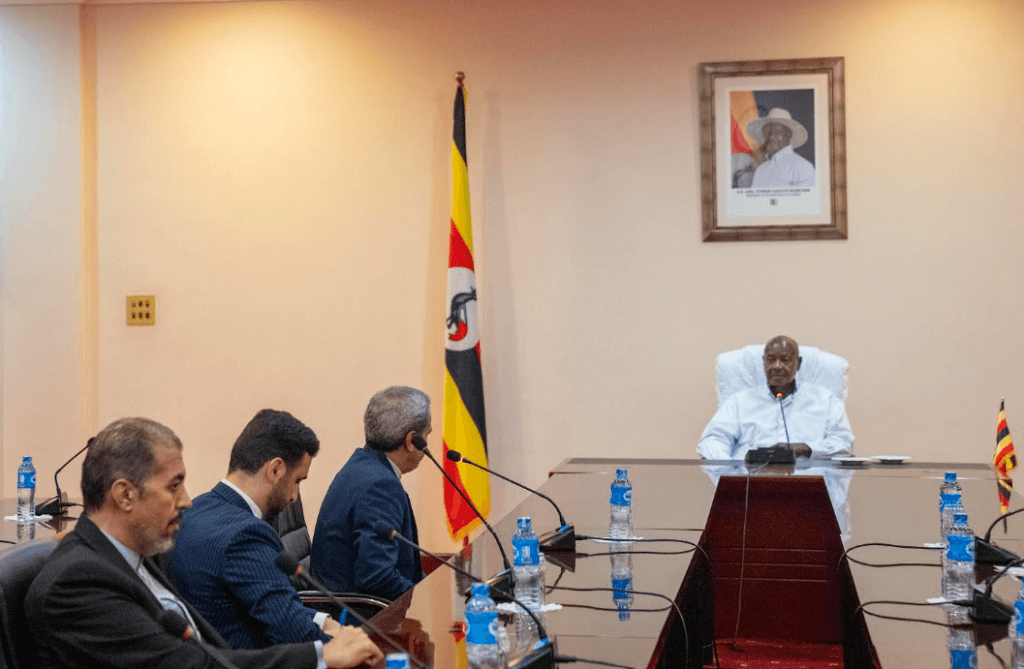
President Museveni delivered the guidance during a farewell diplomatic audience with the outgoing Iranian Ambassador to Uganda, H.E. Majid Saffar, at State House, Entebbe.
The bilateral discussions covered technical cooperation across agriculture, healthcare, and education, focusing on agro-processing infrastructure, the supply of high-yield seeds and fertilizers, and agricultural mechanization.
President Museveni’s remarks came after Ambassador Saffar indicated that several Iranian enterprises were keen on acquiring land to establish commercial agricultural farms.
“The best way is to build factories in Uganda to process agricultural products from our Ugandan farmers. Let the people here produce, and your companies process,” President Museveni told the envoy.
Under this framework, local smallholders and farming cooperatives supply raw produce, while foreign capital focuses on industrial processing into shelf-stable, high-value consumer products for regional and international markets.
Ambassador Saffar reaffirmed Iran's commitment to activating bilateral agricultural partnerships to expand trade volumes and job creation.
“You’re rich in agriculture, and there are a lot of Iranian companies interested in processing Ugandan agricultural products such as cocoa, coffee, pineapples, and we’re ready to support cooperatives and agriculture unions in that line to promote trade and job creation,” Ambassador Saffar said.
Beyond economic and technical partnerships, President Museveni commended Ambassador Saffar for his diplomatic service in Kampala and addressed broader geopolitical tensions in the Middle East.
The President called for a departure from identity-based conflict, urging regional actors to abandon sectarian hostility and pursue mutual recognition.
“My only advice to the Middle East is to stop the politics of identity. You have the wrong politics and wrong methods of solving problems,” President Museveni stated, adding that sustainable peace requires mutual state recognition between Iran, Israel, and Palestine.