
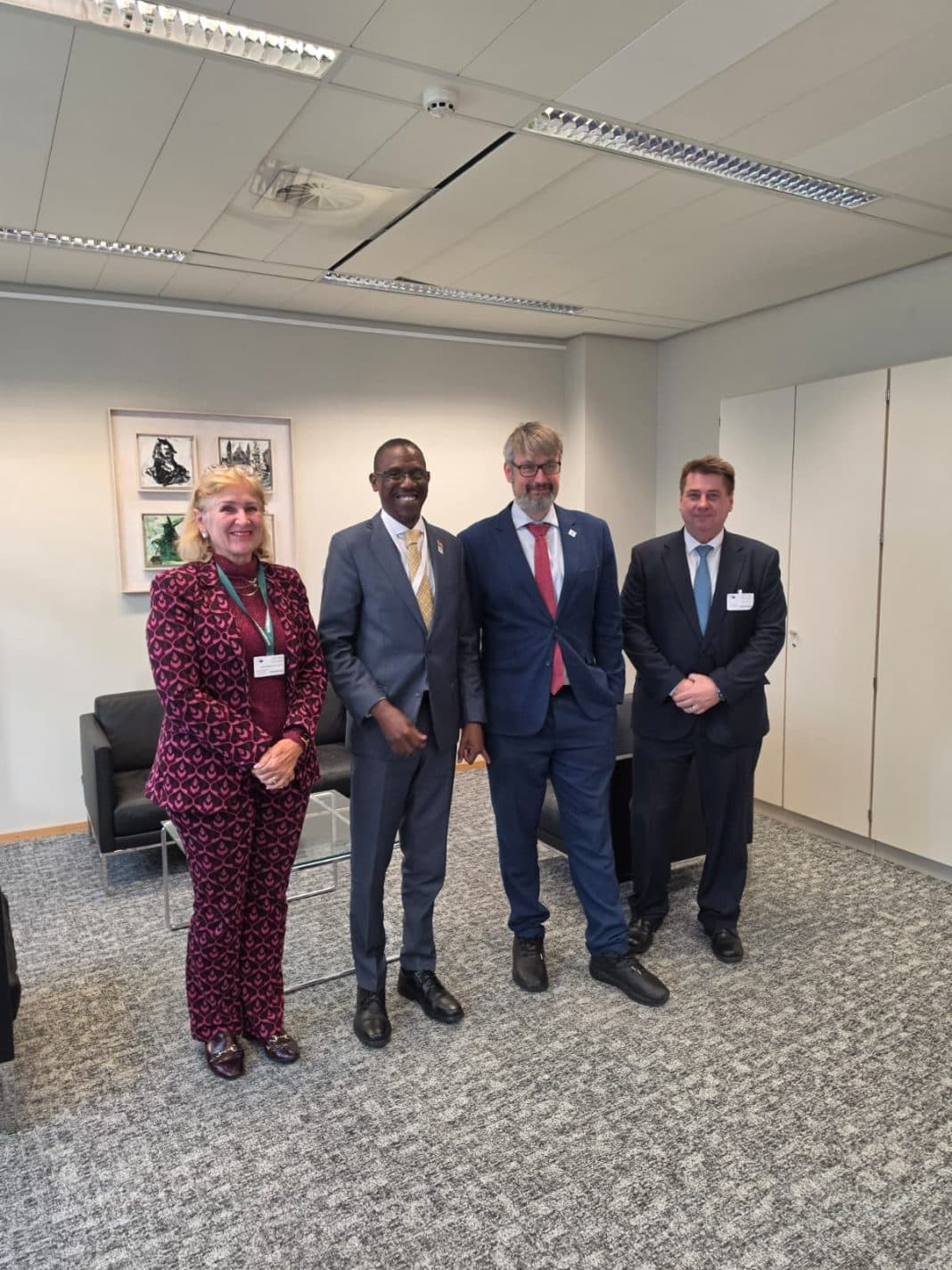
Uganda’s Minister of Defence and Veteran Affairs, Hon. Kiryowa Kiwanuka, has called for stronger international partnerships and Africa-centred multilateral security cooperation to dismantle the growing nexus between armed conflict, terrorism, and transnational organized crime.
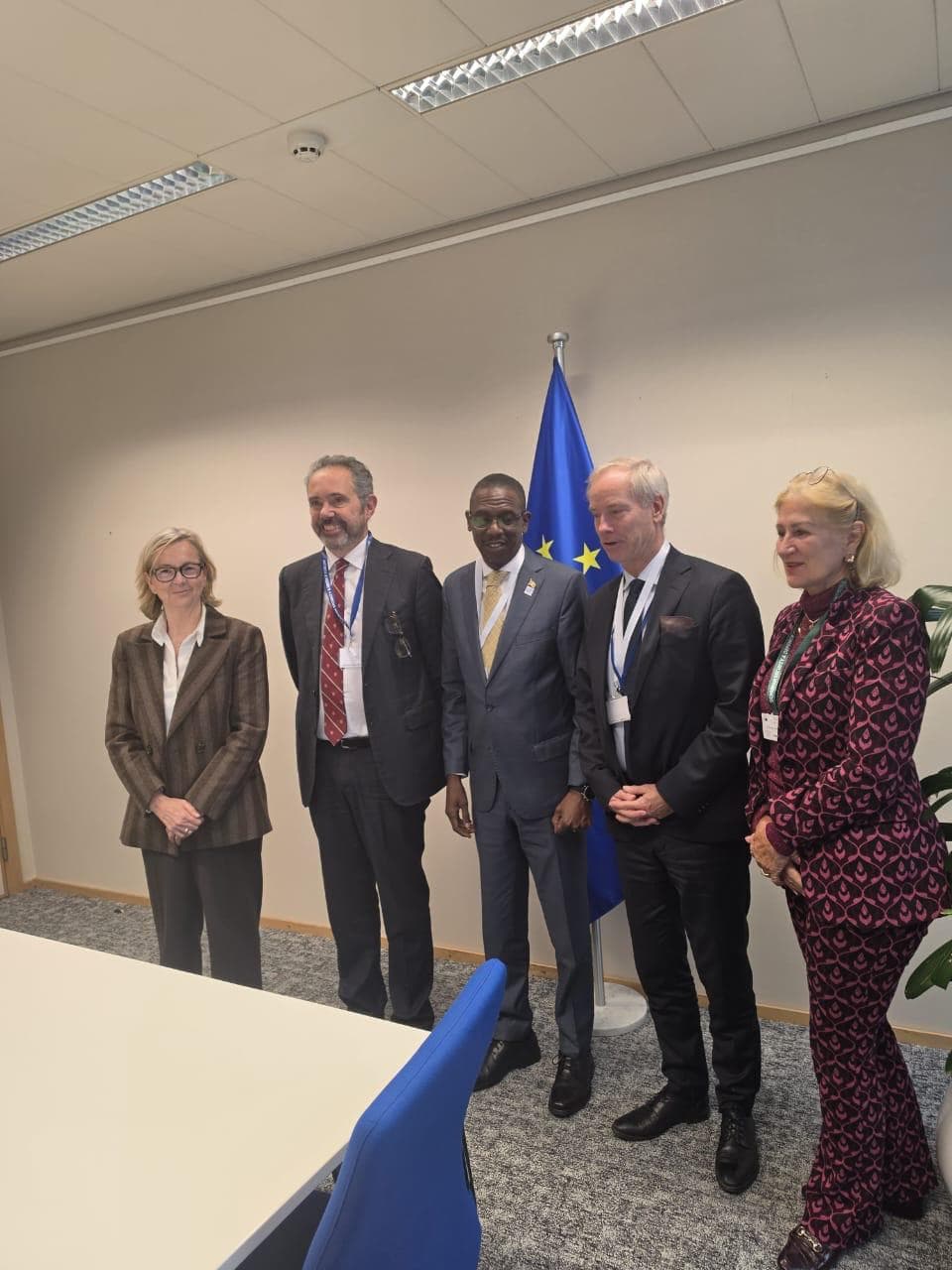
Speaking on Wednesday, November 18, 2026, during a high-level roundtable titled “From Conflict to Terror: Understanding an Evolving Security Nexus” at the third edition of the European Union’s Schuman Security and Defence Forum in Brussels, Minister Kiwanuka argued that lasting peace cannot be achieved through kinetic military interventions alone, but requires resilient state institutions, economic development, and regional collaboration.
Drawing on Uganda’s four decades of counter-insurgency experience, Kiwanuka observed that localized rebellions rarely vanish on their own; instead, they mutate into complex cross-border threats by adopting international terrorist networks, tactics, and ideological narratives. He cited the Lord’s Resistance Army (LRA) and the Allied Democratic Forces (ADF) as prime examples of domestic insurgencies that morphed into regional security menaces.
“The ADF today is an affiliate of the Islamic State. The LRA operated across Uganda, South Sudan, the Democratic Republic of Congo and the Central African Republic. This is no longer a national rebellion. It is a transnational nexus,” Kiwanuka stated.
He attributed the proliferation of these threats largely to fragile state institutions and governance deficits in neighboring states, including Sudan, South Sudan, the Democratic Republic of Congo, and Somalia. According to the minister, gaps in public service delivery, youth unemployment, and weak security apparatuses create vacuums readily exploited by terrorist syndicates, human traffickers, illegal mineral smugglers, and disinformation networks.
Highlighting Uganda’s contributions to regional stabilization, Kiwanuka noted that the country hosts over 2.1 million refugees, making it Africa’s largest refugee-hosting nation, and recalled Uganda’s pioneering peacekeeping deployment in Somalia since 2007 across AMISOM, ATMIS, and the current African Union Support and Stabilization Mission in Somalia (AUSSOM). Nearly two decades of operations in the Horn of Africa, he noted, proved that insurgency, terrorism, and organized crime are deeply intertwined and demand coordinated political, economic, and security responses.
Outlining Uganda’s strategic counter-insurgency doctrine, Kiwanuka stressed that winning public trust and addressing socio-economic root causes remain decisive.
“The population is the strategy. Our doctrine relies on the support of the people. War is never an end in itself,” he explained, urging massive investment in institutional governance, youth skills training, and household wealth creation. “You cannot bomb your way out of the nexus. You must build your way out.”
Warning that unresolved civil conflicts risk escalating into hybrid threats involving cyber warfare and transnational crime, Minister Kiwanuka urged global powers to place Africa at the center of international security architecture, recognizing the continent as an indispensable source of security solutions rather than merely a recipient of aid.
“A strong multilateral system is not a favour to Africa, it is a necessity for global security,” Kiwanuka said, calling for trust-based, long-term Africa–Europe security partnerships anchored in shared responsibility.
The third Schuman Security and Defence Forum convened senior policymakers, military leaders, academics, and multilateral organizations from EU member states and more than 85 partner nations.