

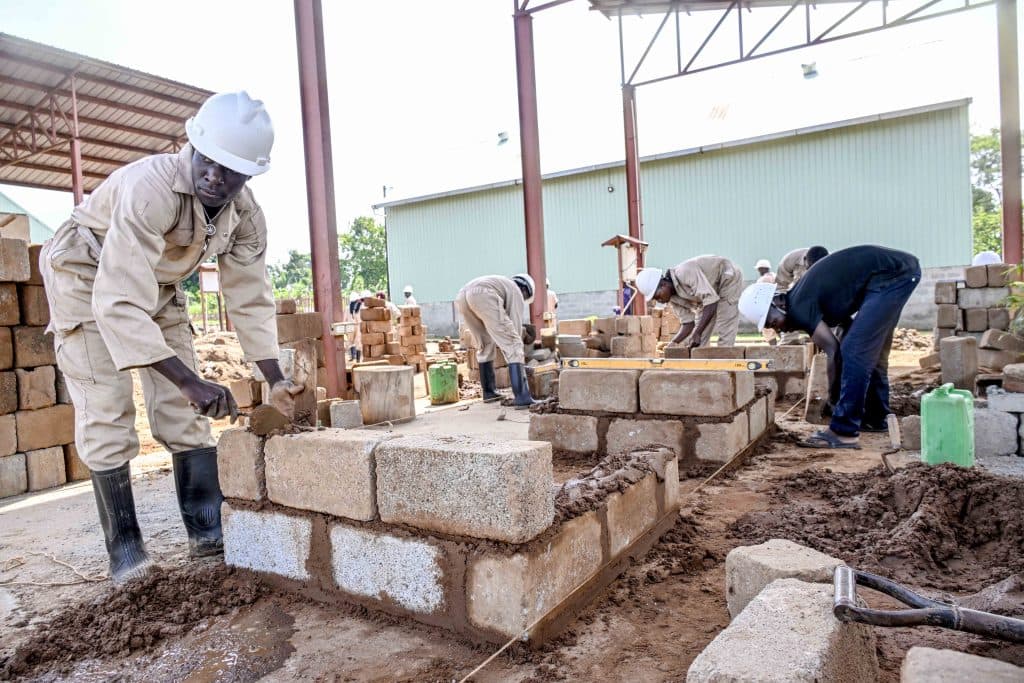
The government will construct 17 additional Presidential Zonal Industrial Skilling Hubs to widen vocational training and combat youth unemployment nationwide.
The State House Presidential Projects Directorate announced the infrastructural expansion on Sunday. The development coincided with the official launch of the sixth academic intake, which has successfully enrolled 4,560 students across the existing 19 zonal training centers.
President Yoweri Kaguta Museveni initiated the flagship skilling program to equip vulnerable young citizens with practical, hands-on trades. The state-sponsored curriculum offers intensive, free instruction in carpentry, industrial welding, tailoring, bricklaying, hairdressing, shoemaking, and automotive mechanics.
To eliminate entry barriers, the government fully finances student accommodation, daily meals, and all raw training materials. Upon graduation, learners receive certified credentials from the Uganda Vocational and Technical Assessment Board (UVTAB), which rank equivalent to the Uganda Certificate of Education (UCE).
The Director of Presidential Projects and Industrial Hubs at State House, Eng. Raymond Kamugisha, confirmed that structural expansion will begin before the close of the current fiscal year.
“We have enrolled 4,560 students this year," Eng. Kamugisha stated. "Before the end of the current Financial Year, State House will commence the construction of 17 additional hubs across the country to increase access to skills training and empower more young people.”
At the Madi Presidential Zonal Industrial Hub in Adjumani District, administrators admitted 240 new youth selected from the border districts of Adjumani, Moyo, and Obongi.
The Madi hub manager, Christopher Ijjo, reported that previous graduation cohorts have radically altered the economic landscape of the sub-region by establishing independent workshops. He highly commended the President for backing the technical training with a UGX 50 million revolving fund injected directly into graduate district SACCOs.
“The Presidential support fund has enabled many beneficiaries to acquire start-up capital and become self-reliant,” Ijjo explained.
Concurrently, the Acholi Presidential Industrial Skilling Hub in Gulu enrolled 240 students representing eight northern districts, one city, and one municipality. New learners commenced their orientation with rigorous physical conditioning drills before finalizing their academic registration.
The Acholi hub manager, Jimmy Lawrence Adong, emphasized that the curriculum pairs technical engineering with mandatory patriotism lectures and character alignment. He praised the integration of basic military drills for instilling strict civic discipline into the incoming class.
“We place emphasis not only on technical skills but also on discipline, patriotism and mindset change," Adong noted. "These values are essential in producing responsible citizens and productive members of society.”
Welcoming the students in Gulu, the Deputy Resident City Commissioner, Amir Kamba, noted that the hubs have successfully rehabilitated thousands of hopeless youth across Northern Uganda. He urged the state to expand individual intake quotas, citing an overwhelming surplus of applications from desperate school leavers.
Enderu Winnie Desire, an incoming student who traveled from Moyo District to join the Madi center, described the program as a vital economic lifeline for young women. Similarly, Achiro Sunday, a newly registered student from Lamwo District, thanked the President for lowering the costs of industrial education, noting that the skills will allow her to shield her family from poverty.
The massive skilling intervention stands as the government’s primary socioeconomic weapon to neutralize youth joblessness and trigger rapid grassroots wealth creation.