

Uganda is moving to strengthen its position as a regional manufacturing and export hub by aligning its Special Economic Zone policies with key regional trade frameworks under the East African Community and the African Continental Free Trade Area.
The push is being led by the Uganda Free Zones and Export Promotions Authority, which was formed in 2024 following the merger of the Uganda Free Zones Authority and the Uganda Export Promotion Board. The Authority has placed regulatory harmonisation at the centre of its reform agenda to unlock regional and continental export opportunities.
Officials say limited alignment between Uganda’s Free Zones Programme and regional frameworks has previously weakened the impact of incentives and reduced competitiveness. Uganda is currently implementing only three of the 15 incentive schemes provided for under the East African Community framework, a gap that has constrained access to regional markets.
To close this gap, the Authority is actively engaging in policy-alignment processes under both the EAC and the African Continental Free Trade Area, with the aim of streamlining Special Economic Zone regulations and standards. Officials say the reforms will deepen Uganda’s integration into continental supply chains while leveraging its central location in Africa.
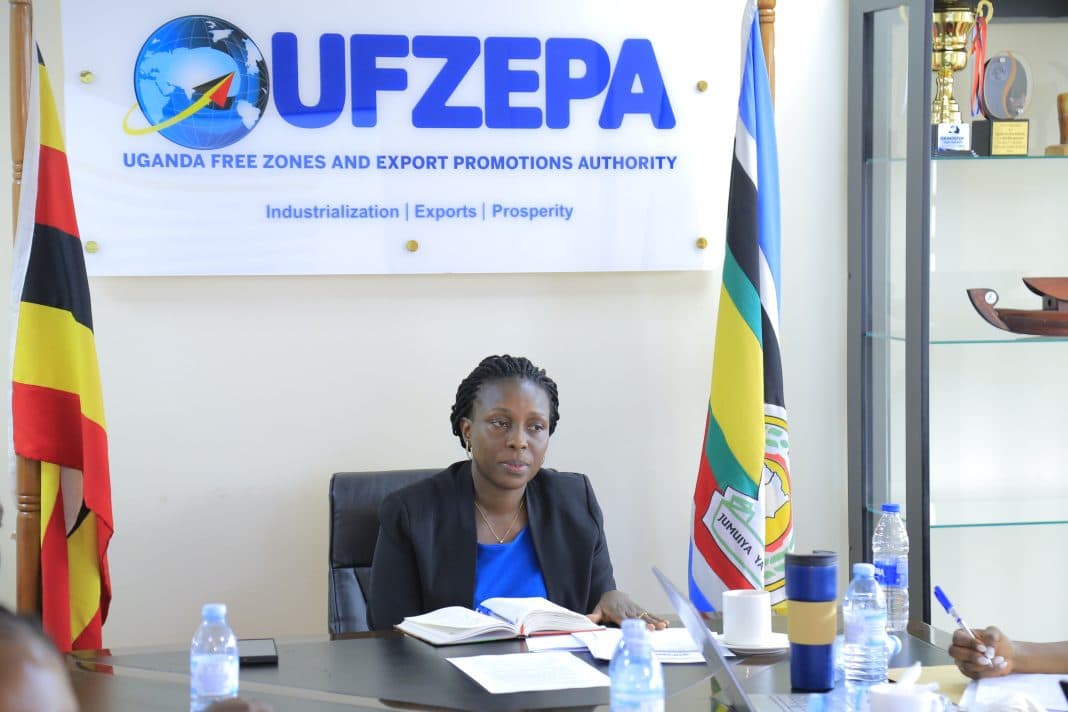
Speaking during a stakeholder engagement with prospective developers, Rebecca Nalumu, Senior Manager for Special Economic Zones Operations and Compliance at the Authority, said regulatory harmonisation also focuses on sustainability and compliance.
“One of our key policy harmonization initiatives is the development of an ESG framework to standardize Environmental Impact Assessment procedures, with the aim of enabling the smooth establishment of Free Zone developers in Uganda,” Nalumu said.
She said the framework will ensure compliance with national environmental laws while aligning Uganda’s investment regime with international best practices, a move expected to attract high-quality and sustainable investors.
The Executive Director of the Authority, Hez Kimoomi Alinda, said Uganda has played an early and active role in implementing regional trade instruments.
“Uganda began implementing the EAC Customs Union Protocol alongside export promotion schemes and Special Economic Zones as early as 2014. By that time, the country had already established industrial parks and was implementing the regional customs framework under the East African Customs Management Act,” Alinda said.
The reforms are expected to accelerate Uganda’s shift from exporting raw materials to finished goods and services. Officials say improved regulatory alignment will reduce trade bottlenecks, simplify export procedures and strengthen the capacity of Ugandan enterprises to compete in regional and continental markets.
By positioning Special Economic Zones to operate efficiently and in line with regional trade rules, the Uganda Free Zones and Export Promotions Authority aims to make Uganda a reliable supplier to neighbouring countries and a key player in intra-African trade.