

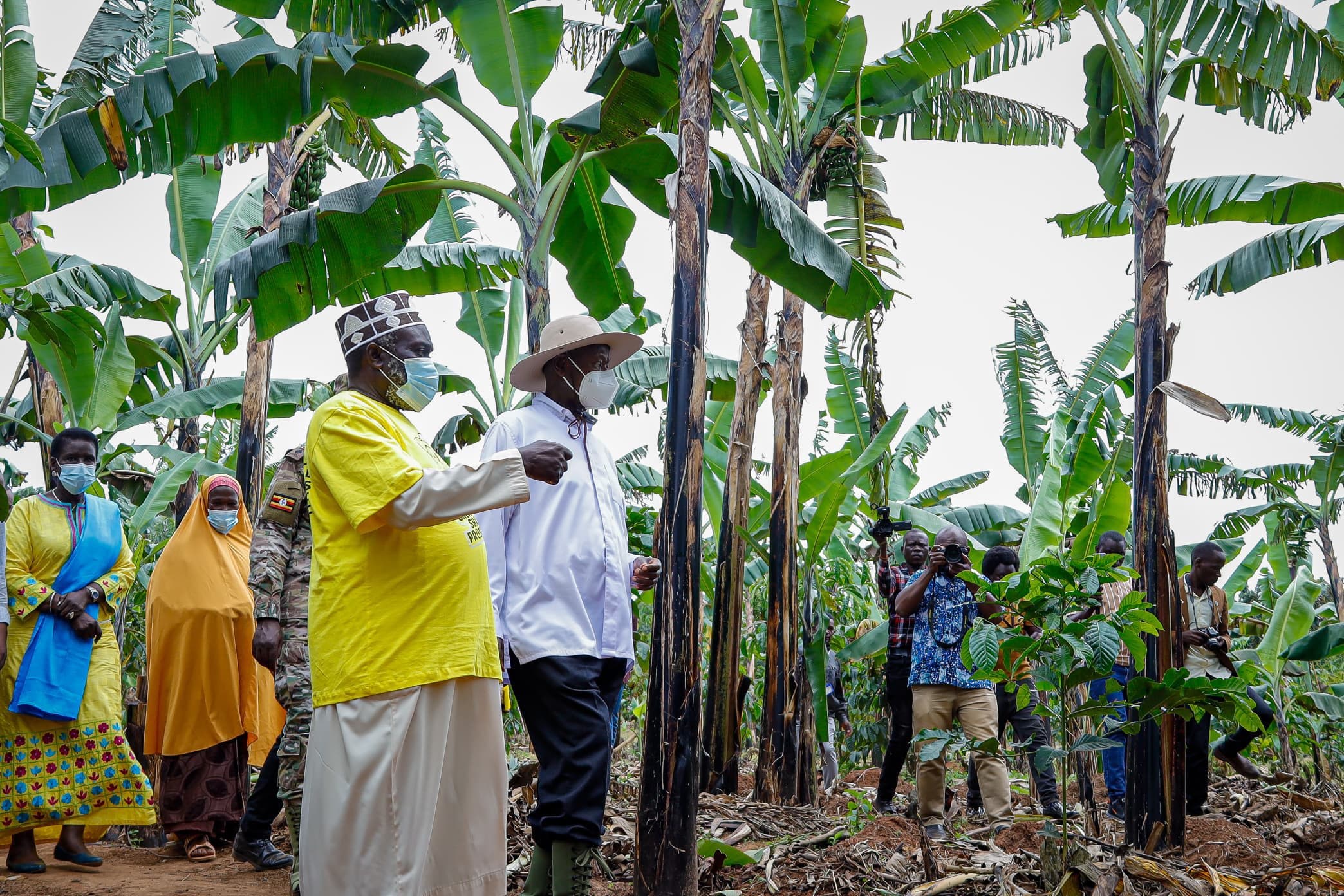
In the heart of Kamengo, Mpigi District, a modest farm is turning heads—and changing lives. Hajji Muhammad Yusuf Zziwa, once a smallholder farmer with a single cow, has built a thriving agribusiness that exemplifies the success of Uganda’s Four-Acre Model.
On June 16, 2025, President Yoweri Kaguta Museveni visited Zziwa’s Zimu Demonstration Farm as part of a tour to assess the impact of the Parish Development Model (PDM) in the greater Mpigi region. He commended Hajji Zziwa for embracing and faithfully implementing the Four-Acre Model, a strategy championed by the National Resistance Movement (NRM) to boost household incomes through commercial agriculture.
“Hajji Zziwa has fully understood our message. His farm is proof that even families with small landholdings can create wealth by using the four-acre model,” President Museveni said.
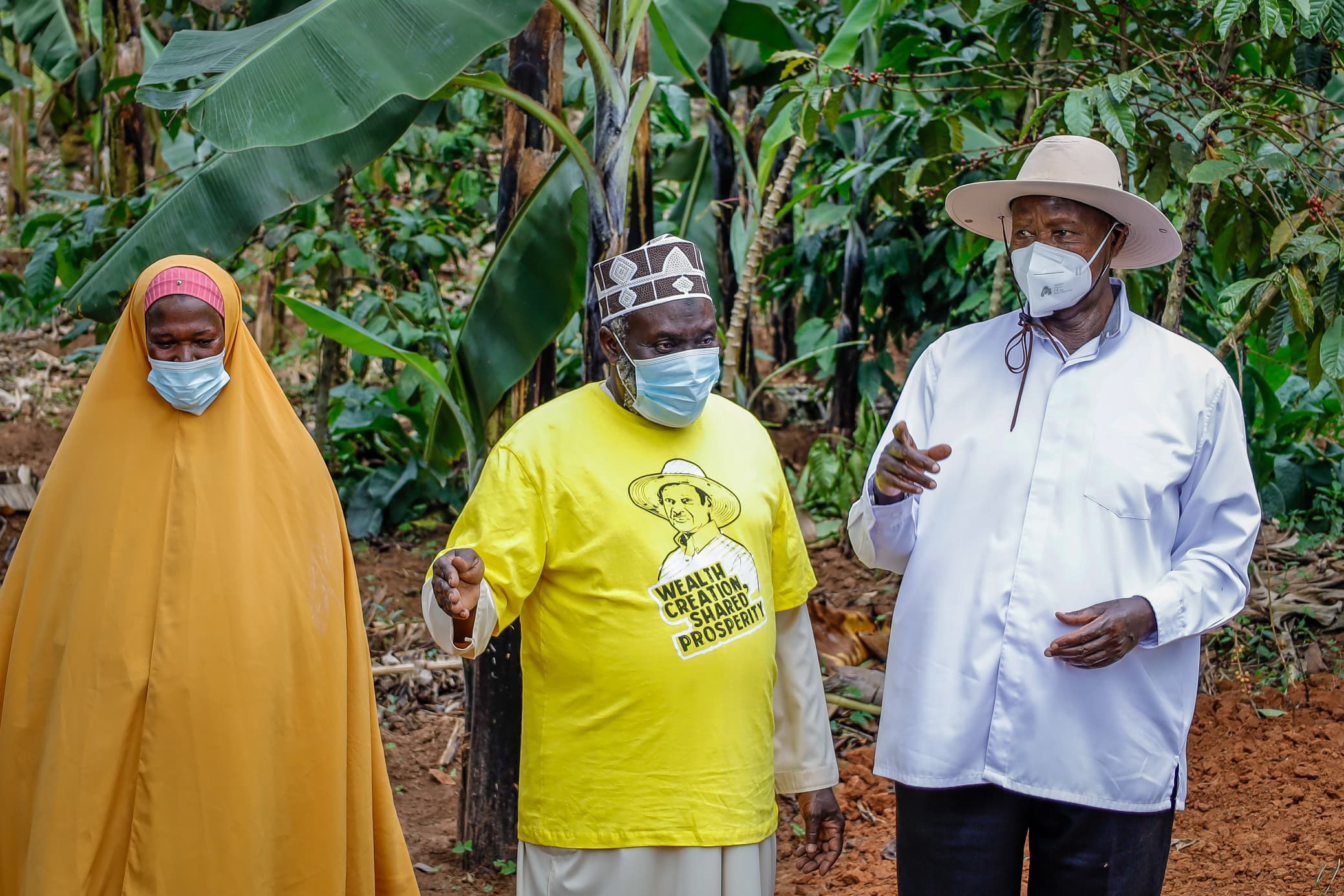
The Four-Acre Model recommends dividing land into four components: one acre for coffee, one for fruit, one for pasture, and one for food crops. Supplementary enterprises like poultry, piggery, and fish farming are encouraged where feasible.
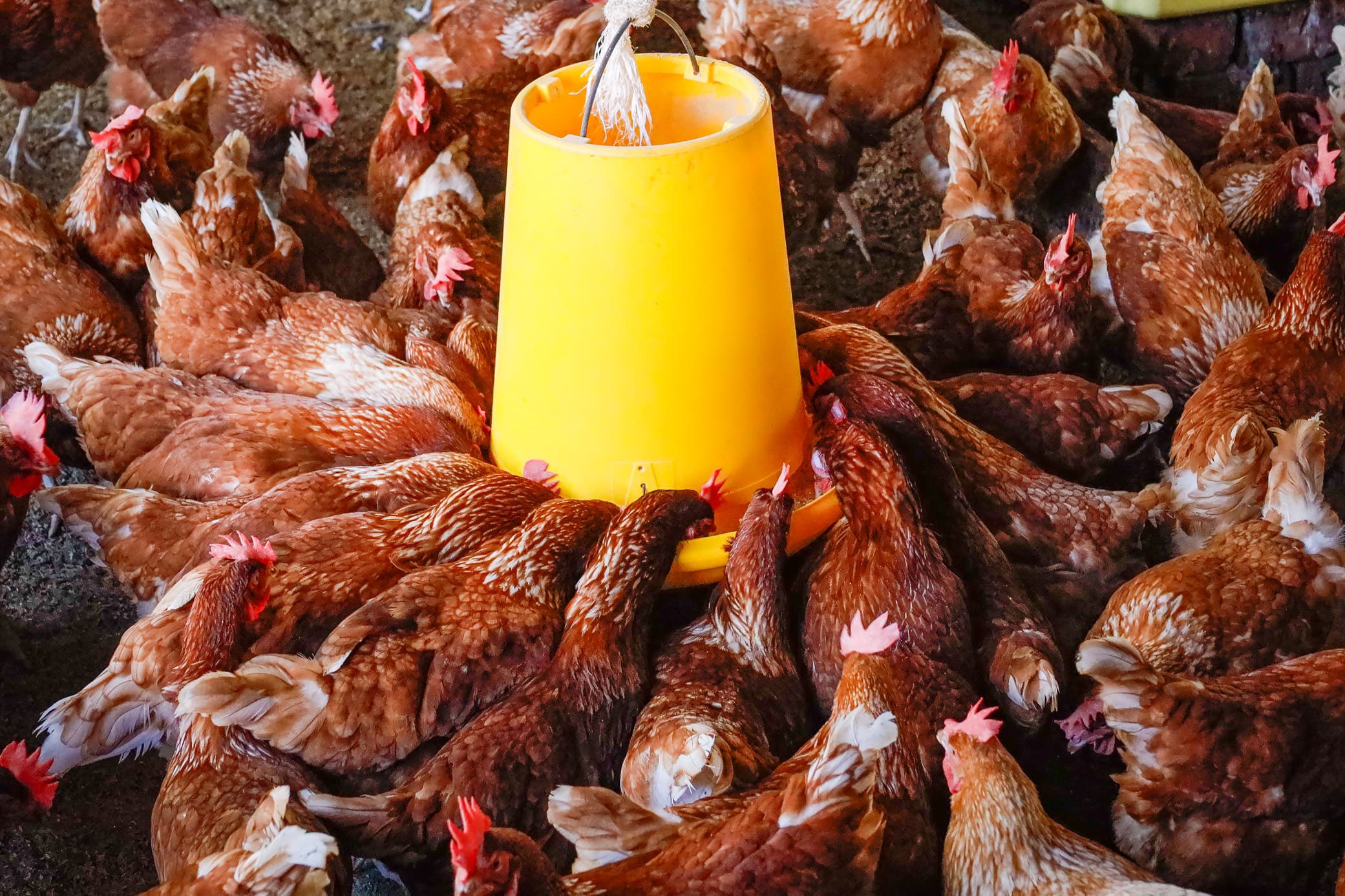
Hajji Zziwa’s farm has grown into a shining example of this model. His poultry unit houses over 2,000 birds and produces 55 trays of eggs daily, earning him UGX 550,000 per day. Annually, the poultry business brings in UGX 198 million in gross income, with a net profit of UGX 60 million after operational costs.
His dairy section, which began with a single cow, now yields 10 litres of milk daily—six of which are sold, generating UGX 360,000 per month. The coffee plantation brings in UGX 68 million gross annually, with net earnings of UGX 56.8 million. A banana plantation adds another UGX 3.7 million in net income, while avocado trees, though still scaling, bring in UGX 720,000 per year.
Beyond crops and animals, Hajji Zziwa has diversified into herbal medicine. He manufactures a tooth remedy that has been certified by the National Drug Authority (NDA), further boosting his profile as an innovative and community-focused entrepreneur.
President Museveni praised the farm’s contribution to local knowledge sharing. “This is not just a farm. It’s a training ground and an example of how rural Uganda can thrive with the right mindset and approach,” he said. The President also pledged to provide a solar-powered water pump for the village and a pickup truck to ease the transport of poultry feeds, which Zziwa currently sources from Mukono.
Despite his impressive results, Zziwa faces challenges. These include high transportation costs for feeds, fluctuating input prices, and water shortages that affect both his enterprise and the surrounding community. Nevertheless, his success story has made his farm a learning center, attracting farmers eager to replicate his model.
Former Mawokota North MP Hon. Amelia Kyambadde applauded President Museveni’s support for grassroots enterprise. However, she urged government investment in healthcare, water supply, electricity, and practical education hubs to support further rural transformation.
President Museveni reiterated his government’s commitment to rural prosperity through strategic models like the Four-Acre Model, calling household wealth creation the “bedrock of national development.”
Hajji Zziwa’s journey—from one cow to a model farm generating nearly UGX 300 million annually—stands as a testament to the power of innovation, government support, and determination. His story is inspiring a new wave of farmers and showing that even small plots can produce big change.