
The Government of Uganda is set to revamp the Uganda Telecommunications Corporation (UTel) through a new partnership with Rowad Capital Commercial LLC (RCC), a company based in the United Arab Emirates.
The agreement will see RCC take a 60 percent stake in UTel, while the government retains 40 percent. The Ministry of Finance, Planning and Economic Development will hold 25 percent, and the Ministry of ICT and National Guidance will hold 15 percent.
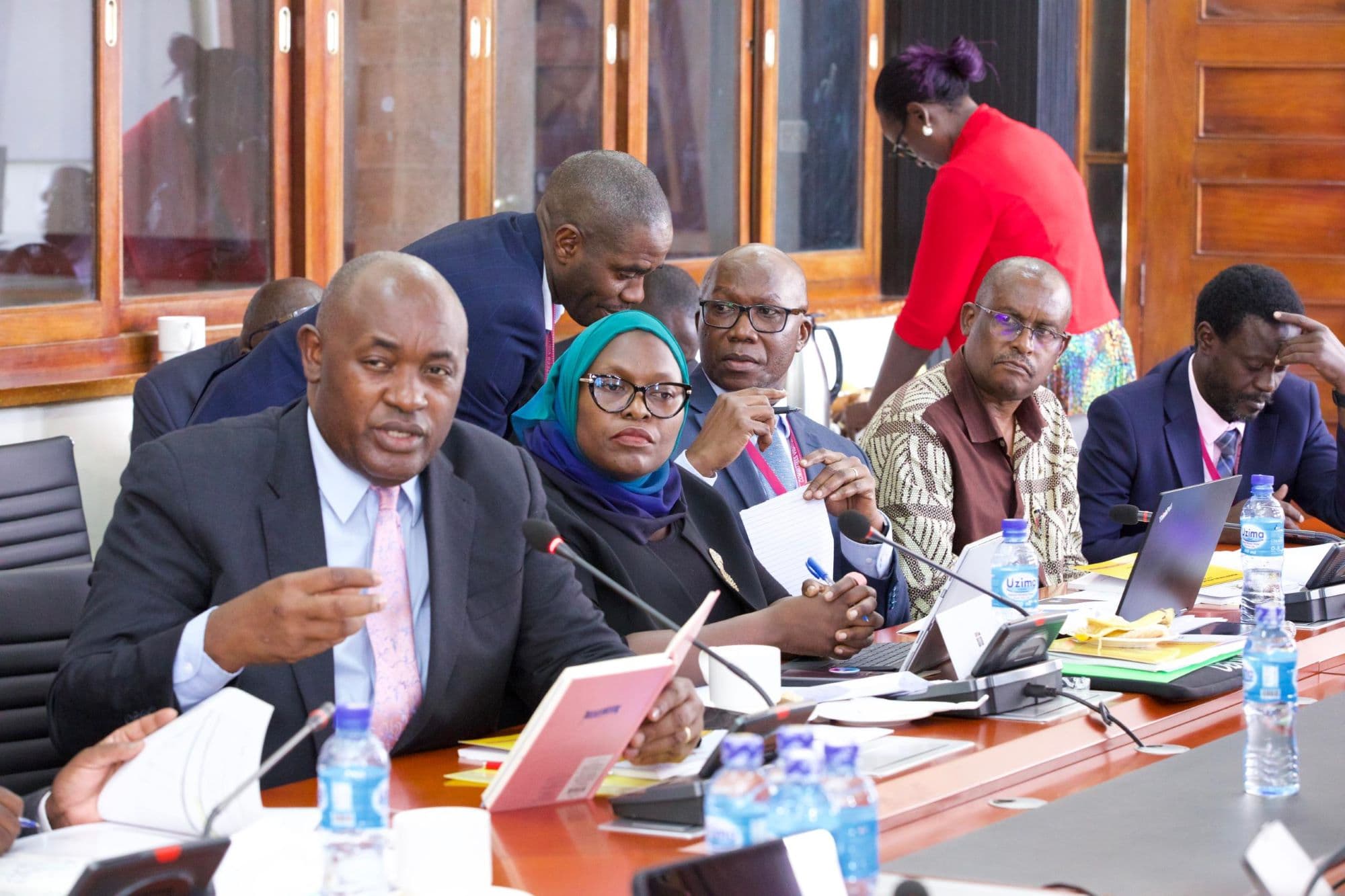
Minister of ICT and National Guidance, Chris Baryomunsi, revealed the development while presenting the Ministry’s policy statement to Parliament’s ICT Committee on Thursday, 3 April 2025. He said the partnership will capitalise UTel to manage and commercialise the National Backbone Infrastructure (NBI).
“Government agreed that we transfer the management and commercialisation of the NBI from Soliton Telmec to UTel,” Baryomunsi stated.
RCC is expected to make an initial investment of US$25 million, followed by US$200 million over the next three years.
However, members of the ICT Committee raised concerns over the existing contract between the National Information Technology Authority – Uganda (NITA-U) and Soliton Telmec. The firm is currently in the 12th year of a 15-year contract to manage the NBI.
Committee Chairperson, Ayoo, questioned the cost of terminating the contract prematurely. “Would it not be cheaper to allow Soliton to run their contract for the remaining three years?” he asked. “If it is negotiated well, we can get Soliton out without any cost.”
Baryomunsi said the government had already made the decision to end Soliton’s contract. “A decision was taken to terminate the contract with Soliton, which will have financial implications due to compensation. The Auditor General has carried out an audit and advised on the implications which government will pay,” he said.
He added that RCC’s commitment to immediate investment justified the urgency. “Waiting for the contract with Soliton Telmec to end would delay the recapitalisation opportunity for UTel,” Baryomunsi noted.
He said the new partnership is expected to increase government revenues from the NBI and open the infrastructure to the private sector. “The NBI has largely been used by government agencies with few clients from the private sector. If we fully commercialise it, we will open it up to the private sector so that we can fetch more money,” Baryomunsi explained.
A new UTel Board composed of members from both RCC and government has been appointed to oversee the transition. The board will make a formal resolution to create a bank account where RCC’s initial investment will be deposited.
For the 2025/2026 financial year, the Ministry of ICT has requested over Shs205 billion to cater for both development and recurrent expenditures, including arrears of over Shs100 billion. NITA-U has requested Shs268 billion, including Shs10.3 billion in arrears.
Baryomunsi cited ongoing challenges, such as slow automation of government systems, high internet costs, and lack of integration among public ICT platforms. “In the next financial year, we aim to improve efficiency in business processes and public service delivery, as well as strengthen the enforcement of policies, laws and regulatory frameworks and institutional coordination,” he said.