

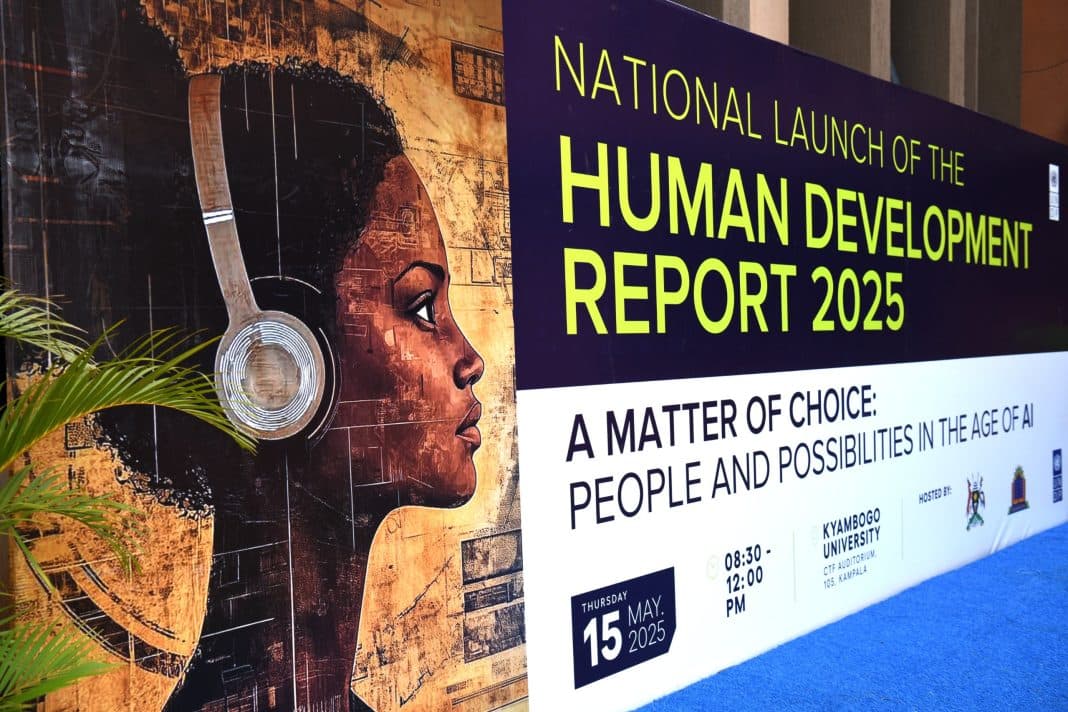
Uganda has the potential to unlock inclusive and sustainable development through artificial intelligence (AI), but only if the country makes deliberate and strategic decisions, the 2025 Human Development Report (HDR) has warned.
The United Nations Development Programme (UNDP), in partnership with the Government of Uganda and Kyambogo University, launched the national edition of the report titled “A Matter of Choice: People and Possibilities in the Age of AI” at Kyambogo University.
The report issues a global alert: human development gains are slowing after decades of progress, and the rise of AI presents both risks and opportunities for countries like Uganda.
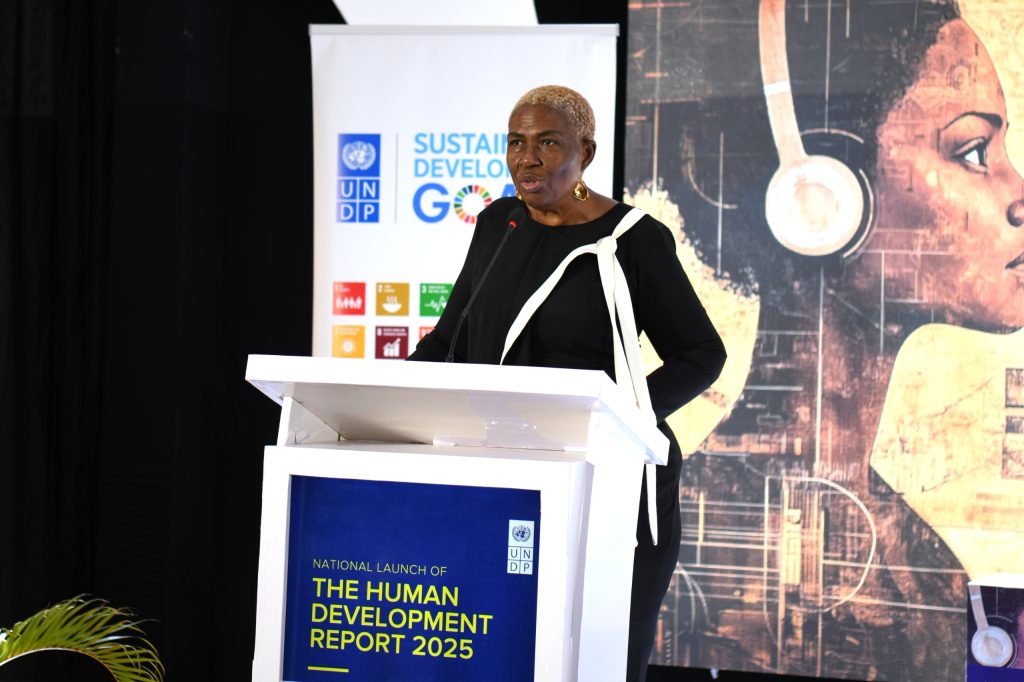
UNDP Resident Representative Nwanne Vwede-Obahor emphasized the urgency of adopting AI in a way that promotes equity and inclusion.
“The 2025 Human Development Report underscores the critical importance of strategic decision-making for Uganda to harness the transformative potential of AI,” she said.
“Human development is not predetermined – it is a matter of choice. Let us join forces to shape an inclusive, digital, and AI-powered future that leaves no Ugandan behind.”
Uganda’s Human Development Index (HDI) now stands at 0.582, placing the country in the medium human development category and ranking it 157 out of 193 countries. Since 1990, Uganda has increased its HDI by 70.2%, with life expectancy up by 20.7 years, expected years of schooling rising by 5.8 years, and gross national income per capita growing by 158%.
However, inequality remains a barrier. When adjusted for inequality, Uganda’s HDI drops to 0.400 — a 31.3% loss — mainly due to disparities in health, education, and income. This inequality-adjusted figure is higher than the Sub-Saharan African average loss, highlighting the need for targeted interventions.
The report calls AI a potential game-changer but cautions that its benefits will not come automatically. Without conscious investment in human capabilities, AI could exacerbate existing inequalities. For Uganda, the way forward includes tailoring AI solutions to local contexts, supporting multilingual and culturally relevant applications, and ensuring technology complements rather than replaces human work.

Uganda’s Gender Development Index (GDI) stands at 0.908, with women’s HDI at 0.556 compared to men’s at 0.612. The country ranks 141 out of 172 on the Gender Inequality Index, reflecting ongoing gaps in education, labor participation, and political representation.
Environmental sustainability also featured in the report. Uganda’s Planetary Pressures–Adjusted HDI is 0.569, just 2.2% lower than its unadjusted HDI. This suggests Uganda exerts less strain on the environment than many of its regional peers, providing a foundation for green development.
To navigate the future, the report recommends that Uganda focus on three priorities:
-
Build a complementarity economy – Use AI to enhance, not replace, human labor.
-
Drive innovation with intent – Develop AI tools that serve the public good, grounded in equity.
-
Invest in capabilities that count – Improve access to quality education, digital skills, and AI infrastructure.
With its young, tech-savvy population and a strategic vision under the Fourth National Development Plan (NDPIV), Uganda is positioned to benefit from AI-driven growth. The success of this transformation, however, will depend on the choices the country makes today.