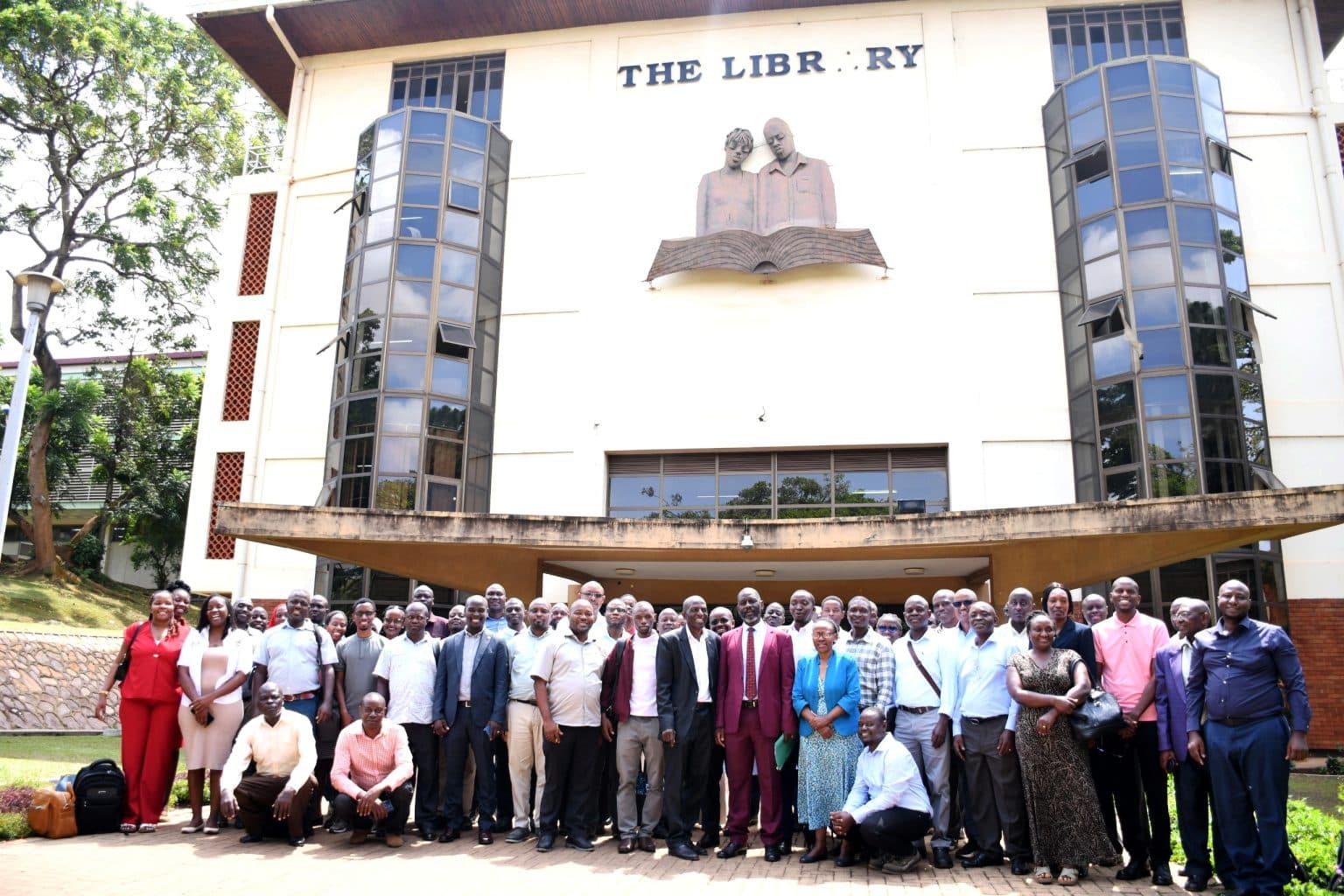


Over 40 Ugandan government officials have been called to integrate communities into biodiversity conservation following a two-day high-level training at Makerere University.
Organised by EfD Uganda, the workshop focused on biodiversity conservation, community-based natural resource management, and the economic valuation of national parks. Led by environmental economist Prof. Edwin Muchapondwa, the training stressed aligning conservation with community involvement for lasting impact.
“Communities must be seen not just as beneficiaries but as co-managers of biodiversity,” Prof. Muchapondwa said. “Policy frameworks need to devolve rights to local people to increase their stake in conservation outcomes.”
Participants from ministries and agencies explored Uganda’s biodiversity challenges, including habitat loss, agricultural expansion, poaching, and climate change. Sessions covered conservation principles, legal frameworks, ecosystem valuation, and regulatory tools to integrate biodiversity into national planning.
A central theme was the economic valuation of ecosystems, putting monetary value on biodiversity to guide policy and investment decisions.
“When we reduce everything to a common metric, we can make objective, evidence-based decisions, especially when weighing development against conservation,” Prof. Muchapondwa said.
Officials practised valuation methods such as contingent valuation and payment for ecosystem services in real-world policy settings, including environmental impact assessments and Uganda’s National Development Plan III.
Despite strong conservation policies on paper, implementation remains weak. “The issue isn’t policy absence but execution,” he noted. “We must adapt successful community-based models from Southern Africa to Uganda’s context.”
At the opening, Prof. Edward Bbaale, Director of the EfD–Mak Centre, emphasised collaboration between academia and government to support tourism development and sustainable resource use.
He praised Prof. Muchapondwa as a “pillar of the Environment for Development network” and called for more research linking tourism, conservation, and economics.
“We’ve had little research from Makerere on tourism and natural resource valuation,” Bbaale said. “Yet this is exactly where government seeks advice.”
He stressed Uganda’s ambition to grow GDP tenfold, from $50 billion to $500 billion, through tourism, agro-industrialisation, and manufacturing, urging researchers to support growth with evidence-based insights.
“Makerere houses the highest concentration of PhDs in this country,” he said. “If this research isn’t happening here, where else should it happen?”
The event ended with a renewed call for stronger partnerships among academia, government, and communities to ensure conservation and development advance together.
Uganda risks losing its natural wealth if it continues to undervalue ecological resources, warned Dr. Peter Babyenda, Research Fellow and Policy Engagement Specialist at EfD–Mak Centre.
“Our forests, wetlands, and ecosystems are routinely excluded from GDP calculations due to limited technical capacity and funding,” he said. “Kenya has made progress, Uganda must catch up.”
To bridge the gap, EfD–Mak Centre, with support from SIDA, has launched a training programme for technical staff from ministries and agencies such as the Ministry of Tourism, Uganda Wildlife Authority, and NEMA.
“These are the people who draft policy,” Dr. Babyenda said. “We’re training them to use data and evidence, not emotion, when defending policies.”
He cited recent transport policy missteps, such as a speed enforcement proposal that failed due to poor public engagement, as an example of why community participation is essential.
“Especially with human-wildlife conflicts, you must involve locals,” he said. “Solutions like electric fencing must be safe and community-driven.”
Uganda’s goal to grow its economy from $50 billion to $550 billion by 2040 poses risks to biodiversity, particularly from agricultural expansion. Dr. Babyenda stressed the need to balance development with preservation.
“We must promote agriculture without destroying forests and wetlands,” he said. “Our tourism sector, which depends heavily on biodiversity, must also be protected.”
He urged officials to present conservation as an economic asset. “If you show that every additional dollar invested in tourism marketing creates jobs and boosts GDP, people will listen.”
Aligning with Uganda’s National Development Plan IV, Dr. Babyenda called for cross-sector policy coherence.
“Tourism, agro-industry, and mineral development must be guided by sound, evidence-based policy,” he concluded. “Otherwise, we risk losing it all.”