

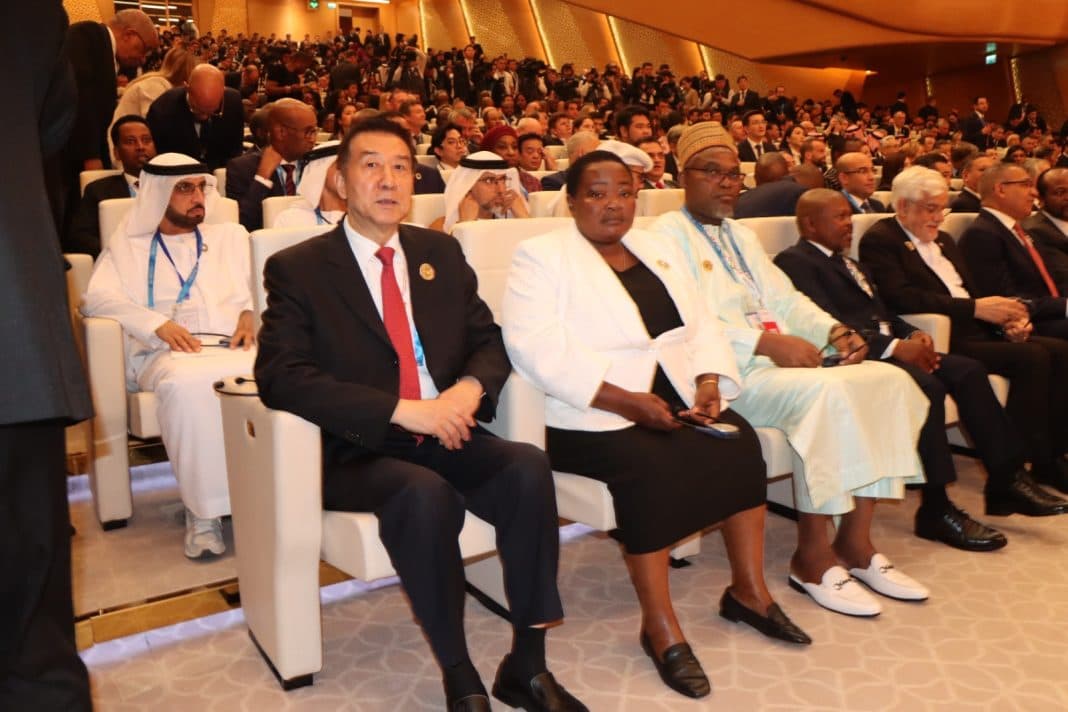
President Yoweri Kaguta Museveni has called on landlocked developing countries to eliminate non-tariff barriers and invest in critical infrastructure to unlock their full economic potential.
The President’s remarks were delivered by the Prime Minister of Uganda, Robinah Nabbanja, during the 3rd United Nations Conference on Landlocked Developing Countries in Awaza, Turkmenistan. The summit brings together leaders from 32 landlocked nations to explore strategies for inclusive development and regional integration.
“Landlocked countries must remove all non-tariff barriers to fully realize their development goals,” President Museveni emphasized through the Prime Minister. He also appealed to developed nations to extend concessional loans to support infrastructure development across landlocked regions.
UN Secretary-General António Guterres, in his opening address, acknowledged the unique challenges facing landlocked nations. He highlighted limited market access, high transportation costs, and insufficient connectivity as key obstacles to economic progress.
On the sidelines of the conference, Prime Minister Nabbanja briefed delegates on Uganda’s efforts to industrialize its economy. She revealed that the country has embarked on a bold strategy to grow its manufacturing sector from $50 billion to $500 billion by 2040.
The President of Turkmenistan, Serdar Berdimuhamedov, urged member states to prioritize joint infrastructure initiatives, enhance digital connectivity, and adopt climate-resilient development strategies. He emphasized the need for stronger regional cooperation to overcome the disadvantages of landlocked geography.
The Awaza summit has attracted high-level delegations, including Heads of State, Vice Presidents, Prime Ministers, and Ministers, reaffirming global commitment to supporting landlocked developing countries.